Algeria
 Egypt
 Libya
 Sudan
 Tunisia
 Benin
 Burkina Faso
 Cabo Verde
 Côte d'Ivoire
 Ghana
 Guinea
 Guinea-Bissau
 Liberia
 Mali
 Mauritania
 Niger
 Nigeria
 Senegal
 Sierra Leone
 The Gambia
 Togo
 Cameroon
 Central African Republic
 Chad
 DR Congo
 Equatorial Guinea
 Gabon
 Republic of the Congo
 São Tomé and Príncipe
 Burundi
 Comoros
 Djibouti
 Eritrea
 Ethiopia
 Kenya
 Madagascar
 Malawi
 Mauritius
 Mozambique
 Rwanda
 Seychelles
 Somalia
 South Sudan
 Tanzania
 Uganda
 Angola
 Botswana
 Eswatini
 Lesotho
 Namibia
 South Africa
 Zambia
 Zimbabwe
A tournament that is about more than prestige
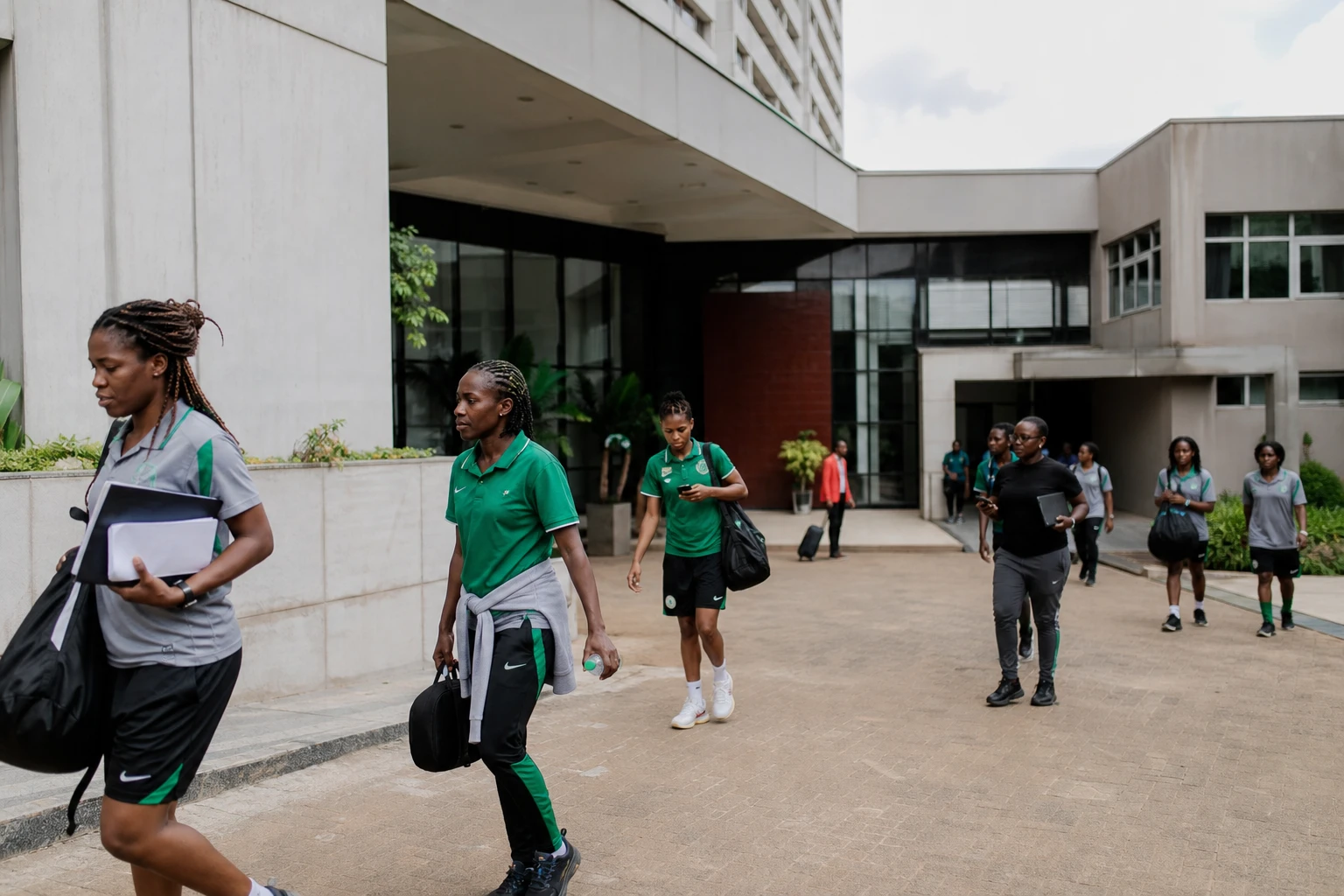
In Rabat, the 2026 Women’s Africa Cup of Nations will be decided by more than the quality of crosses and the accuracy of shots. It will also showcase a new hierarchy in African women’s football. Nigeria, the defending champions and record holders with ten titles, arrive as the team to beat. Hosts Morocco want to turn their recent progress into a first continental title. Between the two, the place of African national teams in world football is being reshaped.
For Nigeria, the competition has particular significance. The Nigerian women are defending a title won in the final against Morocco at the previous edition and are targeting an 11th continental trophy. In Abuja, this run is seen as a test of continuity for a team that remains the continent’s benchmark, but also as a barometer of women’s football at home, long driven more by individual talent than by a cohesive structure.
The African stage: more teams, greater stakes, more pressure
The 2026 edition is the first to bring together 16 national teams. The CAF has expanded the field to four groups of four and increased the winner’s prize to $1 million. This decision says much about the current moment: African women’s football is gaining visibility, but it also needs resources, clear schedules and more competitive tournaments.
The tournament begins on 26 July 2026 and ends on 16 August 2026, with Rabat at its heart. The schedule also matters for the 2027 Women’s World Cup in Brazil. The four semi-finalists will qualify directly, while other teams will go through an intercontinental play-off. In other words, every match already carries significance beyond the continent.
Morocco has invested in this event. Its team has already shown it can compete with the best, reaching two consecutive finals in this competition. But playing at home changes the nature of the challenge: the public expects a title, not just a respectable campaign. For the Moroccan team, the stakes are therefore both sporting and symbolic. The aim is to confirm that progress in local women’s football can be sustained.
Nigeria, between heritage, high expectations and pressure to deliver
In Nigeria, the Super Falcons are a team apart. Their record commands respect, but also creates a constant obligation to deliver. The squad, led by Justine Madugu, includes 25 players, with Rasheedat Ajibade, Chiamaka Nnadozie, Osinachi Ohale, Jennifer Echegini and Asisat Oshoala among the most eagerly awaited names. The logic is clear: rely on established players to maintain control in an expanded and more demanding tournament.
The official message in Abuja is unequivocal. The executive committee of the Nigeria Football Federation has told the team to bring home the trophy and, at the same time, secure a place at the 2027 World Cup. This dual demand reflects a simple reality: Nigeria is no longer playing only to win in Africa. It is also playing to retain its place among the nations that matter on the world stage.
Nigeria’s opening match against Malawi, scheduled for 28 July in Rabat, will offer an early indication. In a short competition, managing physical and mental demands matters as much as raw talent. The Super Falcons know how to play under pressure. But in a 16-team tournament, every slip-up becomes more costly. Being favourites offers little protection when the margins narrow.
What this Africa Cup says about African football
The tournament’s significance extends beyond the pitch. First, because it puts African women’s football in a framework of economic and sporting performance. Second, because it shows that federations, states and the CAF are now investing more in this sector, which has long been underfunded. Nigeria, whose capital is Abuja, is a showcase here. If it confirms its supremacy, it will reinforce the idea that an African team can remain dominant without giving up on renewal.
For West Africa, the tournament also offers a point of comparison. Nigeria, Senegal and Algeria are among the teams to watch in this cycle, while other countries are still seeking to stabilise their women’s programmes. ECOWAS does not govern football, but sporting dynamics in the sub-region follow the same forces as the economy and mobility: better-resourced urban centres, more structured national leagues, and a diaspora that contributes to the quality of national teams.
One simple question remains: can Nigeria extend its dominance in a Women’s Africa Cup of Nations that is broader, more demanding and more exposed? The answer will play out in Rabat, but its effects will be felt far beyond. A Nigerian victory would extend a tradition. A Moroccan triumph would mark a shift. Either way, African women’s football will reach a new milestone.