Algeria
 Egypt
 Libya
 Morocco
 Sudan
 Tunisia
 Benin
 Burkina Faso
 Cabo Verde
 Côte d'Ivoire
 Ghana
 Guinea
 Guinea-Bissau
 Liberia
 Mali
 Mauritania
 Niger
 Senegal
 Sierra Leone
 The Gambia
 Togo
 Cameroon
 Central African Republic
 Chad
 DR Congo
 Equatorial Guinea
 Gabon
 Republic of the Congo
 São Tomé and Príncipe
 Burundi
 Comoros
 Djibouti
 Eritrea
 Ethiopia
 Kenya
 Madagascar
 Malawi
 Mauritius
 Mozambique
 Rwanda
 Seychelles
 Somalia
 South Sudan
 Tanzania
 Uganda
 Angola
 Botswana
 Eswatini
 Lesotho
 Namibia
 South Africa
 Zambia
 Zimbabwe
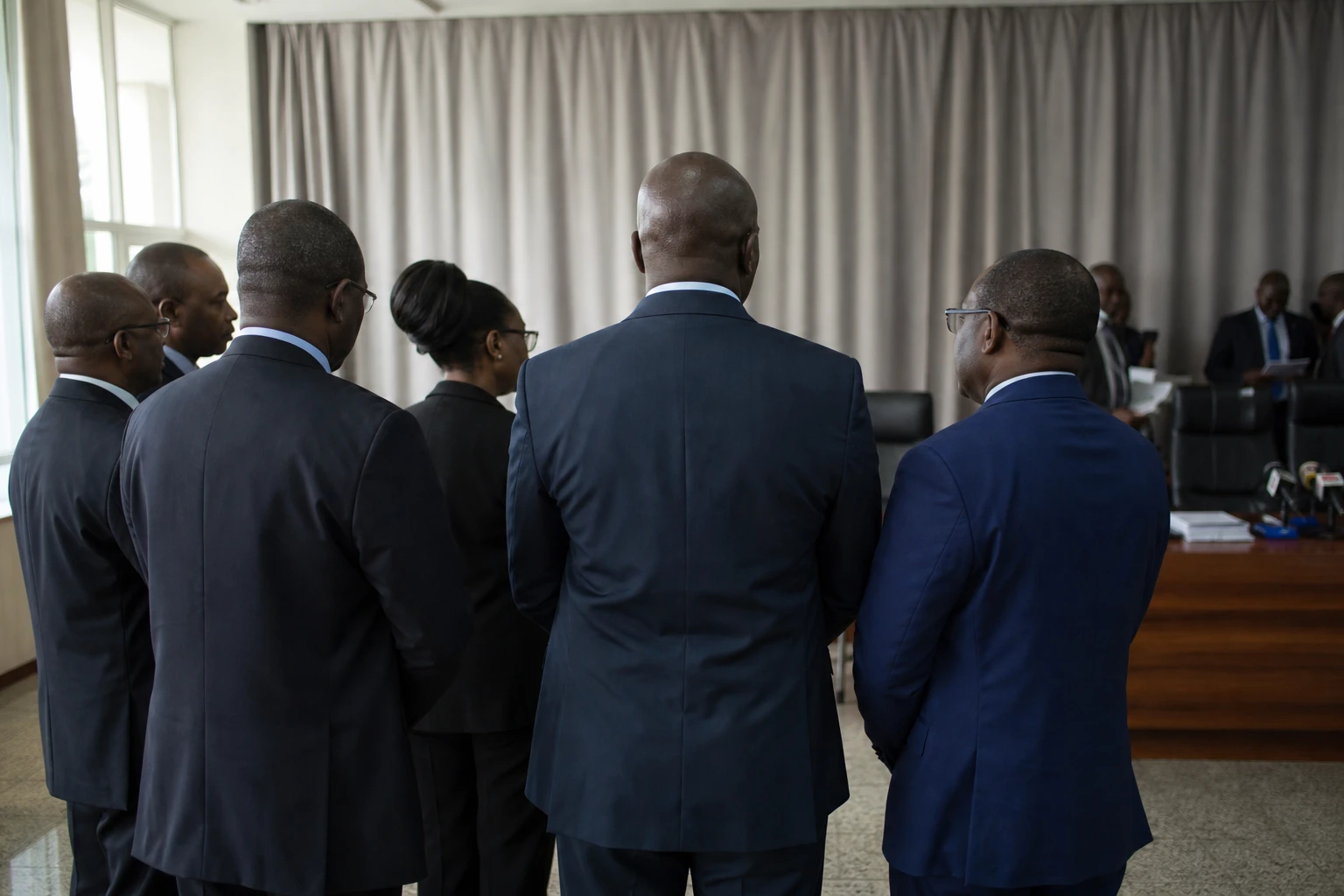
An anti-corruption agency tested by its own discipline
In Abuja, the question is not just how many cases an anti-corruption institution handles. The real measure lies elsewhere: can it impose on its own agents the rules it demands of the rest of the state? In Nigeria, that question has come to the fore again after more than 40 dismissals at the Economic and Financial Crimes Commission, the EFCC, over alleged corruption and financial misconduct.
The issue matters beyond its symbolic significance. Nigeria, West Africa’s largest economy and a central player in ECOWAS, has for years waged a difficult battle against fraud, money laundering and embezzlement. In this landscape, the EFCC remains the federal government’s flagship body for financial investigations, asset seizures and prosecutions. The agency says it works towards a simple goal: a vision of a Nigeria free from economic and financial crimes.
High performance figures, but an institution under scrutiny
The details were made public at a press briefing in Abuja by EFCC chairman Ola Olukoyede. He said he had ordered the departure of more than 40 employees over a period of about two and a half to three years, amid suspicions of corruption and financial misconduct. He also said that more than five of these former agents were already facing legal proceedings, while other cases were still being prepared. These details were reported by several Nigerian media outlets and an international news agency.
The same official highlighted figures he described as record-breaking. Between October 2023 and July 2026, the EFCC says it received 49,673 complaints, investigated 39,615 cases, brought 14,476 cases before the courts and secured 10,872 convictions. The agency also says it recovered about 1.23 trillion naira, as well as sums in dollars, pounds sterling and euros. These figures were published by the Nigerian press and feature in EFCC statements circulated during the institution’s review of its record.
The reported conviction rate of more than 75% gives the EFCC a powerful argument with a public highly sensitive to probity. But it also highlights a more complex reality: the more effective an institution becomes, the more it exposes its own internal weaknesses. Dismissing agents for corruption is therefore both proof of resolve and an admission of institutional vulnerability. This reading is clear from the information published in Abuja.
Internal reforms, public credibility and the fight against conflicts of interest
Ola Olukoyede presented the dismissals as part of a broader internal reform. According to him, the department responsible for internal affairs has been renamed the “Department of Ethics and Integrity”. He has also introduced a policy on gifts and invitations, requiring the declaration of presents above a threshold he did not specify, including those from close relatives living abroad. The aim is clear: to reduce the grey areas that fuel conflicts of interest.
This approach aligns with the EFCC’s official message, which emphasises integrity, professionalism and collaboration as core values. It also overlaps with Nigeria’s anti-money-laundering priorities. On the official pages of SCUML, an EFCC unit, the agency outlines its role in supervising activities considered vulnerable to money laundering and terrorist financing, in line with the standards of the FATF, the international body that sets global rules in this area.
For Nigeria’s population, the stakes are tangible. When corruption cases involve the police, the judiciary, customs or oversight bodies, the cost is immediate: slower proceedings, businesses more exposed to extortion, and growing distrust of the state. For honest public servants, by contrast, visible sanctions can restore a measure of internal trust. For frontline agents, they also signal that the scope for tolerance is shrinking.
What this says about Nigeria and West Africa
The EFCC case goes beyond the national sphere. In West Africa, illicit financial flows, cyber fraud and money laundering often cross borders. Nigeria, with its economic and financial weight, is at the heart of these dynamics. That is why the EFCC’s judicial performance, as well as the discipline of its own staff, matters to ECOWAS, financial regulators and regional partners working to combat cross-border crime.
The case also comes as Nigeria seeks to show that recovered sums can be returned to the real economy. Nigerian media have reported that proceeds from these recoveries have been allocated to public schemes such as the Nigerian Education Loan Fund and the Nigerian Consumer Credit Corporation. The idea is politically sensitive: to turn funds from criminal cases into useful services, rather than let them disappear into administrative channels.
A question of method remains. High conviction figures alone are not enough to measure the quality of an anti-corruption policy. The strength of investigations, the transparency of proceedings and the ability to discipline the institution itself must also be considered. This is where Nigeria is currently sending an important signal across the continent: the credibility of an anti-corruption campaign is also built by the example set by those leading it from Abuja.