Algeria
 Egypt
 Libya
 Morocco
 Sudan
 Tunisia
 Benin
 Burkina Faso
 Cabo Verde
 Côte d'Ivoire
 Ghana
 Guinea
 Guinea-Bissau
 Liberia
 Mali
 Mauritania
 Nigeria
 Senegal
 Sierra Leone
 The Gambia
 Togo
 Cameroon
 Central African Republic
 Chad
 DR Congo
 Equatorial Guinea
 Gabon
 Republic of the Congo
 São Tomé and Príncipe
 Burundi
 Comoros
 Djibouti
 Eritrea
 Ethiopia
 Kenya
 Madagascar
 Malawi
 Mauritius
 Mozambique
 Rwanda
 Seychelles
 Somalia
 South Sudan
 Tanzania
 Uganda
 Angola
 Botswana
 Eswatini
 Lesotho
 Namibia
 South Africa
 Zambia
 Zimbabwe
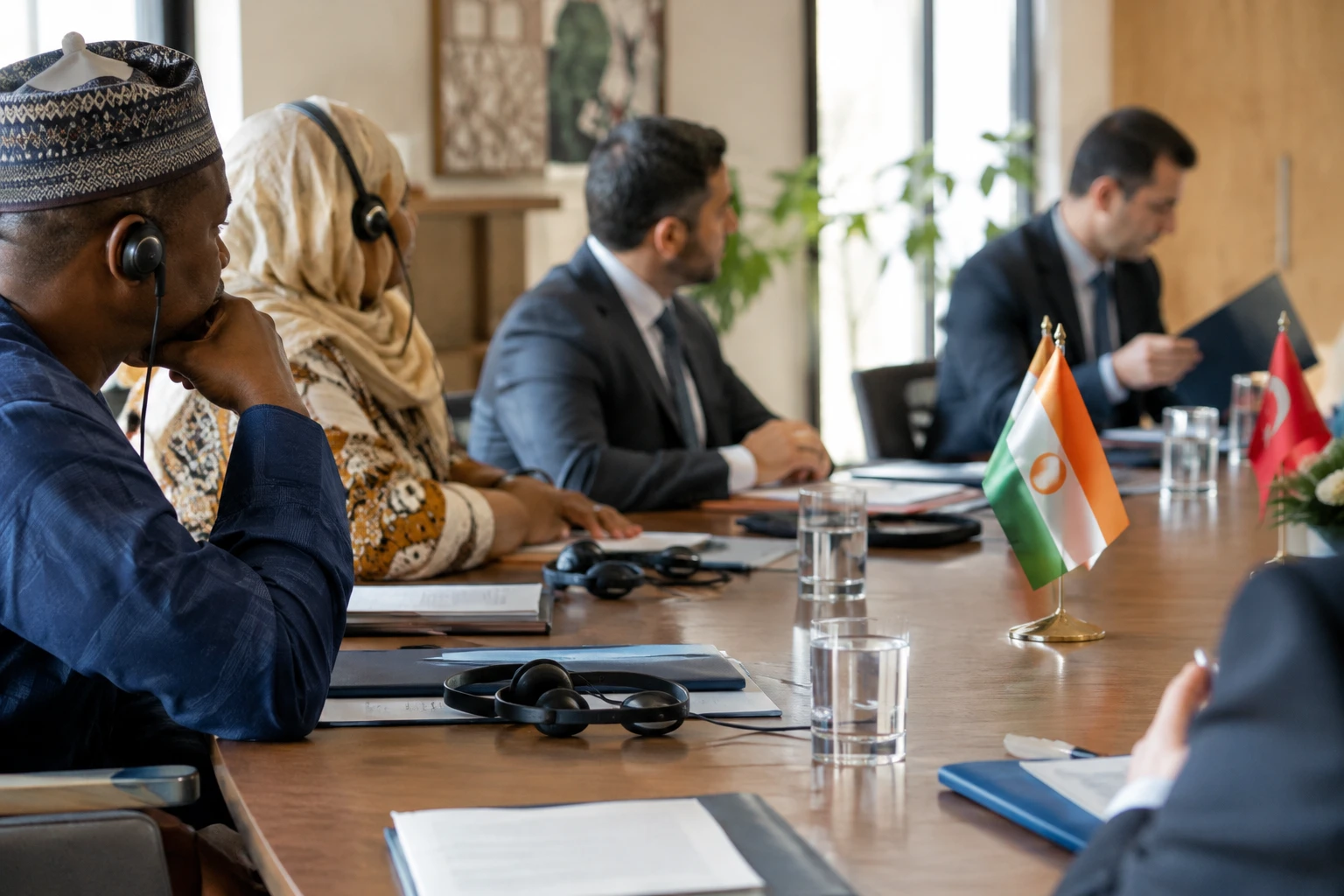
Training technicians locally, rather than relying solely on people leaving the country, is the practical objective of the planned vocational school in Niamey. Its implementation remains to be clarified, as Niger seeks to bring training more closely into line with the needs of its economy.
A project within an existing partnership
Educational ties between Niger and Türkiye are not starting from scratch. In Niamey, the Maarif Foundation says it runs 12 schools. Other programmes already link the two countries through scholarships, higher education and vocational training initiatives.
This cooperation is also taking place amid diplomatic realignment in the Sahel. Niger, Mali and Burkina Faso left the Economic Community of West African States (ECOWAS), a regional integration organisation, on 29 January 2025. They created the Alliance of Sahel States (AES). In this context, bilateral partnerships, particularly in education and skills, have become more prominent in Niger’s foreign relations.
The technical training project is based on an implementing protocol covering the period 2026-2030. Signed in June 2026, it provides for a joint vocational school at Abdou Moumouni University in Niamey. The authorities present the institution as a means of training qualified technicians and mid-level staff.
Commitments announced, but few details so far
On 21 October 2026, Niger’s Minister of National Education, Élisabeth Shérif, received Türkiye’s ambassador, Özgür Arslan, in Niamey. Niger’s ministry confirmed the meeting. The public account referred to strengthening educational cooperation, without announcing a new agreement or giving a timetable for the joint school.
Several essential details therefore remain unknown: the courses to be offered, admission criteria, the division of responsibilities between the partners, funding, the number of places and the opening date. These choices will directly affect the project’s usefulness. Technical training meets employers’ needs when it combines appropriate instruction, available equipment and practical links with workplaces.
The host university gives the project a Nigerien base. But the school will also need to clarify how it will fit alongside training already available in the country, particularly outside the capital. If courses and equipment remain concentrated in Niamey, young people in remote regions may find it harder to access the new places.
From schooling to employment
The cooperation covers several stages of the educational pathway. The Maarif Foundation reports 12 schools in Niger. Figures cited in connection with the partnership point to more than 1,700 pupils at these schools, nearly 500 Nigerien students in Türkiye and about 300 recipients of Turkish scholarships. These figures describe separate programmes; on their own, they do not show how access varies by gender, income or region of origin.
A programme launched in Niamey in May 2026 also aims to train 80 young women in different trades. The Nigerien daily Le Sahel reports that the initiative brings together Türkiye’s embassy and the organisations DOST Eli and HUSAF. The scheme directly targets vocational training, but published information does not yet specify the trades taught, the length of courses or the expected employment outcomes.
For young people, the decisive question will be job prospects. Technical training can open up opportunities in sectors that are hiring, but only if the skills taught match actual demand. Employers, Nigerien institutions and learners will therefore need a role in designing the programmes. Without these links, an additional qualification does not guarantee a job.
Access will matter as much as content. Young women, applicants living outside Niamey and those unable to fund a long stay abroad could benefit from local training, provided that enrolment, costs and financial support are clearly defined. Conversely, limited places or overly narrow courses would reduce the project’s social reach.
Its implementation will be the test
The university protocol adds to other agreements signed between Niger and Türkiye in June 2026, in areas including trade, health and diplomacy. It reflects the diversification of bilateral ties, but the announcement alone says nothing about its impact. The cooperation agreement sets a framework; teaching arrangements and resources will have to make it operational.
Across West Africa, the project also highlights how educational exchanges and the movement of skills extend beyond institutional affiliations. Since Niger’s withdrawal from ECOWAS, regional cooperation arrangements have been changing. For Niamey, developing bilateral partnerships can complement national capacity without replacing the role of public universities, training centres and local businesses.
The next milestones will therefore be very concrete: publication of the courses, an opening timetable, funding, admission arrangements and partnerships with employers. Only under these conditions can the planned school meet the needs of Nigeriens and turn a diplomatic commitment into an accessible and useful training pathway.