Algeria
 Egypt
 Libya
 Morocco
 Sudan
 Tunisia
 Benin
 Burkina Faso
 Cabo Verde
 Côte d'Ivoire
 Ghana
 Guinea
 Guinea-Bissau
 Liberia
 Mali
 Mauritania
 Nigeria
 Senegal
 Sierra Leone
 The Gambia
 Togo
 Cameroon
 Central African Republic
 Chad
 DR Congo
 Equatorial Guinea
 Gabon
 Republic of the Congo
 São Tomé and Príncipe
 Burundi
 Comoros
 Djibouti
 Eritrea
 Ethiopia
 Kenya
 Madagascar
 Malawi
 Mauritius
 Mozambique
 Rwanda
 Seychelles
 Somalia
 South Sudan
 Tanzania
 Uganda
 Angola
 Botswana
 Eswatini
 Lesotho
 Namibia
 South Africa
 Zambia
 Zimbabwe
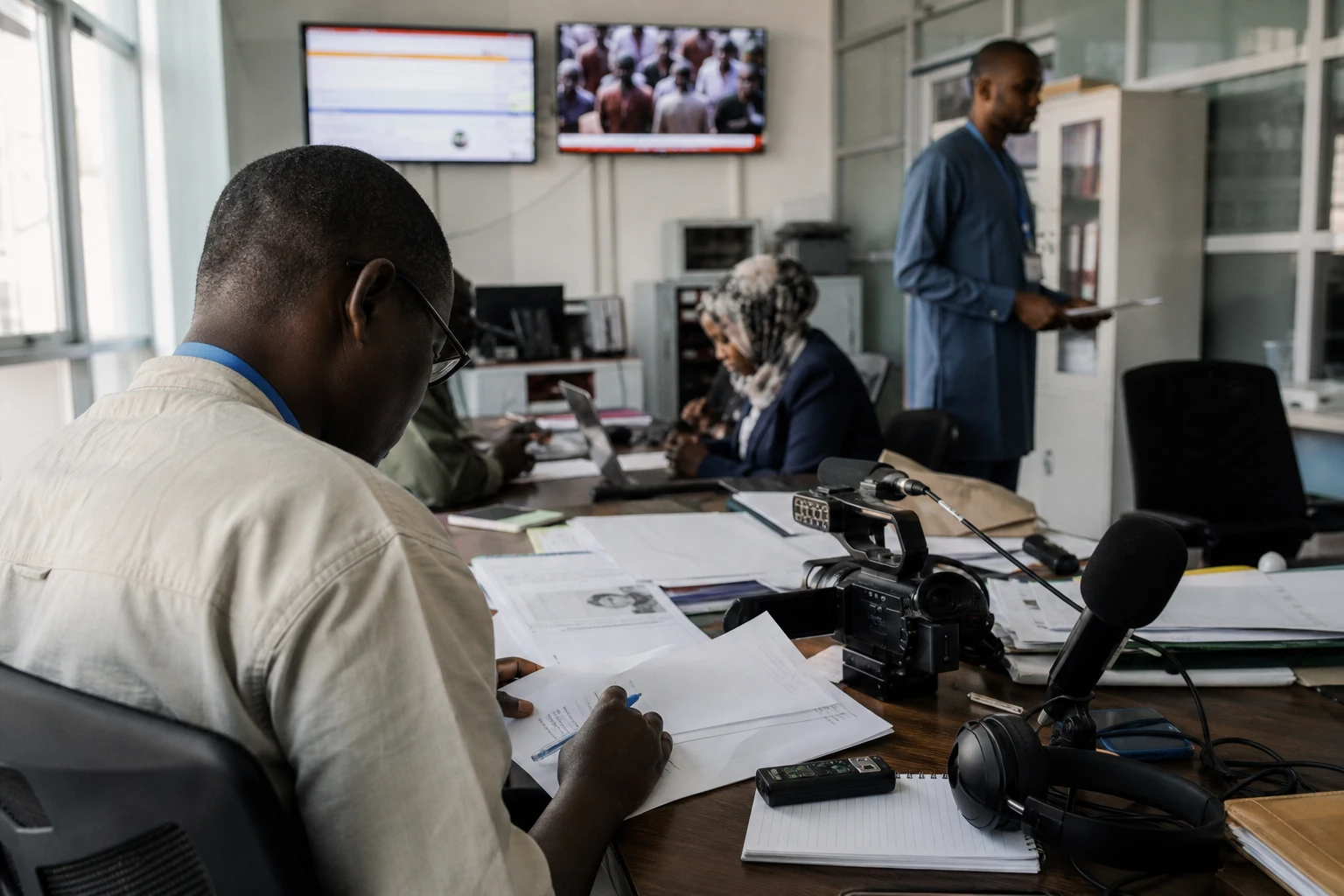
Niamey: a sign of a government protecting itself
In Niger, the question is no longer simply who is in command. It is how a military government consolidates its own chain of command after being shaken from within. In Niamey, the hierarchy of the armed forces matters as much as official statements, because a split at the top can quickly affect security across the entire country.
The regional context explains this unease. Since 29 January 2025, Niger has left ECOWAS, like Burkina Faso and Mali, while remaining within a tighter Sahelian framework centred on the Alliance of Sahel States (AES). In this setting, Niamey is seeking to project political and military cohesion even as security threats remain active in several regions of the country.
A swift reshaping of the high command
On 11 September 2026, Nigerien President Abdourahamane Tiani made several appointments in the Nigerien Armed Forces. Brigadier General Mamane Sani Kiaou was named chief of the defence staff, replacing General Moussa Salaou Barmou. Brigadier General Abdourahmane Abou Zataka took over as head of the army’s staff. Two other posts in the air force and army were also adjusted.
The reshuffle came less than two weeks after the mutiny at Niamey’s Base 101 on the night of 28–29 August 2026. According to the Nigerien News Agency, operations carried out after the events led to the recovery of a substantial arsenal, including armed vehicles, light armoured vehicles, assault rifles, rocket launchers and communications equipment. The figures released point to a serious incident, although full responsibility remains for the authorities to determine.
Several indications suggest that the authorities have opted for a familiar response: replace officers deemed insufficiently reliable, tighten command and reassert the top-down structure of the military chain of command. The appointment of Mamane Sani Kiaou, previously head of the army, points in this direction. This is less a routine administrative move than a political reassertion of control over the state’s military core.
What the mutiny reveals
The mutiny in late August says more than just something about the balance of power among officers. It also points to the fatigue of units facing prolonged security pressure, difficult service conditions and an atmosphere of suspicion within the forces. Analyses published after the events noted that the mutineers appeared to be expressing discontent linked to operational conditions and internal tensions. While this interpretation should be treated with caution, it sheds light on the reasoning behind the reshuffle in Niamey.
For Nigeriens, the stakes are tangible. In the capital, the priority remains institutional stability and the continuity of the state. In the western, northern and south-eastern regions, people chiefly expect the army to remain capable of protecting routes, markets, public services and everyday travel. A reorganisation at the top of the military can strengthen internal order, but it can also reveal persistent unease within the military establishment.
The reshuffle also has institutional significance. Since the coup of 26 July 2023, Niger has been under a military transitional government dominated by Abdourahamane Tiani. In such circumstances, control of the high command is never neutral: it determines the loyalty of units, the flow of information and the centre’s ability to prevent another armed challenge. The authorities are therefore seeking to bring the conventional army firmly under control while preventing a specialised unit from becoming a source of dissent.
A Sahelian issue beyond Niamey
The case goes beyond Niger. Across the Sahel, the relationship between armies, political transitions and the fight against terrorism remains one of the most sensitive issues. Niger, Mali and Burkina Faso have chosen to leave ECOWAS, but they continue to face shared challenges involving security, mobility and military coordination. At the same time, the AES is seeking to build its own cooperation mechanisms, including for unified forces.
The regional significance is economic too. Niger occupies a pivotal position between the Maghreb and West Africa. Road corridors such as the Trans-Saharan Highway, designed to link Algiers to Lagos via the Sahel, show how security in Niger also determines the movement of goods and people along a continental route. When the military apparatus is shaken, the already fragile ambition of integration is put under strain too.
What happens next will depend on two factors. First, the authorities’ ability to restore confidence within the ranks without fuelling further frustration. Second, the Nigerien forces’ ability to remain focused on their operational missions in a country where internal security, the Sahelian border and the credibility of the state are interconnected. In Niamey, the reshuffle at the top of the military is therefore no simple rotation of personnel. It is a test of discipline, loyalty and political control of the chain of command.