Algeria
 Egypt
 Libya
 Morocco
 Sudan
 Tunisia
 Benin
 Burkina Faso
 Cabo Verde
 Côte d'Ivoire
 Ghana
 Guinea
 Guinea-Bissau
 Liberia
 Mali
 Mauritania
 Nigeria
 Senegal
 Sierra Leone
 The Gambia
 Togo
 Cameroon
 Central African Republic
 Chad
 DR Congo
 Equatorial Guinea
 Gabon
 Republic of the Congo
 São Tomé and Príncipe
 Burundi
 Comoros
 Djibouti
 Eritrea
 Ethiopia
 Kenya
 Madagascar
 Malawi
 Mauritius
 Mozambique
 Rwanda
 Seychelles
 Somalia
 South Sudan
 Tanzania
 Uganda
 Angola
 Botswana
 Eswatini
 Lesotho
 Namibia
 South Africa
 Zambia
 Zimbabwe
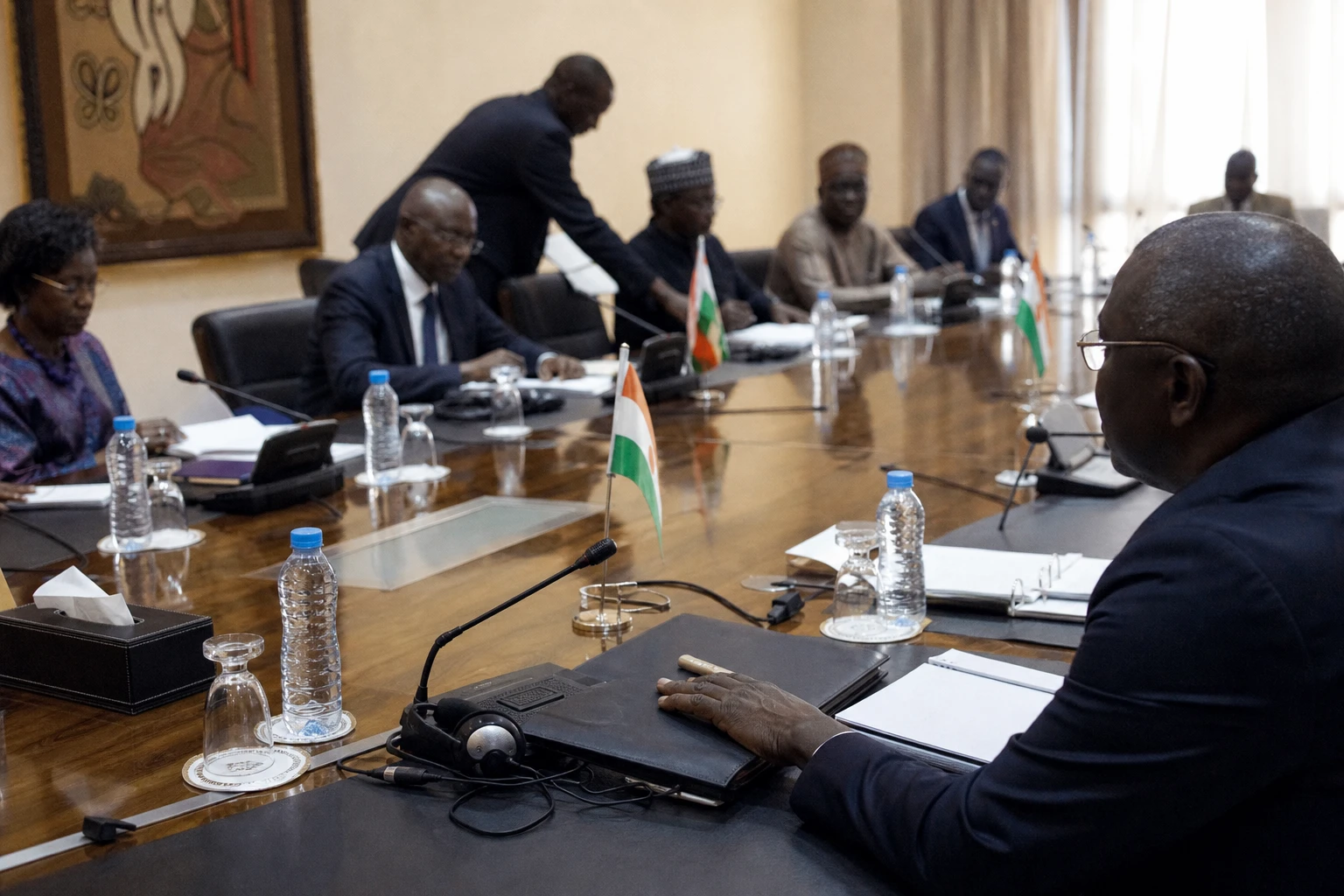
In Niamey, rising revenues point above all to one thing: the state is seeking breathing room
In Niger, the question is not only how to bring more money into public coffers. It is also how to fund schools, healthcare, roads and salaries without further increasing dependence on external financing. In this context, the rise in revenues in the second quarter of 2026 carries clear political and budgetary significance. Niger’s finance ministry describes it as a sign of consolidation, while financing needs remain high and the country remains under an IMF programme.
An effort set within a broader budgetary sequence
Niamey is following a trajectory already visible in 2025. The economic outlook note for the fourth quarter of 2025, published by Niger’s statistical services, reported a marked improvement in total revenue, to CFAF 1,308.1 billion, up 40.8% year on year. This momentum was already attributed to broadening the tax base and more effective collection. It also confirmed a key point: Niger wants to rely less on external sources to balance its budget.
This direction is not isolated. The IMF said in February and then in March 2026 that Nigerien authorities had embarked on tax reforms to meet some of their financing needs, under a programme extended until December 2026. The institution also noted that climate shocks and pressure on natural resources continue to weigh on the country’s public accounts.
The figures for the second quarter of 2026
According to the finance ministry’s economic outlook note at the end of July 2026, Niger’s public revenues reached CFAF 395.8 billion in the second quarter of 2026, compared with CFAF 316.8 billion in the previous quarter. This represents a quarterly increase of 24.9%. Year on year, the rise was 35.1%.
Taxation remains the main driver. Tax revenues increased by 25.6% compared with the previous quarter. Taxes on goods and services jumped by 38.8%, and income taxes by 42.6%. By contrast, taxes on foreign trade fell by 5.1%. In other words, the state mobilised more revenue from domestic activity and consumption, but some of the gains were held back by weaker performance at the borders.
In the first half of 2026, Niger mobilised CFAF 712.6 billion in revenue, equivalent to 48.1% of the programme’s projections for the year under IMF monitoring. This level shows that implementation remains incomplete, but is consistent with a recovery in tax collection compared with previous financial years.
The new tax code is beginning to have an effect
The core of the reform remains the new General Tax Code, adopted in July 2025 and updated in the 2025 Finance Act. The aim is clear: broaden the tax base, reduce certain tax breaks and improve the yield of existing taxes. Niger’s tax ministry has also published the consolidated text of the code, demonstrating an effort to bring regulations into order rather than make a one-off adjustment.
In its documents, the IMF estimates that certain measures in the code should generate an additional CFAF 12 billion in revenue in 2026. The measures cited include an increase in the minimum rate of corporate income tax, the rationalisation of certain exemptions and the extension of tax obligations related to public procurement contracts. These are technical measures, but they affect very tangible stakeholders: businesses, public procurement operators and oversight authorities.
The government, for its part, has presented the 2026 Finance Act as a tool for budgetary stability and support for domestic production. This balance is important. Niger wants to raise more revenue without undermining an economy in which the informal sector remains significant and formal activity alone does not account for the entire tax base.
What this means for the state, businesses and households
For the Nigerien state, higher revenues provide greater room for manoeuvre. They can reduce pressure on domestic financing, limit dependence on external support and ensure that priority spending is carried out. This is particularly significant given that the IMF still expects a temporarily higher deficit in 2026, at around 3.7% of GDP, as a result of climate shocks and the associated spending needs.
For businesses, the picture is more nuanced. A more effective tax and customs administration can improve predictability. But broadening tax bases and reducing exemptions can also increase the bill for some operators, especially in sectors that have so far benefited from special regimes. The real challenge will therefore be the quality of implementation: clear rules, fast procedures and fair enforcement.
For households, the impact will depend on how the state balances tax revenue against purchasing power. Taxes on goods and services are often the most visible in everyday life because they can feed through into prices. If the reform increases revenue without disrupting trade channels, it can strengthen public services. If it is poorly calibrated, it could instead drive up the cost of living.
Regional significance in a strained West African environment
Niger operates within the WAEMU, where domestic revenue is a central issue for all member states. But it is even more important for a country facing financing constraints, a narrow economy and substantial social needs. Across ECOWAS, Niger’s situation also serves as a reminder that budgetary sovereignty depends first and foremost on the ability to collect, track and secure domestic resources.
What happens next will be decisive. If the momentum of the second quarter continues in the second half of 2026, Niamey will be able to consolidate its budgetary room for manoeuvre and better negotiate its financial arrangements with partners. If it fades, the country will remain exposed to more costly financing and persistent dependence on external support. In West Africa, the message is clear: tax reform is no longer administrative jargon; it is becoming an instrument of national stability.