
 Algeria
 Egypt
 Libya
 Morocco
 Sudan
 Tunisia
 Benin
 Burkina Faso
 Cabo Verde
 Côte d'Ivoire
 Ghana
 Guinea
 Guinea-Bissau
 Liberia
 Mali
 Mauritania
 Nigeria
 Senegal
 Sierra Leone
 The Gambia
 Togo
 Cameroon
 Central African Republic
 Chad
 DR Congo
 Equatorial Guinea
 Gabon
 Republic of the Congo
 São Tomé and Príncipe
 Burundi
 Comoros
 Djibouti
 Eritrea
 Ethiopia
 Kenya
 Madagascar
 Malawi
 Mauritius
 Mozambique
 Rwanda
 Seychelles
 Somalia
 South Sudan
 Tanzania
 Uganda
 Angola
 Botswana
 Eswatini
 Lesotho
 Namibia
 South Africa
 Zambia
 Zimbabwe
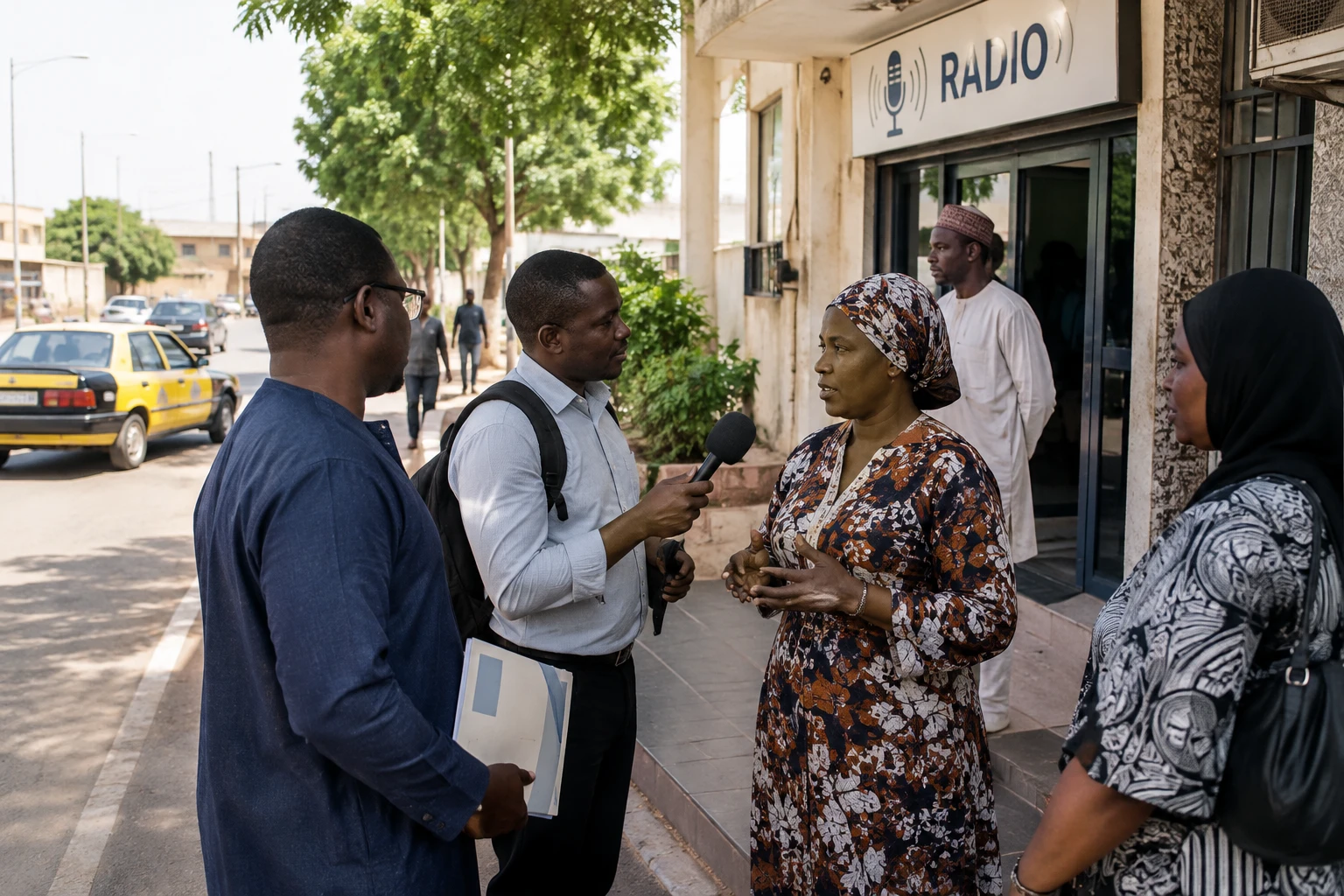
In Niamey, the detention of a journalist whose location has not been made public and who has no confirmed access to his family or lawyer raises a question that goes beyond one man’s fate: what safeguards protect those who document public life in Niger? Two months after Moussa Kaka disappeared, that question remains unanswered.
Detention acknowledged, but no precise location or reason given
Moussa Kaka left the offices of Radiotélévision Saraounia (RTS), which he runs, on 31 August 2026. He was heading to his home in the Nigerien capital, but never arrived. His vehicle has not been found, according to information published by Reporters Without Borders (RSF).
After several weeks without official information, Niger’s Minister of Justice and Human Rights, Alio Daouda, acknowledged on 25 September, before the United Nations Human Rights Council in Geneva, that the journalist was being held. He said Moussa Kaka had allegedly committed an offence and would have to answer to the courts. The minister confirmed these remarks to RSF on 6 October.
But the authorities have not made public the place of detention, the specific allegations or the legal basis for this deprivation of liberty. Organisations following the case also say his family and lawyer have been unable to see him. This lack of independent access makes it impossible to verify his conditions of detention and state of health.
On 28 October, Human Rights Watch called on the authorities to disclose where the journalist was being held. Two days later, RSF noted that the UN Committee on Enforced Disappearances had sought explanations from Niger and set a deadline of 16 October, which passed without a public response.
Legal safeguards at the heart of calls for action
The African Meeting for the Defence of Human Rights (RADDHO), a pan-African organisation, is calling for information on the place of detention, access to a lawyer and respect for the presumption of innocence. Its secretary-general, Mouhamadou Seck, noted that Kaka’s legal status and the reasons for his arrest were unknown.
The debate also concerns whether the case constitutes an enforced disappearance. RSF considers that official acknowledgement of a detention is not enough to allay concerns, since the authorities have disclosed neither where the journalist is being held nor details of the proceedings. This is the organisation’s assessment; it is not a ruling by a court.
Niger ratified the International Convention for the Protection of All Persons from Enforced Disappearance in 2015. The treaty prohibits secret detention and provides for relatives to obtain information about the place of detention and the authority responsible. African regional mechanisms have also been seized of the case: RSF has approached the African Commission on Human and Peoples’ Rights.
Stanis Bujakera Tshiamala, a Congolese journalist detained for several months in Kinshasa in 2023 and 2024, has also called on the authorities to bring Moussa Kaka before a judge if they have charges against him, or release him. His account highlights a practical concern: without contact with relatives or access to legal counsel, it becomes difficult to monitor whether basic safeguards are being respected.
A precedent weighing on press freedom
The case comes after several episodes of tension between the authorities and Nigerien journalists. In November 2025, Niamey’s judicial police arrested Moussa Kaka and five other journalists. They were charged in connection with disseminating information likely to disturb public order, under the cybercrime law. Moussa Kaka was later released on bail, while the charges remained pending at the time of the statement by the Observatory for the Protection of Human Rights Defenders, a joint programme of FIDH and OMCT.
The legislation, adopted in 2019, was amended by ordinance in June 2024. The Observatory notes that the amendments reinstated prison sentences for certain offences related to electronic communications. It is calling for the law to be revised to bring it into line with protections for freedom of expression under international and African instruments.
Moussa Kaka’s career is a reminder that judicial pressure on the press is not new. In 2007, he was charged with complicity in undermining state authority after making contact with the Tuareg rebellion as part of his journalistic work. He was released in October 2008. Since then, he has continued his career, including as head of RTS, a Nigerien media outlet employing several dozen people.
Since the July 2023 coup, the country has been governed by the transitional authorities brought together under the National Council for the Safeguard of the Homeland. In this context, proceedings against journalists are being closely monitored by human rights organisations. This scrutiny does not prejudge anyone’s guilt or innocence: it concerns the transparency of the process and respect for rights.
Beyond Niamey, the issue of access to information
Kaka’s disappearance directly affects his family and colleagues. It also concerns the listeners and viewers who rely on Nigerien media to understand public decisions. When an editor is detained and information about his case is unavailable, other professionals may hesitate to cover sensitive topics. This risk of editorial restraint affects the public as a whole, in the capital and in the regions.
Across West Africa, the case puts to the test commitments to protect fundamental rights that states have undertaken, including through African Union and United Nations mechanisms. ECOWAS — the organisation for the integration of West African states — is not the only framework involved: calls to the Nigerien authorities are also being made through the relevant continental and international bodies.
What happens next depends on verifiable information: where Moussa Kaka is being held, any charges against him, whether his family and lawyer can see him, and whether there is effective judicial oversight. Until these details are made available, the statement that he is alive does not answer the central questions about his safety and rights.



