Algeria
 Egypt
 Morocco
 Sudan
 Tunisia
 Benin
 Burkina Faso
 Cabo Verde
 Côte d'Ivoire
 Ghana
 Guinea
 Guinea-Bissau
 Liberia
 Mali
 Mauritania
 Niger
 Nigeria
 Senegal
 Sierra Leone
 The Gambia
 Togo
 Cameroon
 Central African Republic
 Chad
 DR Congo
 Equatorial Guinea
 Gabon
 Republic of the Congo
 São Tomé and Príncipe
 Burundi
 Comoros
 Djibouti
 Eritrea
 Ethiopia
 Kenya
 Madagascar
 Malawi
 Mauritius
 Mozambique
 Rwanda
 Seychelles
 Somalia
 South Sudan
 Tanzania
 Uganda
 Angola
 Botswana
 Eswatini
 Lesotho
 Namibia
 South Africa
 Zambia
 Zimbabwe
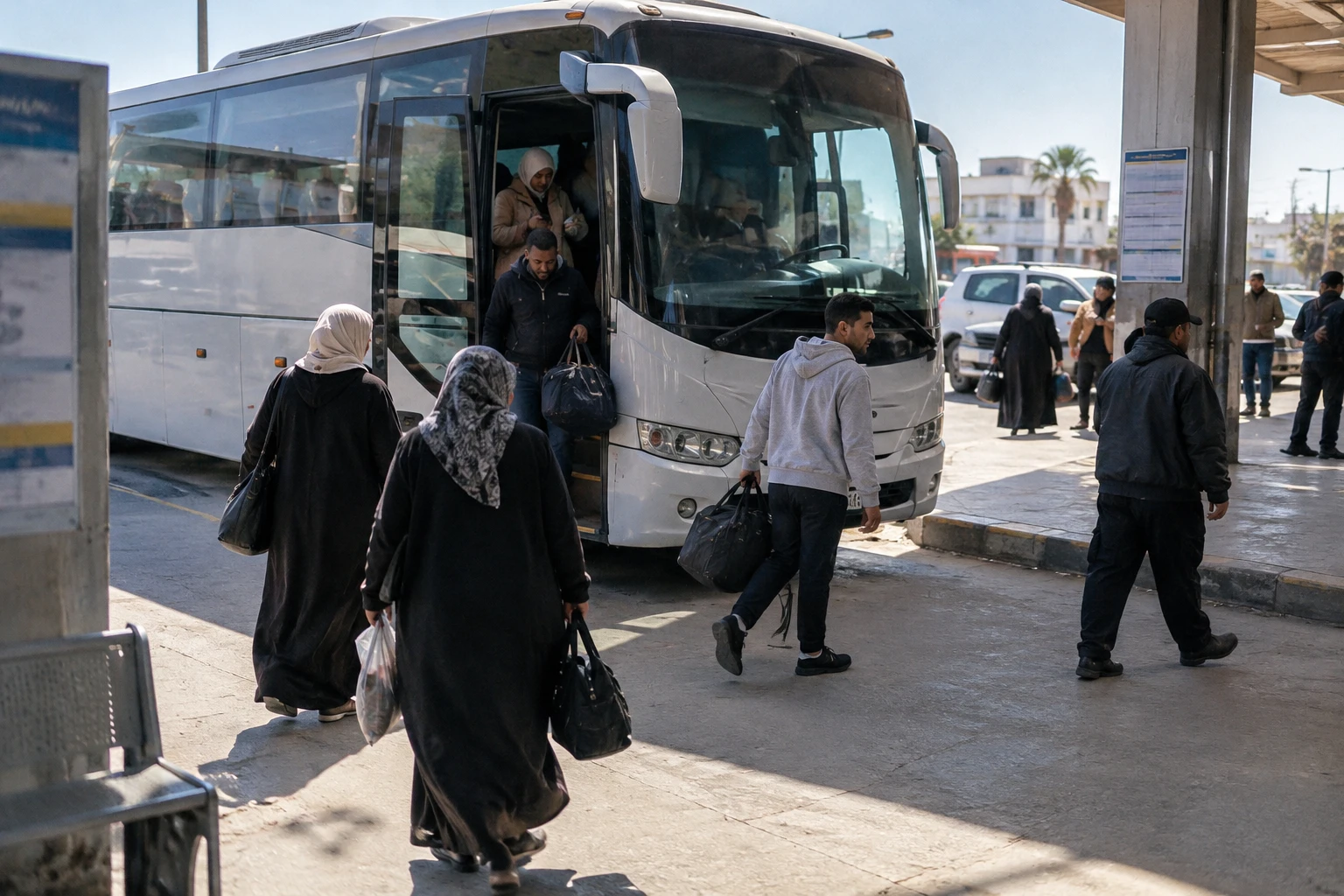
The release of two women abducted in Agadez is a reminder that security crises in the Sahel cross national borders. Their arrival in Benghazi, in eastern Libya, also highlights the diplomatic role that actors based in Libya are seeking to play in the region.
A Sahel case that ends in eastern Libya
Niger and Libya share a long desert border. Armed networks and mediation efforts that cross this area do not stop at national boundaries. Agadez, in northern Niger, is far from Niamey, but is connected to cross-border routes that pass through southern Libya.
Libya, too, remains marked by the political divisions that emerged after the fall of Muammar Gaddafi in 2011. The Government of National Unity led by Abdulhamid Dbeibeh is based in Tripoli, the capital, while Khalifa Haftar and his forces dominate much of the east. Benghazi lies at the heart of this sphere of influence.
This fragmentation gives the eastern authorities their own means of action, particularly in border regions. It nonetheless complicates Libya’s representation abroad: an operation claimed by a local actor does not necessarily mean it was the result of a decision shared by the state as a whole.
Two separate abductions, then a confirmed release
Eva Gretzmacher, a 76-year-old Austrian national, was abducted in Agadez in January 2025. Claudia Abbt, a 69-year-old Swiss national, was abducted in the same city in April. Both had lived in Niger for several years.
On 21 October 2026, they arrived in Benghazi after their release. The following day, the Austrian authorities confirmed that Eva Gretzmacher was free and in the care of a crisis response team. Switzerland also confirmed the release of its national. Both governments described a complex diplomatic effort, without detailing all its stages.
In a video broadcast by a television channel based in eastern Libya, the two women thanked Khalifa Haftar and his son Saddam. The channel said the field marshal’s son had intervened at the request of the families. This account is attributed to the outlet and to the recorded statements: the precise arrangements for the operation have not been made public by the Austrian or Swiss authorities.
Initial reports sometimes reversed the two women’s nationalities. Official confirmations and corroborated reports correctly identify Eva Gretzmacher as Austrian and Claudia Abbt as Swiss.
A source of influence for actors in Benghazi
The release is first and foremost a relief for the two women and their loved ones. For consular authorities, the immediate priority is their return and care after a long captivity. Medical details and the conditions of their detention have not been publicly established.
For the eastern Libyan camp, the case brings visibility beyond the country’s borders. Several media outlets have linked Saddam Haftar to recent efforts concerning people held in the Sahel. But the recurrence of such operations is not, in itself, enough to establish who organised them, which intermediaries took part or what terms were negotiated.
This calls for caution. The thanks expressed by those released may reflect their experience and gratitude, but they do not replace an independent account of the operation. Likewise, no corroborated public information makes it possible here to identify the kidnappers or establish the exact conditions of the captivity.
The episode nonetheless reveals a regional balance of power: actors in eastern Libya are seeking to present themselves as interlocutors capable of negotiating in the Sahel. Such a role could bring them international recognition while Libya remains politically divided. It could also serve their ambitions to extend their influence in border areas.
Porous borders and co-operation to watch
In Niger, the abductions took place amid a tense security situation, worsened since the military coup of July 2023. The country faces armed groups in several areas. Available information has sometimes attributed the detention of the two women to Islamic State in the Sahel, but this responsibility has not been independently confirmed by the authorities that announced their release.
Regional co-operation is itself being reshaped. Niger, Mali and Burkina Faso have left ECOWAS, the West African economic and political organisation, and formed the Alliance of Sahel States. Libya, meanwhile, belongs to the Arab Maghreb Union, whose mechanisms do not directly address security issues between Benghazi and northern Niger. These separate frameworks make bilateral arrangements and informal networks particularly important.
For residents of border areas, the consequences extend beyond cases involving foreign nationals. Insecurity can restrict travel, disrupt trade and make access to public services more difficult. Mediation between armed actors can resolve a specific situation, but it cannot replace institutions capable of protecting the population or lasting co-operation between states.
What happens next will depend in particular on what the Swiss and Austrian governments make public about the transfer and return of the two women. At the regional level, it will also be important to watch whether actors in Benghazi consolidate their role in other Sahelian mediation efforts. For now, the release is confirmed; the precise mechanics of the operation remain largely confidential.