Algeria
 Egypt
 Libya
 Morocco
 Sudan
 Tunisia
 Benin
 Burkina Faso
 Cabo Verde
 Côte d'Ivoire
 Ghana
 Guinea
 Guinea-Bissau
 Liberia
 Mali
 Mauritania
 Nigeria
 Senegal
 Sierra Leone
 The Gambia
 Togo
 Cameroon
 Central African Republic
 Chad
 DR Congo
 Equatorial Guinea
 Gabon
 Republic of the Congo
 São Tomé and Príncipe
 Burundi
 Comoros
 Djibouti
 Eritrea
 Ethiopia
 Kenya
 Madagascar
 Malawi
 Mauritius
 Mozambique
 Rwanda
 Seychelles
 Somalia
 South Sudan
 Tanzania
 Uganda
 Angola
 Botswana
 Eswatini
 Lesotho
 Namibia
 South Africa
 Zambia
 Zimbabwe
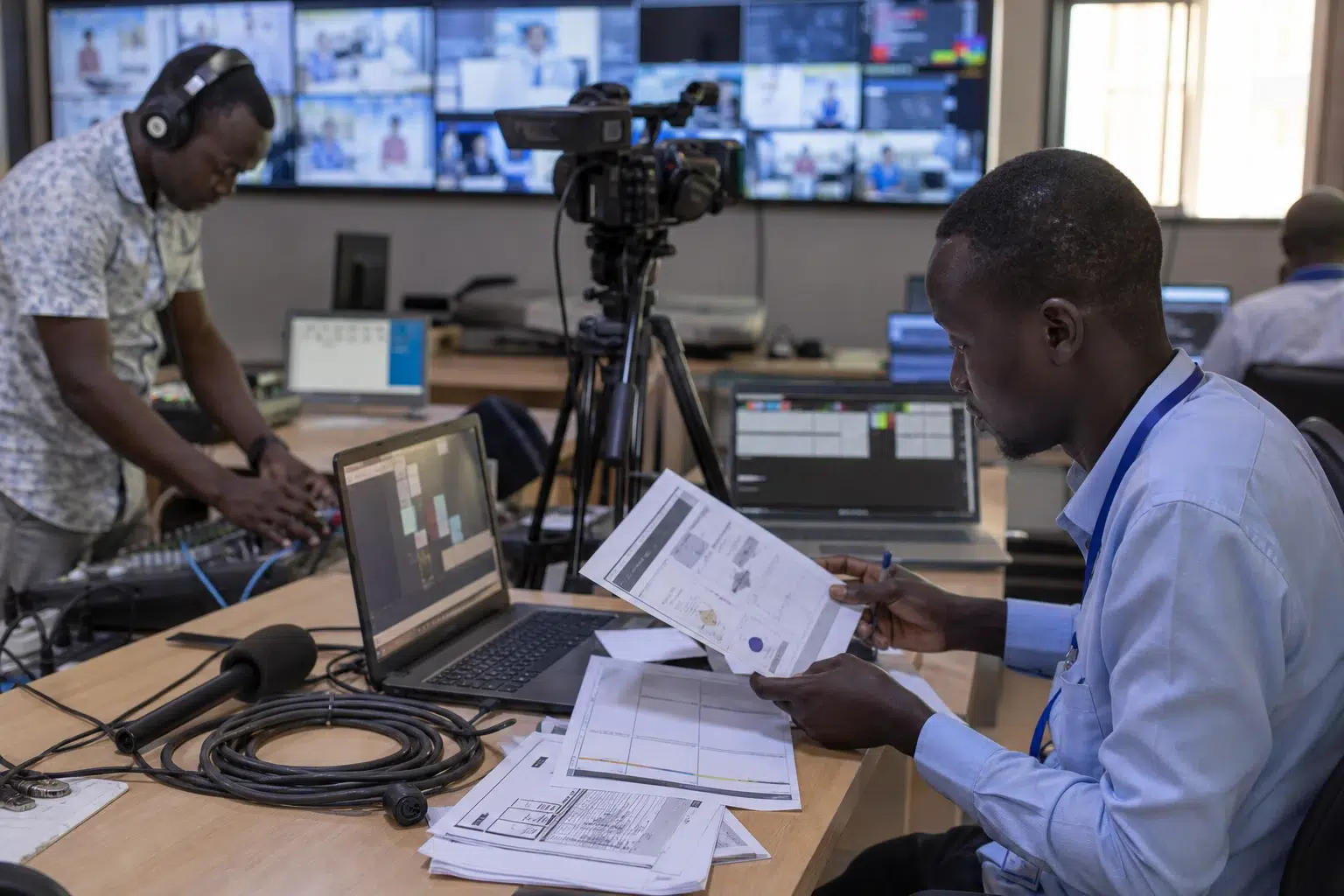
In Niamey, uranium is no longer just a mining issue. It is a test of sovereignty.
Niger is now moving along two tracks at once. On one hand, it is seeking capital to restart a strategic mining project. On the other, it is strengthening security partnerships with Moscow. This dual approach says much about the method chosen by Niamey: diversifying its support without allowing itself to be confined to a single camp.
This choice takes on particular significance in a country where uranium remains as much a political asset as an economic one. Niger, whose capital is Niamey, has spent decades building part of its place in the world around this resource. But since the July 2023 coup, the junta has taken a harder line with Paris, reorganised the sector and sent increasingly frequent signals of openness to other partners. The regional context also matters: the country has left ECOWAS alongside Mali and Burkina Faso, while the Alliance of Sahel States has emerged as a new political horizon for the three juntas.
The Dasa project is moving forward, but nothing is set in stone yet
On 16 September 2026, the board of directors of the DFC, the US development finance agency, approved debt of up to $414.2 million for the Dasa project in Niger. Global Atomic later specified that the package would comprise a maximum principal loan of $397.4 million and $16.8 million to cover potential cost overruns. The Canadian company still expects commercial production to begin in the second half of 2028.
The project remains conditional, however. The DFC still requires several steps before any funds can be disbursed: an extension of the mining agreement and permit, a direct agreement with the Nigerien state, and evidence of a credible export route for uranium concentrate, often called yellowcake. In other words, Washington is financing the start of production, not guaranteeing a purchase of the ore.
Global Atomic says Dasa is one of the continent’s most promising uranium deposits. In its recent documentation, the company says it owns 80% of the project company SOMIDA, with the Nigerien state holding 20%, and is targeting total production of 68.1 million pounds of U3O8 over 23 years. The DFC’s website also confirms this ownership structure.
The project also carries significant financial weight. As of 30 June 2026, Global Atomic said it had already committed $228.1 million of Dasa’s total budget of $556 million, before adjustments related to financing. The cost of the work, construction expenses and disbursement schedule therefore remain central. For Niamey, the issue is not just announcing a mine; it still has to be built, financed and exported under favourable conditions.
For Niger, the issue is less Washington versus Moscow than the sum of its dependencies
The simplest reading would be to see this US financing as Washington’s return to favour in the Sahel. That would be incomplete. The United States is not buying a political alliance here; it is securing a critical minerals project. The EIA says that in 2025 Canada supplied 32% of the uranium delivered to US nuclear power plant operators, ahead of Kazakhstan at 28% and Australia at 15%. The United States therefore remains heavily dependent on imports, and uranium is now among the strategic minerals closely monitored by Washington.
At the same time, Niamey has strengthened its military cooperation with Russia. In April 2024, Russian instructors arrived in Niger with military equipment, according to Nigerien state television, as cited by Reuters. Open sources and press reports subsequently referred to the deployment of anti-aircraft systems and a sustained presence by the Africa Corps, the structure linked to Russia’s defence ministry. Here, too, the message is clear: Niger wants partners, but in separate spheres.
This juxtaposition is not simply a diplomatic contrast. It reflects a strategy for political and economic survival. In mining, the authorities are seeking to replace a French dependency that has become contentious with a broader pool of investors. In security, they are relying on an ally that has different institutional requirements from Western partners. For Niger’s population, the expected benefits are tangible: jobs, local economic activity, public revenue and security. But those promises will count for nothing unless projects actually move forward and logistics corridors remain open.
The precedent of Somaïr sheds light on this point. In June 2025, Nigerien authorities announced the nationalisation of the uranium joint venture previously operated by France’s Orano. Orano held a 63% stake, according to Reuters and Agence France-Presse reports carried by several international and African media outlets. The same state had already withdrawn the permit for the Imouraren project. The message to former partners was that the country would exercise stricter national control over its subsoil.
The real battle is also being fought over export routes
At Dasa, the obstacle is not just financial. It is logistical. Historically, Nigerien uranium travelled along the Benin corridor to the port of Cotonou. But tensions between Niamey and Porto-Novo have put that route at risk. Global Atomic is therefore exploring alternative routes, particularly northwards towards Algeria, whose relations with Niger have drawn considerably closer. The transport of the ore will say as much about the balance of power in the sub-region as the mine itself.
This matters beyond Niger. If Dasa does enter production, the project could strengthen the country’s position on the African strategic minerals map, at a time when several powers are seeking to reduce their energy and industrial dependencies. But Niger’s example also shows that a deposit alone is not enough. A minimum level of stability, transport agreements, clear rules for sharing proceeds and the ability to balance partners without losing control of what matters are all necessary.
Ultimately, Niger is not switching from one protector to another. It is trying to monetise its resource, spread its dependencies and retain control of the pace of events. It is a fragile but coherent course for the current period: neither total alignment nor isolation. In Niamey, uranium is now a means of negotiating with several powers at once, in a Sahel where sovereignty is measured as much by contracts as by uniforms.