Algeria
 Egypt
 Libya
 Morocco
 Sudan
 Tunisia
 Benin
 Burkina Faso
 Cabo Verde
 Côte d'Ivoire
 Ghana
 Guinea
 Guinea-Bissau
 Liberia
 Mali
 Mauritania
 Nigeria
 Senegal
 Sierra Leone
 The Gambia
 Togo
 Cameroon
 Central African Republic
 Chad
 DR Congo
 Equatorial Guinea
 Gabon
 Republic of the Congo
 São Tomé and Príncipe
 Burundi
 Comoros
 Djibouti
 Eritrea
 Ethiopia
 Kenya
 Madagascar
 Malawi
 Mauritius
 Mozambique
 Rwanda
 Seychelles
 Somalia
 South Sudan
 Tanzania
 Uganda
 Angola
 Botswana
 Eswatini
 Lesotho
 Namibia
 South Africa
 Zambia
 Zimbabwe
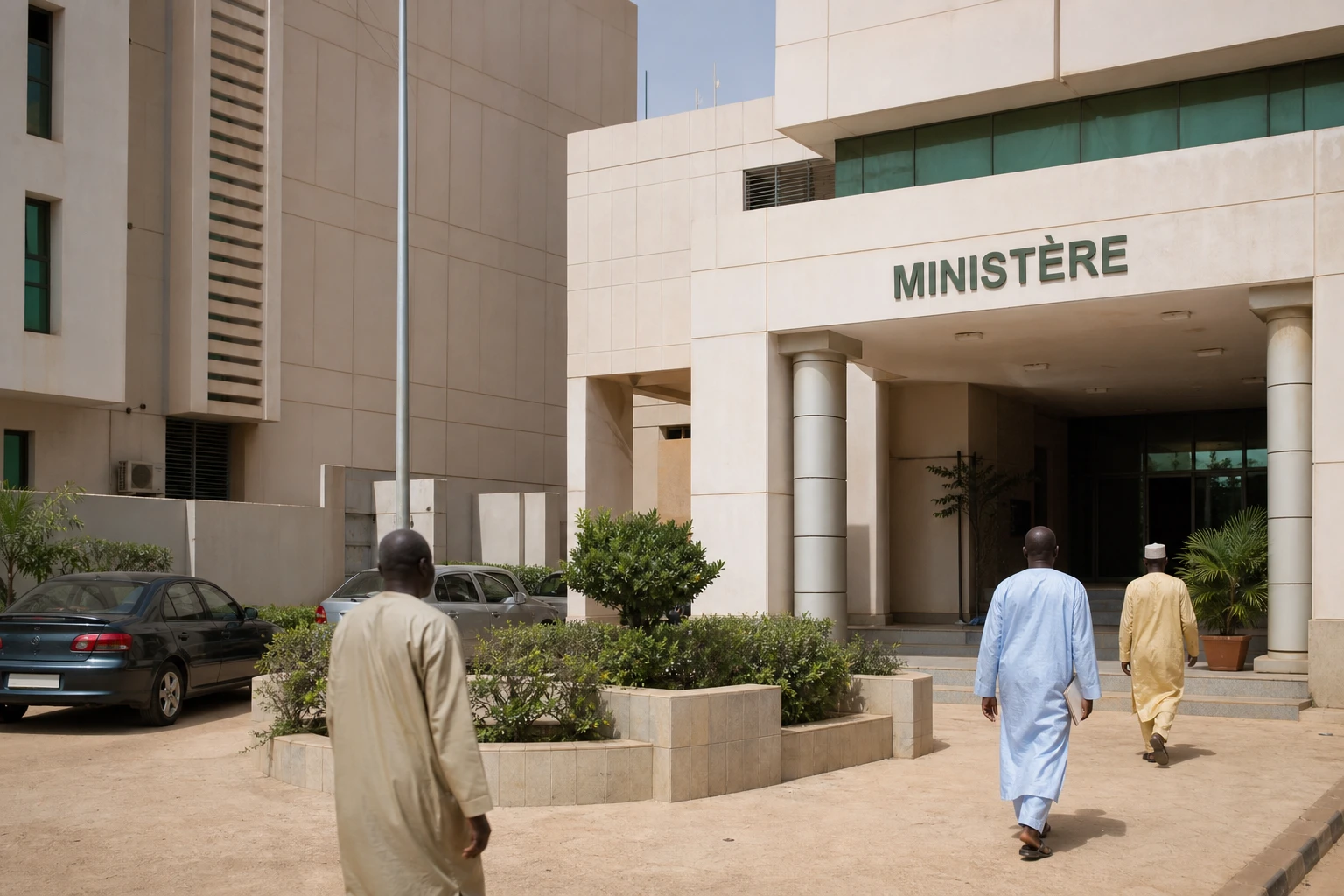
In Niamey, internal security remains a test of resilience
In Niger’s capital, a military base tells more than a story of barracks life. It also reflects the state of power, the army’s cohesion and Niamey’s ability to keep control of its sensitive routes. After gunfire and explosions around Base 101 from 28 to 29 August, the challenge was not merely to retake a site. It was also to show that the chain of command remained intact.
Since the coup of 26 July 2023, Niger has been in a political period dominated by the junta of the National Council for the Safeguard of the Homeland, while the country remains under heavy security pressure in the Sahel and within the Alliance of Sahel States (AES), which brings together Niger, Mali and Burkina Faso. In this context, the slightest crack in the military apparatus immediately weighs on domestic stability, as well as on the regional perception of the regime in Niamey.
What the authorities say they recovered at Base 101
On 3 September, the Nigerien Press Agency reported the recovery of weapons and military equipment following the mutiny at Base 101, in the area of Niamey’s Diori Hamani International Airport. The figures released included 34 Toyota pick-up trucks fitted with mounted weapons, two light armoured vehicles (VBL), one of them destroyed, several dozen motorbikes, 382 AK-47 rifles, 36 RPG-7 rocket launchers, 30 PKM machine guns, six 12.7mm weapons, four 14.5mm weapons, four Dragunov rifles, an 82mm mortar and 17 automatic pistols. There were also ammunition boxes, magazines and communications equipment.
The figures give a sense of the arsenal the authorities say they seized. Above all, they show how a disciplinary incident became a matter of national security. In the official account, this was not a mere fit of anger, but an action by members of the Special Reconnaissance Battalion of the Special Operations Command, a unit created and equipped after 26 July 2023 to fight terrorism and monitor trafficking.
On 29 August, the Nigerien Press Agency had already reported that the situation was gradually returning to normal after the failed mutiny. The Ministry of Defence said a group of dissident soldiers had tried to attack fellow servicemen at Base 101 and several strategic sites in the capital, before the Defence and Security Forces intervened swiftly.
What the episode reveals about Niger’s security apparatus
The immediate aftermath was tightly managed. The army called on the servicemen involved who were still away from their unit to report individually to the Niamey Gendarmerie School or regional brigades, bringing any weapons, ammunition and equipment in their possession. The Ministry of the Interior, for its part, banned civilians in Niamey from wearing full military uniforms or insignia without government authorisation. The measures convey a simple message: after the crisis, the state is seeking to close every grey area between civilian and military life.
The response also highlights another issue. Since 2023, Niger has devoted much of its effort to securing its territory and borders. But when a unit meant to protect the capital becomes a centre of dissent, some state resources shift from fighting armed groups to internal surveillance. International news reports have noted that Base 101 is in the same complex as Diori Hamani Airport, giving it immediate strategic importance for Niamey.
The statement reported by state media also presents the restoration of control as a political signal. Its message to soldiers emphasises loyalty to the nation and the «refoundation» under way in Niger. Domestically, this is intended to reassure Niamey residents, as shops and traffic resumed after the gunfire. Militarily, it aims to prevent the unrest spreading to other garrisons across the country.
A Nigerien affair, but with clear regional significance
The Base 101 crisis goes beyond Niamey. It is a reminder that Sahelian states face a double constraint: securing their borders and maintaining discipline in armies under constant pressure. In Niger, this dilemma has become more visible since the break with ECOWAS, the Economic Community of West African States, and the country’s pivot towards the AES. In this new political geography, every domestic episode becomes a test of credibility for the Sahelian framework as a whole.
The precedent matters too. The change of power in 2023 had already shown that in Niamey, the outcome of a military episode can shift very quickly. This time, the authorities chose to declare a return to order promptly, then publish details of the recovered arsenal. The method is clear: demonstrate that the threat has been contained without allowing doubts to take hold about control of the seat of power.
For the African Union and Niger’s Sahelian neighbours, the episode is also a reminder of an obvious fact: Niamey’s stability remains a balancing point for the entire Sahel. Niger lies at the crossroads of armed movements, trafficking networks and counter-terrorism responses. When the capital falters, even briefly, the symbolism extends far beyond its borders. The next steps will therefore be closely watched: a full return to calm, the handling of the soldiers being sought and how the military leadership will bring the crisis to a close without further weakening the military institution.