Algeria
 Egypt
 Libya
 Morocco
 Sudan
 Tunisia
 Benin
 Burkina Faso
 Cabo Verde
 Côte d'Ivoire
 Ghana
 Guinea
 Guinea-Bissau
 Liberia
 Mali
 Mauritania
 Niger
 Nigeria
 Senegal
 Sierra Leone
 The Gambia
 Togo
 Cameroon
 Central African Republic
 Chad
 DR Congo
 Equatorial Guinea
 Gabon
 Republic of the Congo
 São Tomé and Príncipe
 Burundi
 Comoros
 Djibouti
 Eritrea
 Ethiopia
 Kenya
 Madagascar
 Malawi
 Mauritius
 Rwanda
 Seychelles
 Somalia
 South Sudan
 Tanzania
 Uganda
 Angola
 Botswana
 Eswatini
 Lesotho
 Namibia
 South Africa
 Zambia
 Zimbabwe
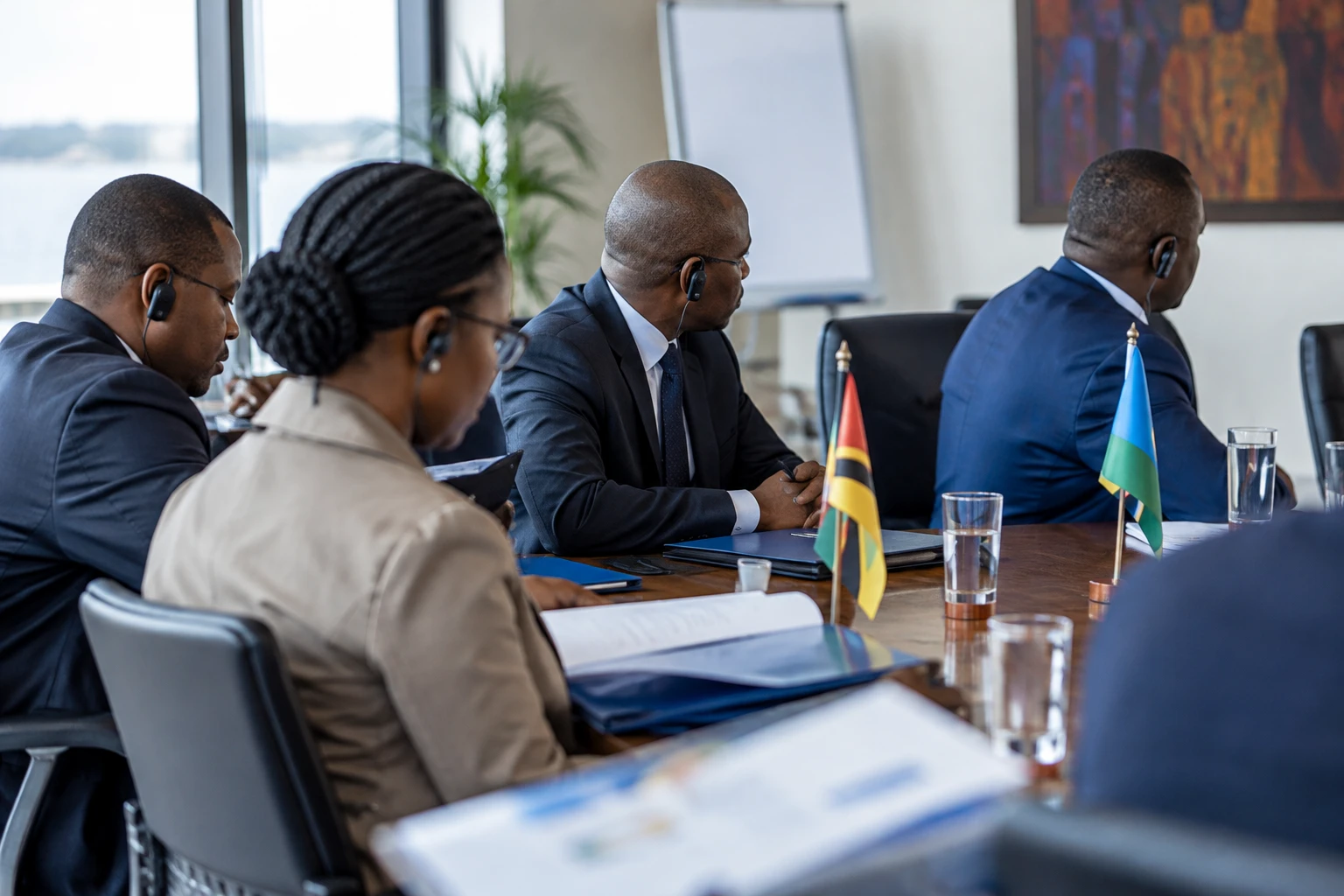
At Temane, in southern Mozambique, gas could fuel a new 75-megawatt power plant. But generating more electricity is not enough to connect households: for Mozambicans, the issue also hinges on the lines that carry power and on households’ ability to access it.
A project at the heart of the energy transition
Mozambique has significant gas resources, particularly in the Rovuma Basin in the north. Yet access to electricity remains unequal. Available figures vary by year and calculation method: the World Bank estimates that around 60% of the population was connected in 2024. Extending the grid, particularly in rural areas, therefore remains essential.
Against this backdrop, Eni is seeking companies to design and build a 75 MW gas-fired thermal power plant at Temane, in Inhassoro district, Inhambane province. Bids for the engineering, procurement and construction contract must be submitted by 31 October 2026 at the latest, according to a notice reported by Portuguese news agency Lusa and Mozambican media.
The project is valued at $130 million. President Daniel Chapo announced it in October 2025, at the time of the final investment decision on Coral Norte, Eni’s liquefied natural gas project off Cabo Delgado. The decision, taken in Maputo on 2 October 2025, covers an announced investment of $7.2 billion. Coral Norte aims for liquefaction capacity of about 3.6 million tonnes a year and is scheduled to start operating in 2028.
Eni has been present in Mozambique since 2006. The company operates Coral Sul, a floating liquefaction unit that began production in 2022, and holds a 50% stake in the Coral Norte consortium. The planned Temane plant is part of a separate project: converting some of the gas into electricity generated in the country, rather than directing it solely towards exports.
A power plant cannot replace a grid
The announced 75 MW could strengthen electricity supply, but on its own it does not guarantee new connections. Electricity must also be transmitted and distributed, and billed at an affordable cost. This is why the national goal of universal access to electricity by 2030 depends as much on grids and off-grid solutions as on new generation units.
Needs vary from place to place. Urban centres and industrial activity are more likely to be close to existing infrastructure. In remote rural areas, connections may require additional investment. Small businesses, health services and schools also need a reliable power supply to operate day to day.
The 75 MW project should also be distinguished from the 450 MW Temane power plant, another gas-fired facility being developed in the country. The latter is described by the National Petroleum Institute as a project intended to supply the domestic market and enable regional exports. The two capacities should therefore not be confused: the new unit sought by Eni is smaller and is the subject of a separate call for bids.
This distinction matters when assessing the expected impact. Additional capacity could help meet demand, but the benefits for households will depend on transmission and distribution infrastructure, the construction timetable and supply arrangements. The public information consulted does not yet specify a commissioning date for the 75 MW plant.
Between domestic supply and regional trade
Mozambique is a member of the Southern African Development Community (SADC) and participates in the Southern African Power Pool, the network that organises electricity exchanges between several countries in the region. Its generation can thus support domestic supply while contributing to cross-border trade. This regional position raises a question of allocation: how can exports, businesses’ needs and wider access for residents be brought into line?
The government’s gas strategy is also unfolding at a time of intense focus on major energy projects. Coral Norte is due to increase liquefied natural gas exports from 2028, while the authorities present energy infrastructure as a lever for national development. The Temane plant offers another use for the resource: generating electricity, although its contribution will remain limited on a countrywide scale.
The challenge is therefore less about choosing between exports and domestic consumption than about specifying the returns from each investment. For the authorities, the task is to link increased generation to measurable new connections. For Eni and other operators, the next steps involve selecting companies and carrying out the project. For residents, the tangible results will be measured by the availability and cost of electricity, including far from major urban centres.
In the short term, the visible deadline is the close of bidding on 31 October 2026. The construction timetable and supply agreements will then make it possible to assess the project’s contribution more clearly. At the regional level, the challenge remains the same: to turn Mozambique’s energy resources into accessible electricity, without reducing sector policy to generation capacity or exports alone.