Algeria
 Egypt
 Libya
 Morocco
 Sudan
 Tunisia
 Benin
 Burkina Faso
 Cabo Verde
 Côte d'Ivoire
 Ghana
 Guinea
 Guinea-Bissau
 Liberia
 Mali
 Mauritania
 Niger
 Nigeria
 Senegal
 Sierra Leone
 The Gambia
 Togo
 Cameroon
 Central African Republic
 Chad
 DR Congo
 Equatorial Guinea
 Gabon
 Republic of the Congo
 São Tomé and Príncipe
 Burundi
 Comoros
 Djibouti
 Eritrea
 Ethiopia
 Kenya
 Madagascar
 Malawi
 Mauritius
 Rwanda
 Seychelles
 Somalia
 South Sudan
 Tanzania
 Uganda
 Angola
 Botswana
 Eswatini
 Lesotho
 Namibia
 South Africa
 Zambia
 Zimbabwe
A country already under pressure as the season falters
In Mozambique, the weather is about more than clouds. It affects harvests, drinking water, rural roads and, ultimately, market prices. When seasonal signals turn red, farming households are the first to bear the impact, followed by districts far from major centres. It is against this backdrop that the country is preparing for an El Niño episode forecast to be particularly strong, with distinct risks in different parts of the country.
Mozambique is a member of the Southern African Development Community, SADC, which published a regional bulletin on 27 August 2026 forecasting below-normal rainfall across much of the region’s south and centre during the 2026/27 season. The organisation cites El Niño as the main driver of this trend. For Maputo, this means preparing both for drought in the south and centre and for possible excess water in the north.
What the climate bulletins say
The World Meteorological Organization confirmed on 3 September 2026 that El Niño is firmly established and expected to strengthen further, with a probability close to 100% that it will persist until February 2027. The warning is not just about an ocean phenomenon. Above all, it signals a shift in rainfall and temperature patterns, with increased risks of drought, floods and extreme heat in several regions of the world.
Mozambique’s national meteorological service had already begun preparing for this period. In its March 2026 climate bulletin, the National Institute of Meteorology reported an increased likelihood of a shift towards El Niño during the southern hemisphere winter of 2026. The same bulletin had already noted rainfall well below average in the south of the country, with visible stress on crops and pasture. In other words, the warning is not theoretical: it is part of a pattern already observed on the ground.
This assessment is in line with that of SADC. Its regional bulletin of 27 August 2026 forecasts below-normal rainfall over Angola, southern Zambia, Zimbabwe, Mozambique, Namibia, Botswana, most of South Africa, Eswatini and Lesotho in October-November-December 2026. The northern SADC region, by contrast, is expected to experience wetter conditions. Mozambique therefore finds itself at the intersection of two risks: drought in the south and centre, and likely flooding in some northern areas.
Very different effects across the provinces
The country is long, narrow and climatically diverse. This geography matters. In the centre and south, forecasts point to a less generous short rainy season, with a high risk of water shortages for maize, food crops and livestock. In the north, excessive rainfall may instead undermine infrastructure, secondary roads and production basins already exposed to flooding. The same overall conditions will therefore not have the same effects in Cabo Delgado, Sofala, Gaza or Nampula.
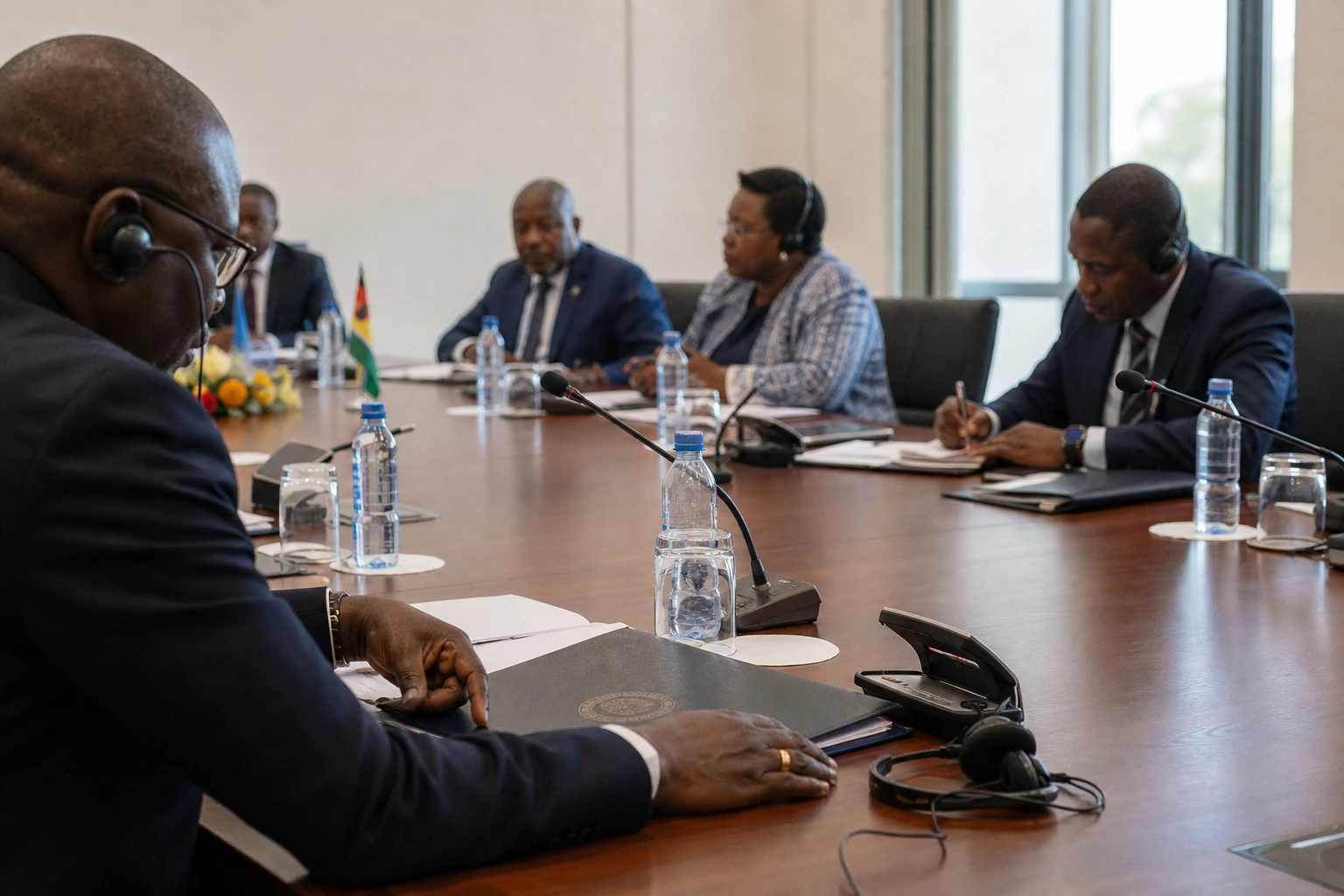
The Ministry of Public Works had already outlined an El Niño mitigation plan in mid-August, while the National Institute for Disaster Management and Risk Reduction convened its technical group on early warnings and anticipatory action against drought in Maputo on 10 July 2026. The meeting brought together representatives of the state, the World Food Programme, OCHA, FAO and Save the Children. The Mozambican government is therefore not waiting until the height of the season to act; it is trying to get ahead of the emergency.
Agriculture remains the main point of vulnerability. It supports a large share of the population and supplies local markets. When rainfall is scarce, rural households first lose their reserves, then their income, and then their ability to buy enough food. When rainfall becomes excessive, losses can affect planting, stocks and evacuation routes. In both cases, the costs quickly spread to secondary cities, where goods arrive later and at higher prices.
A climate crisis compounded by other vulnerabilities
Mozambique is not starting from scratch. The IPC, the reference framework used by humanitarian agencies to measure acute food insecurity, estimated that 3.5 million people were affected between October 2025 and March 2026. In the same report, 1.2 million people in 47 districts were classified in Phase 3 or above, with about 126,000 in the emergency phase. FAO, for its part, continues to report persistent food insecurity, driven by conflict-related displacement, repeated climate shocks and high prices.
This overlap changes everything. In the south and centre, a strong El Niño could increase the vulnerability of households already exposed to drought, rural poverty and pressure on water supplies. In the north, heavy rainfall could complicate humanitarian logistics and population movements where insecurity continues to take its toll. The risk is therefore not just agricultural. It is social, health-related and economic. It affects communities, markets, schools and water supply systems.
Authorities and international partners are now talking about “anticipatory action”. The term is technical, but the idea is simple: provide certain forms of support before a crisis, not after it. This could mean protecting seeds, securing water, supporting vulnerable households or pre-positioning resources in the most exposed districts. For Mozambique, the challenge is not just to respond to damage. It is also to slow its onset.
A Mozambican warning with regional and continental significance
The issue extends far beyond Maputo. SADC has already called on its members to monitor climate updates and strengthen preparedness across sectors. This is an important signal for all of southern Africa, where harvests, hydropower, transport and urban food supplies depend heavily on the rainy season. As El Niño intensifies, the costs spread across the region, from grain markets to humanitarian flows.
Across Africa, the issue is also political. It is a reminder that climate adaptation is shaped first and foremost by states and regional organisations, not only at international conferences. Mozambique, already accustomed to cyclones, droughts and floods, illustrates a reality shared by many countries on the continent: the urgent task is no longer to wait for the next shock, but to make agricultural, water and logistics systems more resilient before it hits. The coming months will show whether the plans announced in Maputo and across SADC are enough to cushion the impact of a season that looks set to be difficult.