Algeria
 Egypt
 Libya
 Morocco
 Sudan
 Tunisia
 Benin
 Burkina Faso
 Cabo Verde
 Côte d'Ivoire
 Ghana
 Guinea
 Guinea-Bissau
 Liberia
 Mali
 Mauritania
 Niger
 Nigeria
 Senegal
 Sierra Leone
 The Gambia
 Togo
 Cameroon
 Central African Republic
 Chad
 DR Congo
 Equatorial Guinea
 Gabon
 Republic of the Congo
 São Tomé and Príncipe
 Burundi
 Comoros
 Djibouti
 Eritrea
 Ethiopia
 Kenya
 Madagascar
 Malawi
 Mauritius
 Rwanda
 Seychelles
 Somalia
 South Sudan
 Tanzania
 Uganda
 Angola
 Botswana
 Eswatini
 Lesotho
 Namibia
 South Africa
 Zambia
 Zimbabwe
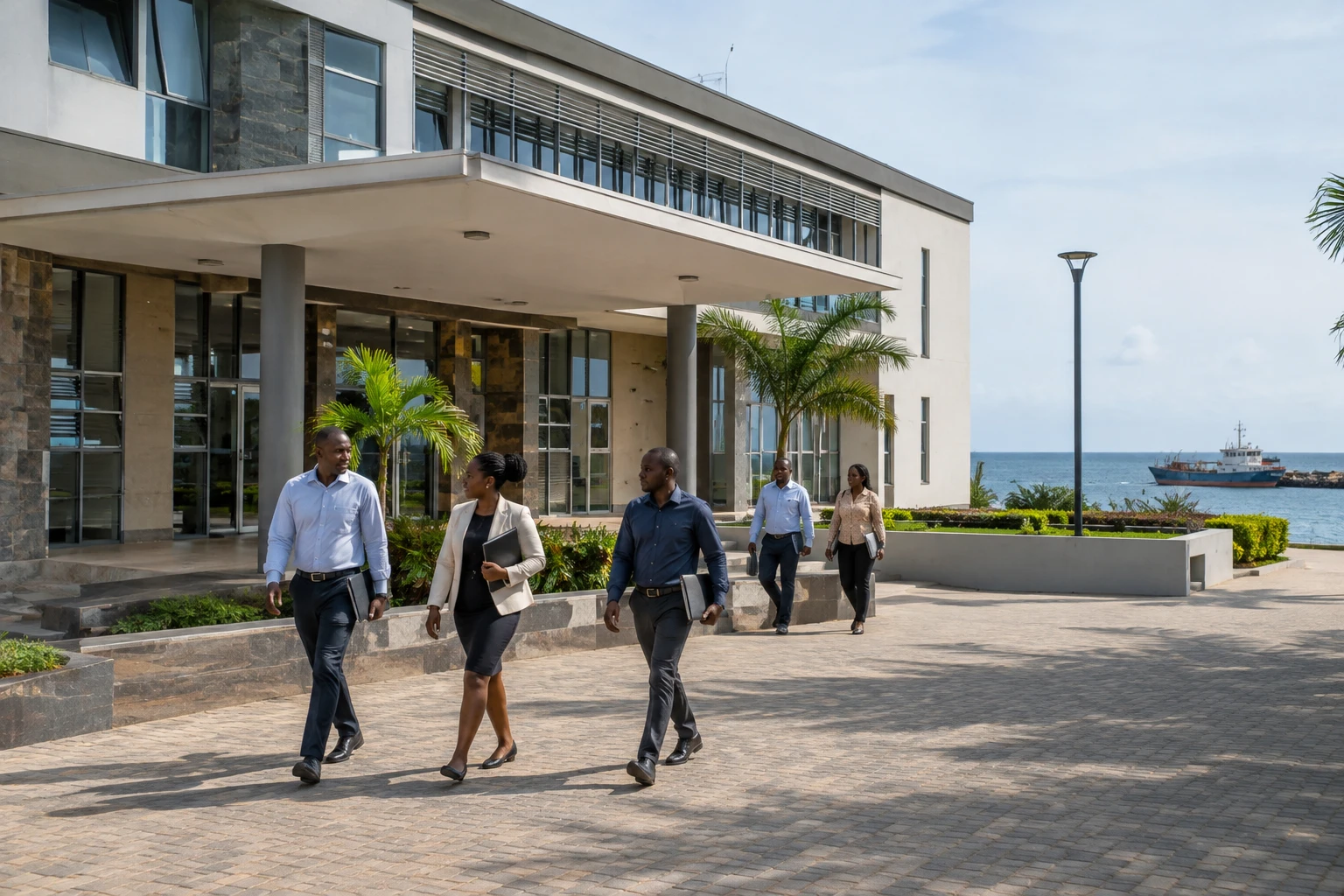
Off Cabo Delgado, the next stage of Coral Norte is unfolding beneath the sea: drilling is due to begin in early November 2026. For Mozambique, the stakes go beyond building a new gas vessel. They also concern the country’s ability to turn exports into lasting benefits for the national economy and the communities affected.
From the Rovuma Basin to a new drilling campaign
Coral Norte is located in the Rovuma Basin, off Cabo Delgado province in northern Mozambique. The project is set to develop the northern part of the Coral field using a floating liquefied natural gas unit, or FLNG: a vessel that processes and cools gas at sea to convert it into liquefied natural gas (LNG), which can be transported by ship.
This new stage is part of a sector in which several gas projects are operating side by side, with different schedules and operators. Coral Sul, also operated offshore by Eni, has been producing since 2022. Other projects have faced delays, notably because of the security situation in Cabo Delgado. Mozambique is a member of the Southern African Development Community (SADC), which is also seeking to develop regional energy trade.
On 15 October 2026, at African Energy Week in Cape Town, Francesco Gasparri, managing director of Eni Rovuma Basin, announced that drilling at Coral Norte was due to start in early November. The announcement was reported by several specialist media outlets, but the planned number of wells was not specified. The timetable therefore remains a target announced by the operator, rather than confirmation that operations have already begun.
A unit with capacity of 3.6 million tonnes a year
The final investment decision was taken on 2 October 2025 in Maputo by Eni and its partners. The project envisages liquefaction capacity of 3.6 million tonnes of LNG a year and is targeting first production in 2028. The African Development Bank approved a $150 million loan in January 2026. In September, the Mozambican government authorised a financing structure that could raise up to $7.2 billion.
The consortium is 50% owned by Eni, 20% by China National Petroleum Corporation, and 10% each by Korea Gas Corporation, Empresa Nacional de Hidrocarbonetos (ENH), the Mozambican state-owned company, and XRG, a subsidiary of Abu Dhabi National Oil Company. The hull of the floating unit was launched in South Korea in January 2026, according to Eni.
Coral Norte is intended to complement Coral Sul, whose announced capacity is 3.4 million tonnes a year. Mozambique’s National Petroleum Institute says Coral Sul had exported its production in 172 cargoes as of 17 September 2026. These cargoes attest to the project’s export activity, but do not on their own indicate how much revenue goes to the national budget or what its economic impact is in the provinces.
National benefits remain a central concern
With both units, the Coral field’s combined capacity would approach 7 million tonnes a year. Eni estimates that this expansion could make Mozambique one of Africa’s leading LNG exporters. This prospect nevertheless depends on the timetable being met and the facilities operating as planned. Planned capacity is not yet actual production.
For the state, the project also entails financing ENH’s participation and managing the commitments associated with costly infrastructure. Public revenues will depend, among other things, on contracts, volumes sold, prices and the pace of production. For Mozambican companies, the challenge is gaining access to subcontracting markets, skills and project jobs. Benefits are therefore neither automatic nor evenly distributed between Maputo, the main economic centres and the communities of Cabo Delgado.
Some of the gas could also contribute to the domestic market. The National Petroleum Institute says the development plan provides for domestic volumes to become available progressively, with an initial allocation announced for the start of production. Effective implementation, the necessary infrastructure and the terms of access to this energy will be crucial if export growth is also to support local activity.
A test for the regional energy strategy
At SADC level, increased Mozambican production could strengthen southern Africa’s energy influence and create opportunities for regional supply. But LNG destined for export and transported by ship does not in itself guarantee wider access to gas in neighbouring countries. Networks, trade agreements and decisions on how to allocate supplies between exports and domestic use will matter just as much.
The next immediate milestone is the announced start of drilling, followed by the construction and installation stages needed to meet the 2028 target. For Mozambique, Coral Norte’s performance will therefore be judged on two levels: its ability to begin production as planned, and the share of value, energy and expertise that remains in the country. Progress on the project alone will not answer that second question.
Details of the project and its capacity are set out in information published by Eni on Coral Norte’s investment decision and by the National Petroleum Institute of Mozambique. The African Development Bank’s financing is detailed by the AfDB. The drilling announcement was reported by African Energy Week and Or Noir Africa.