Algeria
 Egypt
 Libya
 Morocco
 Sudan
 Tunisia
 Benin
 Burkina Faso
 Cabo Verde
 Côte d'Ivoire
 Ghana
 Guinea
 Guinea-Bissau
 Liberia
 Mali
 Mauritania
 Niger
 Nigeria
 Senegal
 Sierra Leone
 The Gambia
 Togo
 Cameroon
 Central African Republic
 Chad
 DR Congo
 Equatorial Guinea
 Gabon
 Republic of the Congo
 São Tomé and Príncipe
 Burundi
 Comoros
 Djibouti
 Eritrea
 Ethiopia
 Kenya
 Madagascar
 Malawi
 Mauritius
 Rwanda
 Seychelles
 Somalia
 South Sudan
 Tanzania
 Uganda
 Angola
 Botswana
 Eswatini
 Lesotho
 Namibia
 South Africa
 Zambia
 Zimbabwe
In Cabo Delgado, a war of attrition drags on
In northern Mozambique, the question is no longer simply who controls a town or a road. It is broader: how to protect civilians, revive the local economy and prevent a security crisis from becoming entrenched in a province already under pressure. In Cabo Delgado, armed violence remains mobile enough to destabilise villages, markets and population movements, even when the front appears contained.
This matters to Maputo, but also to the Southern African region. Mozambique belongs to SADC, the Southern African Development Community, which launched a regional military response in 2021. Since then, the issue has become a test of security cooperation, humanitarian coordination and the protection of investment in the northern gas basin.
UN visit confirms the stalemate
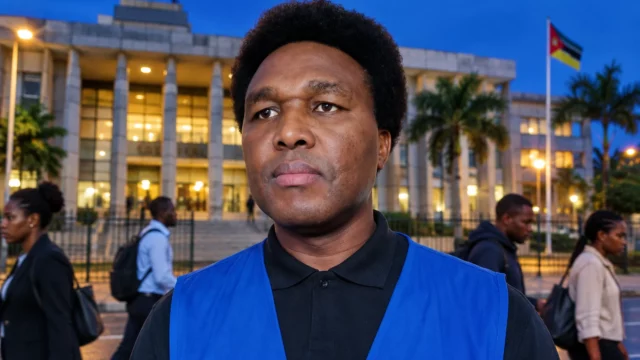
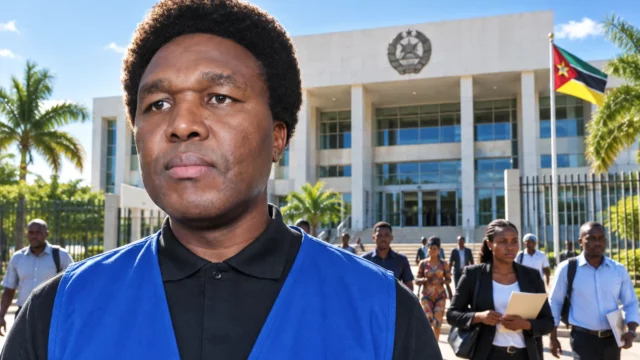
From 4 to 14 August 2026, Ben Saul, the United Nations Special Rapporteur on the promotion and protection of human rights while countering terrorism, visited Mozambique to examine the country’s counter-terrorism laws, policies and practices. His starting point is clear: a decisive military victory over the jihadist insurgency in Cabo Delgado does not appear to be within immediate reach.
The conflict pits the Mozambican army and its supporters against an insurgency linked to Islamic State, which has been present in the province since 2017. The rapporteur notes that attacks on civilians have intensified over the past year. He also stresses that he is speaking as an independent expert mandated by the Human Rights Council, not on behalf of the UN as a whole.
The figures cited in the report show the scale of the human cost. Drawing on ACLED, it records 6 632 deaths between 2017 and mid-2026, including 2 772 civilians. Other UN sources confirm that mass displacement persists: UNHCR reports more than 500 000 internally displaced people since the crisis began, while several agencies estimate that at least 1.5 million people have been displaced or severely affected by the violence and its indirect effects.
Why a military approach alone is not enough
The heart of the problem lies in the nature of the response itself. According to Ben Saul, the current posture looks more like an «offensive defence» than the complete neutralisation of the armed group. In other words, security forces secure, repel and contain, but do not ensure the lasting closure of the space left to insurgents. In this kind of conflict, a visible decline in fighting does not mean the threat has disappeared; it may also signal the reconstitution of armed networks.
For residents, the effects are measured first in lost land, abandoned harvests, separated families and disrupted public services. Humanitarian needs remain high in the north of the country. The FAO reports persistent food insecurity, worsened by displacement, climate shocks and rising prices. UNICEF, meanwhile, estimates that more than one million people have been affected by the conflict in the north, while needs also extend to nutrition and child protection.
The issue also has a major economic dimension. Cabo Delgado is home to gas reserves that have attracted major companies such as TotalEnergies, Eni and ExxonMobil. TotalEnergies’ liquefied natural gas project, frozen after the insurgency escalated in 2021, has recently resumed at the Afungi site, a sign that local security has once again become central to investment and recovery plans. But this restart resolves neither the land issue nor the future distribution of revenues, nor the question of trust among displaced communities.
External support has also evolved. Rwanda has maintained a deployment in the province since 2021, at the request of the Mozambican authorities. The European Union has supported this engagement through the European Peace Facility, while SADC deployed its SAMIM mission in July 2021 before bringing its mandate to a close in 2024. This framework illustrates a key point: the crisis is no longer purely national; it has become a regional security issue involving intertwined bilateral, multilateral and European support.
A Mozambican crisis, but also a signal to the region
The case of Mozambique says something broader about Southern Africa. A local insurgency can turn into a regional crisis when state capacity is stretched, displaced populations move between districts and energy interests attract external support. It is also a reminder that purely military responses can reduce the intensity of attacks without addressing their root causes, which combine marginalisation, security, local governance and access to resources.
Mozambique therefore faces a twofold immediate challenge. On the one hand, it must prevent Cabo Delgado from again becoming a staging ground for armed groups. On the other, it must rebuild a credible public presence in affected districts, with services, safe roads, functioning administration and mechanisms to protect civilians. Without that, every military gain risks being temporary.
At continental level, the case also affects how the African Union and regional organisations approach counter-terrorism. Mozambique shows that a lasting way out of crisis depends not only on the military situation, but on the ability to link security, justice, humanitarian assistance and economic recovery. It is this combination, rather than force alone, that the coming months will test in Cabo Delgado.