Algeria
 Egypt
 Libya
 Sudan
 Tunisia
 Benin
 Burkina Faso
 Cabo Verde
 Côte d'Ivoire
 Ghana
 Guinea
 Guinea-Bissau
 Liberia
 Mali
 Mauritania
 Niger
 Nigeria
 Senegal
 Sierra Leone
 The Gambia
 Togo
 Cameroon
 Central African Republic
 Chad
 DR Congo
 Equatorial Guinea
 Gabon
 Republic of the Congo
 São Tomé and Príncipe
 Burundi
 Comoros
 Djibouti
 Eritrea
 Ethiopia
 Kenya
 Madagascar
 Malawi
 Mauritius
 Mozambique
 Rwanda
 Seychelles
 Somalia
 South Sudan
 Tanzania
 Uganda
 Angola
 Botswana
 Eswatini
 Lesotho
 Namibia
 South Africa
 Zambia
 Zimbabwe
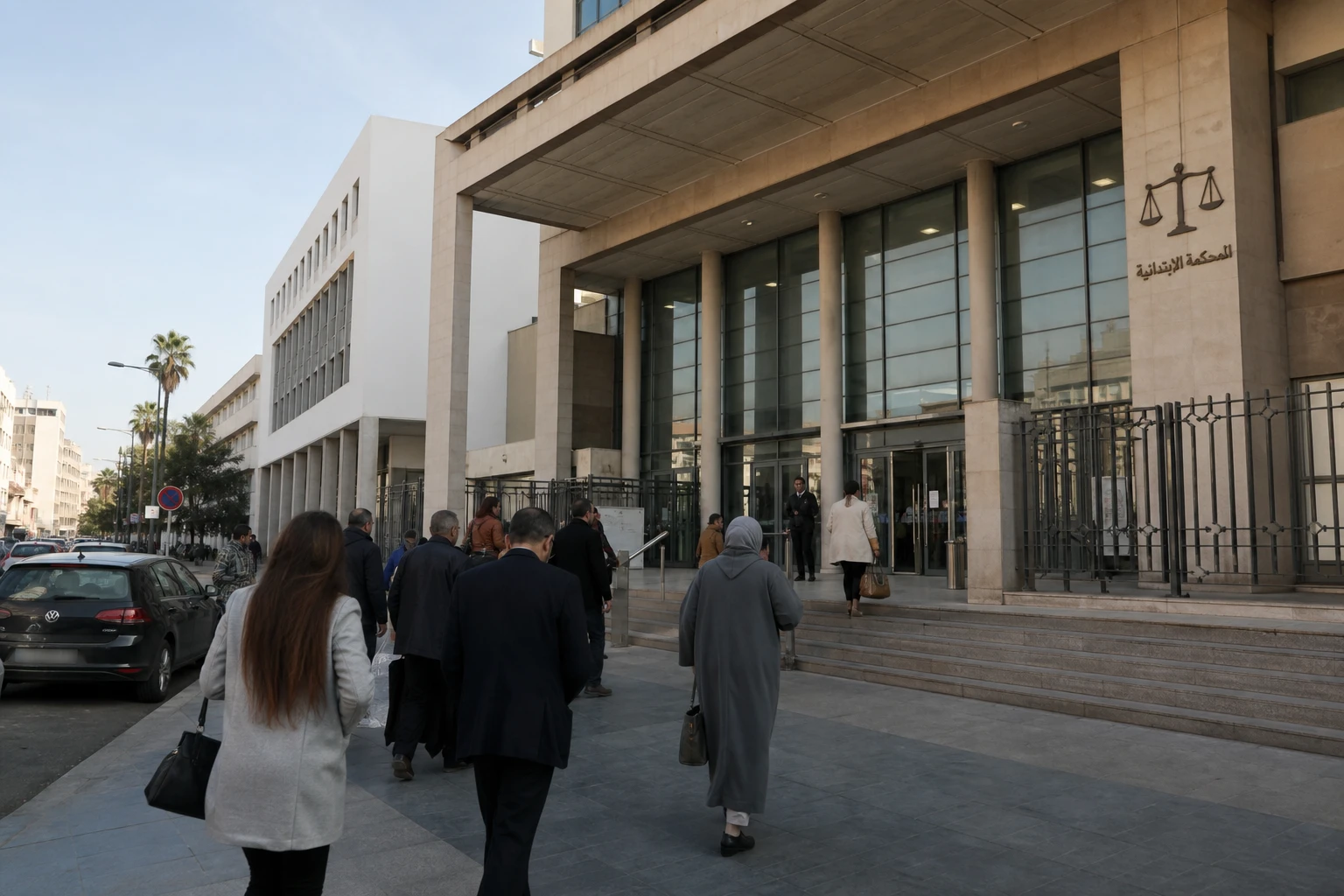
A criminal case in Casablanca that goes beyond one artist
In the courtroom, a case involving drawings quickly becomes a test for the Moroccan justice system. At the centre of the case is a 22-year-old young creator, known on social media for his graffiti and caricatures, who remains in Oukacha prison in Casablanca while his trial stalls. The question is no longer just about an Instagram account. It also concerns the space left for artistic expression in a country where the monarchy remains an institutional pillar.
The context is a Morocco where the 2011 Constitution guarantees freedom of expression and of the press, while setting out limits provided for by law. The Penal Code, meanwhile, punishes offences against the monarchy and certain symbols or institutions of the state. In other words, the legal debate is not about freedom of expression itself, but about exactly where Moroccan law draws the line between criticism, satire and insult.
What the Casablanca court examined
On 16 September 2026, Yasser Mounbir appeared before the Casablanca Court of First Instance without a lawyer, against the backdrop of a lawyers’ strike that has been continuing for weeks in Morocco. The hearing was adjourned until 21 September after he asked to be represented. At this stage, he remains in pre-trial detention. This chronology is confirmed by several corroborating sources, including a report picked up internationally and the Moroccan press.
According to reports in the case, the prosecution was brought after caricatures depicting King Mohammed VI were published on Instagram. The young artist is being prosecuted for offences described in the case file as “insulting a constitutional institution” and “insulting a public official in the performance of his duties”. Under Moroccan law, Article 267-5 of the Penal Code provides for penalties against anyone who harms the monarchical system, including prison sentences and fines, while Article 267 concerns violence against a public official in the performance of their duties.
The procedural context matters as much as the substance of the case. The legal profession is currently experiencing major industrial action in Morocco, with the Association of Bars of Morocco maintaining a nationwide strike for several months against reform of the profession. This mobilisation has affected the operation of many courts, particularly in Casablanca and other major jurisdictions. In a sensitive case, the absence of an organised defence inevitably affects the balance of the trial, even as the justice system proceeds at its own pace.
An artistic case becomes a political signal
Yasser Mounbir’s case is first and foremost about drawings, but it points more broadly to the status of satire in Morocco. The artist’s support committee describes his arrest as the criminalisation of peaceful artistic expression. This view echoes broader concerns already raised by human rights organisations about the use of criminal prosecutions in cases involving online publications, political opinions or artistic expression.
For the authorities, the line is clear: constitutional institutions, the monarchy and public officials receive specific protection under criminal law. For his supporters, this protection is sometimes applied too broadly, to the point of deterring criticism and irony. The divide is not merely legal. It is also generational and social. A section of urban Moroccan youth now expresses itself through images, short videos, rap, graffiti and social media platforms. The trial of a street artist thus becomes an indicator of how the state intends to manage these new spaces for expression.
Casablanca has a particular role here. An economic city, a judicial city and a centre of cultural expression, it concentrates tensions also found in other African metropolises: the rise of counter-discourse on social media, institutions’ growing sensitivity to symbolic attacks, and increasing pressure on courts to rule on cases where the boundary between public order and creative freedom remains contested. In Morocco, the issue involves both the institutional centre of Rabat and the major city of Casablanca, where power, media, justice and urban countercultures intersect.
Resonance beyond Morocco
Across Africa, the case is a reminder that artistic freedom is not tested only in exhibition halls. It is also tested on phones, in courtrooms and in penal codes. Several countries on the continent face the same debate: how can institutions be protected without turning satire into an almost automatic offence? Morocco, often presented as a space of institutional stability in North Africa, is once again under scrutiny for how it balances the monarchical order, justice and freedom of expression.
The next hearing, set for 21 September 2026, will show whether the case moves towards a hearing on its merits or becomes bogged down in procedural disputes. In the meantime, the Yasser Mounbir case forms part of a broader period in Morocco in which several artists and critical voices have recently faced prosecutions or convictions linked to their public statements. It is this accumulation, rather than the case in isolation, that is fuelling debate about the real space left for criticism in the kingdom.