Algeria
 Egypt
 Libya
 Sudan
 Tunisia
 Benin
 Burkina Faso
 Cabo Verde
 Côte d'Ivoire
 Ghana
 Guinea
 Guinea-Bissau
 Liberia
 Mali
 Mauritania
 Niger
 Nigeria
 Senegal
 Sierra Leone
 The Gambia
 Togo
 Cameroon
 Central African Republic
 Chad
 DR Congo
 Equatorial Guinea
 Gabon
 Republic of the Congo
 São Tomé and Príncipe
 Burundi
 Comoros
 Djibouti
 Eritrea
 Ethiopia
 Kenya
 Madagascar
 Malawi
 Mauritius
 Mozambique
 Rwanda
 Seychelles
 Somalia
 South Sudan
 Tanzania
 Uganda
 Angola
 Botswana
 Eswatini
 Lesotho
 Namibia
 South Africa
 Zambia
 Zimbabwe
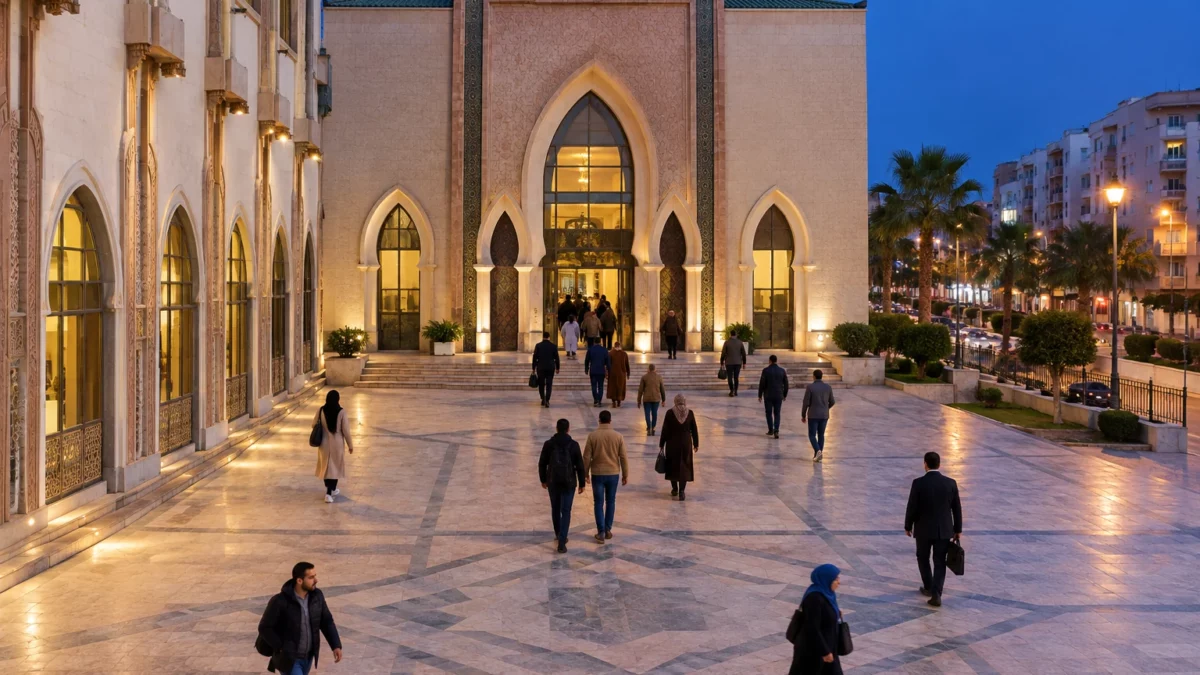
For some Moroccan women, an activity presented as a way to sell cosmetics from home has turned into a financial loss. A judicial inquiry in Morocco is now seeking to establish whether income from The Untamed network came from genuine sales or, as members allege, from recruiting new participants.
Inquiry opened in Casablanca
The case comes amid a climate in which social media serve both as shop windows and recruitment channels. In Rabat, where The Untamed Maroc is based, the company presents itself as the national arm of a brand registered in Sweden. In this case, the central question is not the brand’s nationality, but how its distribution model worked in practice.
On 23 November 2026, the public prosecutor’s office at the Aïn Sebaâ Court of First Instance in Casablanca entrusted an inquiry to the National Judicial Police Brigade. This step does not prejudge the guilt of the company or the people named. Investigators must in particular verify the sums paid, the contracts and the source of the commissions. Médias24 has documented the opening of the inquiry and the company’s registration in Rabat.
Since mid-November, former members have said they paid between 3,000 and 10,000 dirhams to join the network. Some say they were then asked to recruit five or six people in order to recoup their money and earn commissions. Others describe additional spending to promote the offer on social media. These accounts are allegations to be verified, not facts established by a court.
Videos shared by Moroccan content creators have amplified the case. The number of people potentially affected, sometimes put at 5,000, and losses of 25 million dirhams have circulated in public accounts. These estimates have not, however, been confirmed by an independent judicial assessment. They should therefore be treated with caution.
Product sales or paid recruitment?
The decisive distinction concerns the source of income. A sales network can pay distributors for products actually sold. By contrast, if earnings depend mainly on bringing in new members and their payments, the mechanism may constitute a pyramid scheme. The inquiry will have to examine the flows of money and the reality of the sales, rather than relying on marketing slogans or individual accounts alone.
The Untamed Maroc denies the allegations and says its business is based on marketing cosmetics. The company says it imported products worth 15 million dirhams and paid nearly 42 million dirhams in commissions to 3,000 partners over three years. These figures were provided by the company; their significance will depend in particular on whether they can be verified and how the commissions were calculated.
Participants’ accounts describe varied backgrounds, including students, employees and homemakers. Some say they borrowed money or sold personal belongings to finance their entry. If confirmed, these cases would illustrate how exposure to financial risk varied according to individual means. But the inquiry will have to establish individual losses and their scale, without conflating public accounts with a consolidated tally of complaints.
The controversy has also drawn in Moroccan public figures who are said to have taken part in promoting the brand or attending events linked to its network. Lending one’s image to a campaign or sharing an advertisement does not, in itself, demonstrate knowledge of any potential irregularities or criminal liability. According to reports published on 26 November, two actresses were barred from leaving the country as part of the inquiry. This reported measure does not amount to a finding of guilt. TelQuel reports the measure, citing several Moroccan media outlets and sources close to the inquiry.
A test of oversight and trust
For the Moroccan authorities, the case is a test of their ability to distinguish a multi-level sales business from a system in which recruitment becomes the main source of income. The evidence that will determine the outcome is concrete: the value and volume of products sold, the fees required to join, how commissions are calculated and the role of recruits in generating the network’s income.
It also raises questions about advertising by public figures with large online followings. Their visibility can inspire confidence in an offer and accelerate recruitment. However, any potential liability must be examined individually, on the basis of contracts, published content and the information available to each person. A name’s exposure in the media is no substitute for establishing the facts.
Regionally, Morocco is a member of the Arab Maghreb Union (AMU), a North African organisation. At this stage, the case does not establish illicit activity in other countries. But a brand that says it operates in 28 markets raises a question of cross-border oversight: where are the products sold, where are commissions paid, and which authorities can exchange information?
What happens next will depend on judicial and financial checks, as well as the number of complaints formally registered. The figures cited by people who say they have suffered losses and those claimed by the company will have to be compared with accounting records and proof of sales. That comparison, more than the scale of the online controversy, will make it possible to measure the losses and determine the nature of the model.