
 Algeria
 Egypt
 Libya
 Sudan
 Tunisia
 Benin
 Burkina Faso
 Cabo Verde
 Côte d'Ivoire
 Ghana
 Guinea
 Guinea-Bissau
 Liberia
 Mali
 Mauritania
 Niger
 Nigeria
 Senegal
 Sierra Leone
 The Gambia
 Togo
 Cameroon
 Central African Republic
 Chad
 DR Congo
 Equatorial Guinea
 Gabon
 Republic of the Congo
 São Tomé and Príncipe
 Burundi
 Comoros
 Djibouti
 Eritrea
 Ethiopia
 Kenya
 Madagascar
 Malawi
 Mauritius
 Mozambique
 Rwanda
 Seychelles
 Somalia
 South Sudan
 Tanzania
 Uganda
 Angola
 Botswana
 Eswatini
 Lesotho
 Namibia
 South Africa
 Zambia
 Zimbabwe
Cultural support that reaches beyond the screen
In Morocco, animation is no longer a mere subsector of the audiovisual industry. It is becoming a space where creativity, the French language, international visibility and influence strategy intersect. That is what the partnership announced by TV5MONDE reveals: the broadcaster has decided to invest €1 million in Moroccan productions for young audiences, to be shown on its channels and on TV5MONDE+.
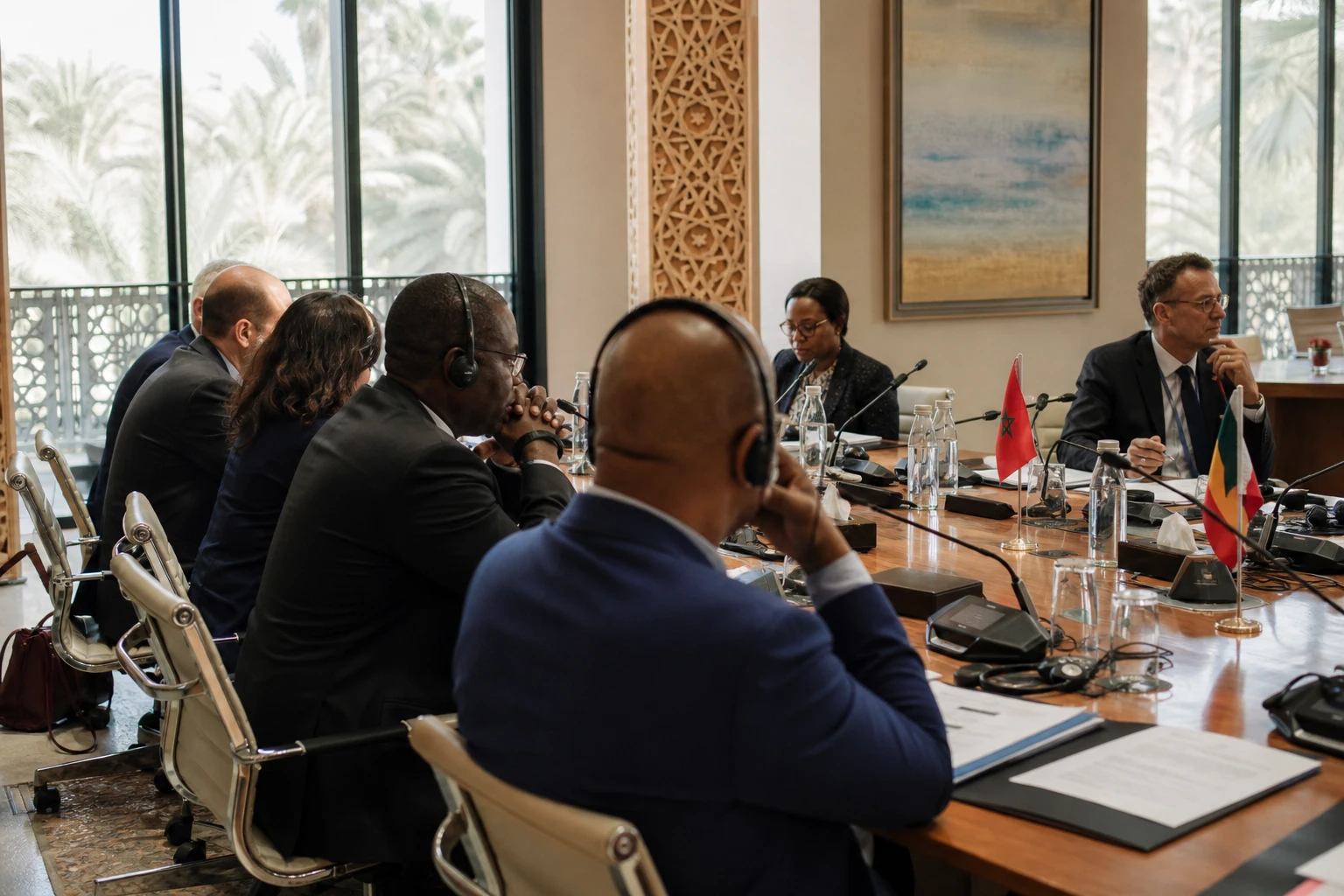
The deal comes at a particularly sensitive moment. A few weeks before the announcement, the French-language network confirmed that Morocco wanted to join its governance structure. The kingdom would then become the first African country to join the circle of funding governments, which currently comprises Canada, France, Quebec, Switzerland, the Wallonia-Brussels Federation and Monaco.
In this context, the cultural gesture cannot be viewed in isolation. It forms part of a broader rapprochement between Rabat and Paris. In 2024, French diplomacy reaffirmed that, in its view, the present and future of Western Sahara fall within the framework of Moroccan sovereignty. This highly political issue remains central to bilateral relations and to how Morocco is viewed regionally in North Africa.
What TV5MONDE is actually funding
TV5MONDE’s statement is precise. The broadcaster says it is investing a total of €1 million in Morocco to develop around ten educational entertainment animated series, all produced in French. It names two partner studios: Neverseen Productions and Art’coustic Studios. Eight series are already being delivered, according to the channel.
TV5MONDE also says the support is based on an exceptional grant from France’s Ministry for Europe and Foreign Affairs. In other words, the money is not merely the result of an internal programming decision. It is also a French diplomatic lever, used to strengthen French-language production and the circulation of Moroccan content through a global network present in nearly 200 countries and territories.
The channel makes a clear cultural argument: to give more space to Maghreb stories, heroes and heritage in the French-speaking world. It also says it has previously supported creative studios in other sub-Saharan African countries, including Côte d’Ivoire and Madagascar. This is significant. It shows that Morocco is not being treated as a complete exception, but as the latest part of a broader strategy of French-language co-production.
On paper, the arrangement looks conventional. In practice, however, it puts Morocco in a distinctive position: as a content partner, a future governance player and a recipient of French funding channelled through an international media organisation. This triple role raises questions about the balance between cultural cooperation and the projection of influence.
Governance open, but subject to conditions
TV5MONDE stresses its safeguards. Its website says the channel’s governance is based on a public-service mission for French-language audiovisual media and on the six funding governments. It also states that any new member must comply with the TV5 Charter, renewed in 2021, as well as the Charter of Editorial Independence and Ethics. The channel says these texts protect journalistic rigour, the accuracy of information, transparency and pluralism of opinion.
For Rabat, the stakes are different. Morocco wants to consolidate its image as a French-speaking cultural hub at the crossroads of Africa and Europe. The kingdom is also pursuing a number of regional initiatives. It now chairs the GTMO 5+5, the Western Mediterranean Transport Cooperation Group, for 2026-2028, confirming its ambition to play the role of an institutional crossroads in the north of the continent.
But audiovisual media are not a neutral domain. The Reuters Institute’s 2026 report on Morocco describes a media landscape where trust remains limited, sensitive topics are handled cautiously and judicial pressure continues to influence coverage of some debates. In this context, a state’s entry into the governance of a French-language media organisation raises a simple question: how can a free newsroom be protected as political, financial and symbolic ties grow closer?
The risk is not necessarily direct intervention. It is more subtle. It lies in the surrounding effect: what is funded, what is co-produced, what is broadcast to children and families, and what this says about Morocco in the French-speaking world’s imagination. Animation reaches a young audience. It establishes narratives. It shapes lasting perceptions. At this level, soft power is exercised not through grand speeches, but through characters, settings and cultural habits.
What North Africa is watching now
The Moroccan case goes beyond the bilateral relationship with Paris. It raises questions about the place of African countries in global French-language media. Until now, discussions about opening TV5MONDE’s governance to African states had focused mainly on several sub-Saharan countries. Morocco shifts the scale of the debate: it is becoming the first African entry point into a structure long reserved for a Euro-North American circle.
For North Africa, the stakes are also symbolic. Rabat is seeking to position itself as a centre of gravity for the French-speaking world, as well as a diplomatic, cultural and audiovisual hub. This ambition aligns with Moroccan priorities already visible in other international matters, from cultural diplomacy to digital sovereignty. It also fits France’s strategy of renewed engagement in the Maghreb following its 2024 shift on Western Sahara.
The most practical question remains: what will happen on air? TV5MONDE says Morocco will have to respect its charters and editorial standards. The real test will come over time, in the coverage of sensitive issues and regional balances, and in the network’s ability to show Morocco without shielding it from debate. That is where it will become clear whether the €1 million investment mainly supports creativity, or also strengthens a broader architecture of influence.



