Algeria
 Egypt
 Libya
 Sudan
 Tunisia
 Benin
 Burkina Faso
 Cabo Verde
 Côte d'Ivoire
 Ghana
 Guinea
 Guinea-Bissau
 Liberia
 Mali
 Mauritania
 Niger
 Nigeria
 Senegal
 Sierra Leone
 The Gambia
 Togo
 Cameroon
 Central African Republic
 Chad
 DR Congo
 Equatorial Guinea
 Gabon
 Republic of the Congo
 São Tomé and Príncipe
 Burundi
 Comoros
 Djibouti
 Eritrea
 Ethiopia
 Kenya
 Madagascar
 Malawi
 Mauritius
 Mozambique
 Rwanda
 Seychelles
 Somalia
 South Sudan
 Tanzania
 Uganda
 Angola
 Botswana
 Eswatini
 Lesotho
 Namibia
 South Africa
 Zambia
 Zimbabwe
A new chapter in African football begins while the previous one remains unresolved. On Thursday 24 September 2026, qualifying for the 2027 Africa Cup of Nations gets under way with one question still unanswered: should Morocco or Senegal be listed as winners of AFCON 2025?
A new campaign despite the final dispute
The Confederation of African Football (CAF), the governing body of the continental game, has recorded Morocco as the winners of the AFCON 2025 final. The decision is being challenged by the Senegalese Football Federation at the Court of Arbitration for Sport (CAS), the independent body responsible for resolving international sports disputes.
The dispute concerns the final played in Rabat on 18 January 2026. Senegal won 1-0 after extra time with a goal from Pape Gueye. The match was interrupted after Senegalese players protested against a penalty awarded to Morocco. Brahim Diaz’s subsequent spot-kick was saved.
Initially, CAF’s disciplinary jury imposed sanctions on both teams without changing the result of the match. The appeal jury later ruled that Senegal had abandoned the field and declared the team to have forfeited the match. Morocco was therefore awarded a 3-0 administrative victory.
The Senegalese Football Federation filed an appeal with CAS on 25 March 2026. It is seeking to have CAF’s decision overturned and Senegal recognised as winners of the competition. CAS confirmed that the appeal had been registered in an official statement on the proceedings.
Hearings are due to take place in Lausanne on 8 October 2026, behind closed doors. The tribunal has, however, said that no ruling will be issued on the day of the hearing. The decision timetable therefore remains uncertain. The official records currently favour Morocco.
Morocco begin again in Rabat with a special status
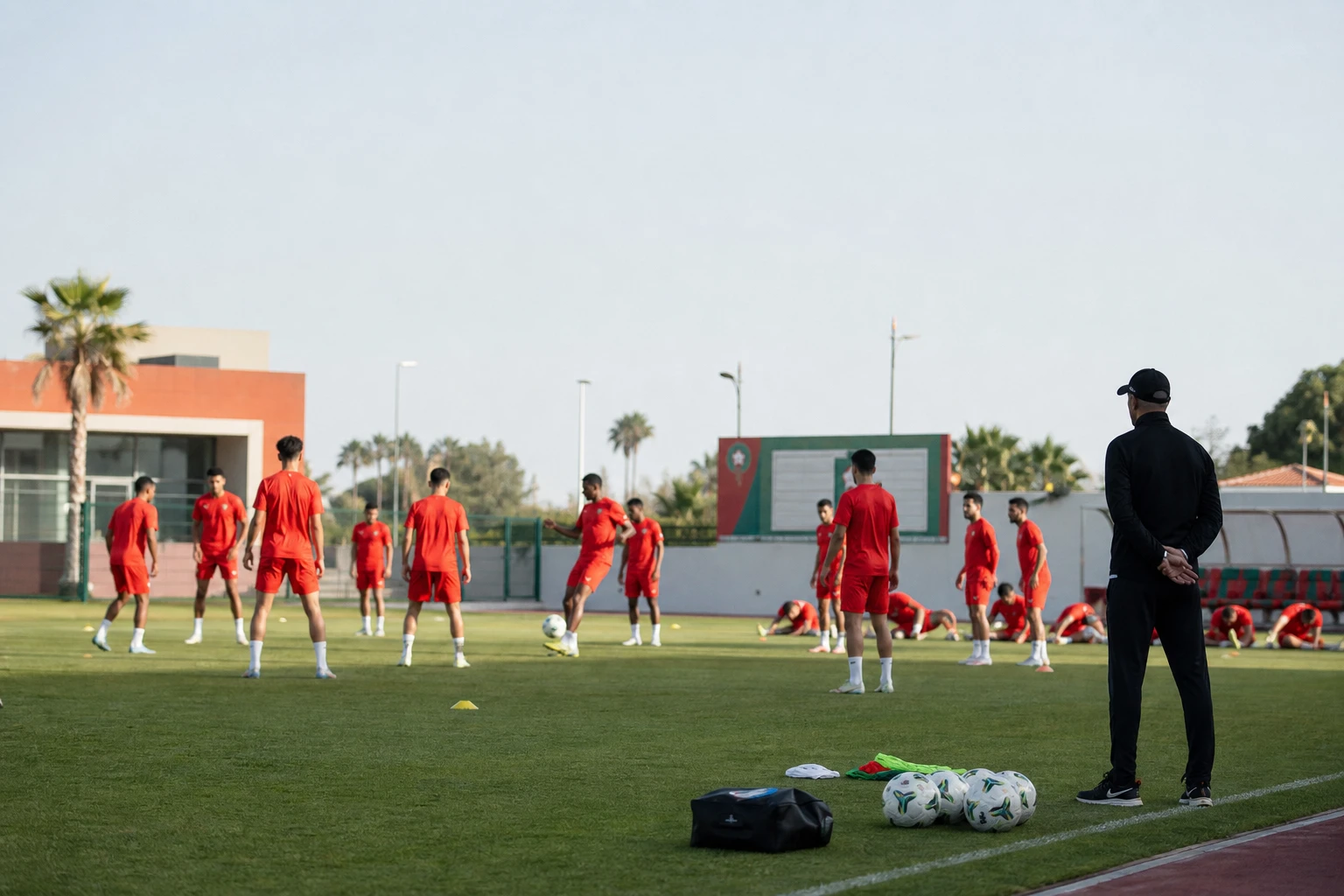
Morocco begin their campaign against Gabon on Friday 25 September at the Prince Moulay Abdellah Sports Complex in Rabat. The stadium hosted the controversial final a few months earlier. The symbolism is strong, but the focus is chiefly on football: the Atlas Lions must get their campaign under way without allowing the legal dispute to disrupt their preparations.
Morocco will then travel to Lesotho on 29 September. Both matches are in Group A, which also includes Niger. The top two teams in the group will qualify for the finals, scheduled to take place in Kenya, Tanzania and Uganda from 19 June to 17 July 2027.
Morocco retains a central place in African football. The country hosted AFCON 2025 and continues to invest in its infrastructure, national teams and the organisation of continental competitions. This trajectory strengthens its sporting influence, while also exposing the Royal Moroccan Football Federation to particular scrutiny in a case being followed well beyond the pitch.
The sanctions imposed after the final will also have an immediate effect. Achraf Hakimi and Ismaël Saibari are set to miss the match against Gabon. Their absence leaves new coach Mohamed Ouahbi with fewer options for this first international window.
Senegal begin a new era under Patrick Vieira
Senegal also start their qualifying campaign on 25 September. The Lions of Teranga face Mozambique in Group J. The match is scheduled for the National Stadium of Zimpeto in Maputo, before an away trip to Ethiopia on 29 September.
The schedule follows an arrangement between the Senegalese and Mozambican federations, with CAF’s approval. The Abdoulaye-Wade Stadium in Diamniadio is being used for the Dakar 2026 Youth Olympic Games. The return match between the two teams will therefore be played in Senegal in March 2027.
Patrick Vieira will lead Senegal for the first time in an official competition. He succeeds Pape Thiaw, who was suspended for several matches by CAF after the final. Sadio Mané is among those absent from the first squad. The coach cited a physical problem, while leaving open the possibility of a return during a future international window.
Senegal must also contend with the suspensions of Iliman Ndiaye and Ismaïla Sarr. Both will miss the opening rounds of qualifying. The team nevertheless retains an experienced core around Kalidou Koulibaly, Idrissa Gana Gueye and Pape Matar Sarr.
Qualification format raises the pressure
The 48 participating teams are divided into 12 groups of four. Each team will play six matches, home and away. The top two in each group will qualify, except in groups containing a host nation.
Kenya, Tanzania and Uganda have qualified automatically as co-hosts. In their respective groups, only one other team will secure a place. The rule applies in particular to Group L, where Nigeria, Madagascar and Guinea-Bissau will compete for a single spot.
The opening round features several important fixtures. Côte d’Ivoire host Ghana in Bouaké. Cameroon welcome Comoros to Garoua. The Democratic Republic of the Congo face Equatorial Guinea in Kinshasa. Egypt host Angola, while Algeria play Zambia in Tizi-Ouzou.
Nigeria begin without the injured Victor Osimhen against Madagascar. Mali face Cape Verde. Burkina Faso meet Benin. These matches underline the depth of African football today, with the gap narrowing between established sides and teams on the rise.
The schedule moves on; the verdict can wait
The first two rounds take place from 24 September to 6 October 2026. Rounds three and four are scheduled for 9 to 17 November. The final two rounds will be held from 22 to 30 March 2027, a few months before the finals in East Africa.
The main risk is that the AFCON 2025 record remains unclear. If CAS delivers its decision before qualifying ends, CAF will be able to clarify its archives and official communications quickly. If the proceedings drag on, both federations will have to continue preparing for their competitions against a backdrop of institutional uncertainty.
For both Morocco and Senegal, however, the immediate priority is clear. Points won in September will matter in a short campaign. African football is therefore moving forward on two parallel timelines: the action on the pitch, already under way, and sports law, still awaiting its final word.