Algeria
 Egypt
 Libya
 Sudan
 Tunisia
 Benin
 Burkina Faso
 Cabo Verde
 Côte d'Ivoire
 Ghana
 Guinea
 Guinea-Bissau
 Liberia
 Mali
 Mauritania
 Niger
 Nigeria
 Senegal
 Sierra Leone
 The Gambia
 Togo
 Cameroon
 Central African Republic
 Chad
 DR Congo
 Equatorial Guinea
 Gabon
 Republic of the Congo
 São Tomé and Príncipe
 Burundi
 Comoros
 Djibouti
 Eritrea
 Ethiopia
 Kenya
 Madagascar
 Malawi
 Mauritius
 Mozambique
 Rwanda
 Seychelles
 Somalia
 South Sudan
 Tanzania
 Uganda
 Angola
 Botswana
 Eswatini
 Lesotho
 Namibia
 South Africa
 Zambia
 Zimbabwe
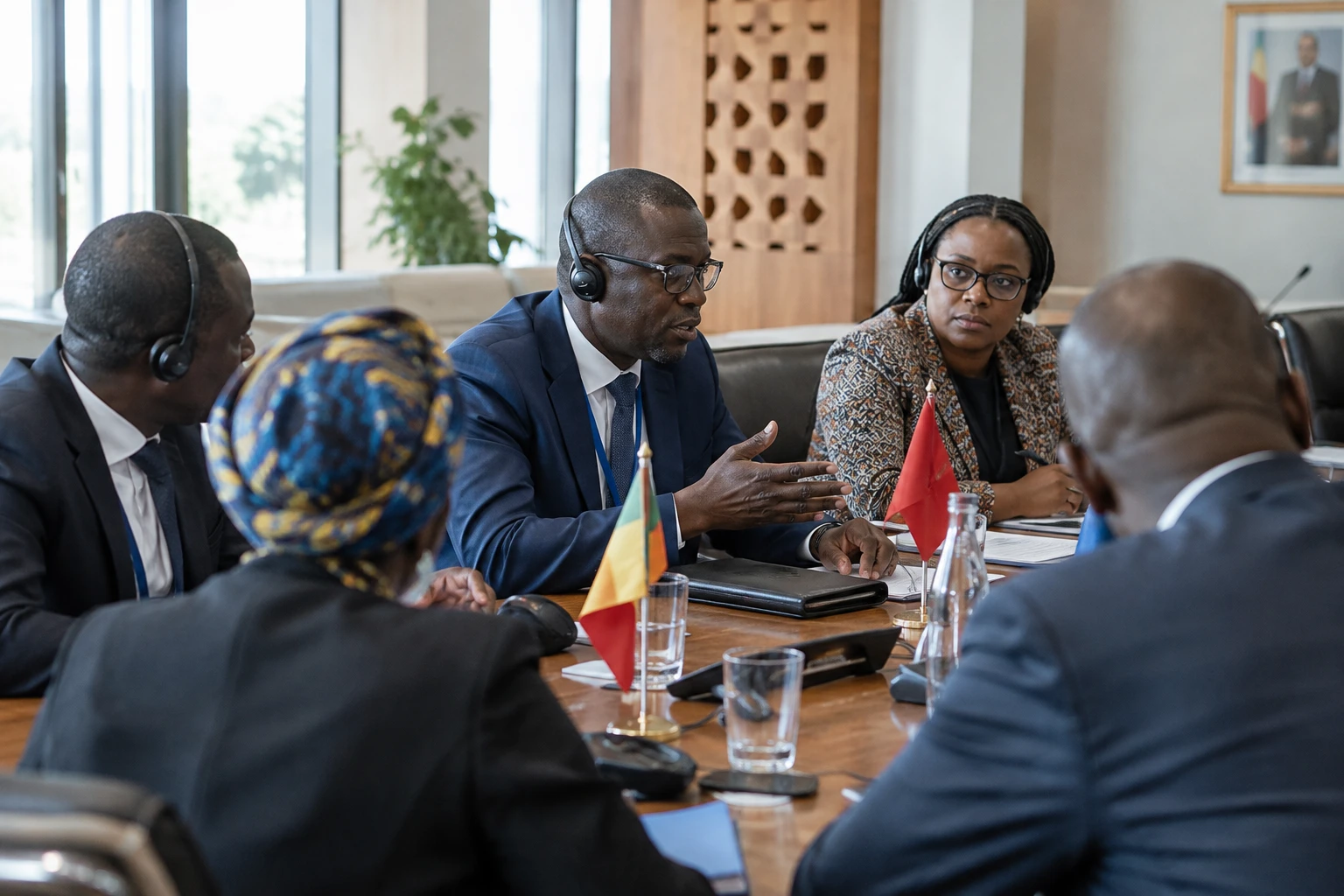
Training engineers, researchers and legal specialists across the continent is not enough: universities must also be able to fund their work, and graduates must be able to find jobs. In Morocco, Mohammed VI Polytechnic University (UM6P) aims to address this challenge by combining teaching, research and innovation.
A Moroccan university focused on research
Based mainly in Benguerir, with a campus also in Rabat, UM6P has chosen to focus its courses on fields such as agriculture, artificial intelligence, robotics, energy and social sciences. Its ambition goes beyond awarding degrees: it seeks to bring laboratories, businesses and development challenges closer together.
Its rise in international rankings has attracted attention. In the 2026 edition of the Times Higher Education World University Rankings, the university is placed in the 351-400 band, up from the 401-500 band in 2025. The 2027 ranking places it in the 376-400 band. These results are corroborated by the institution’s profile published by Times Higher Education. The rankings measure several dimensions, including research, teaching, industry links and international outlook; they therefore do not, on their own, sum up the quality of the student experience. View UM6P’s Times Higher Education ranking.
The university reports that it produced more than 6,600 indexed publications between 2020 and 2025 and has more than 1,300 PhD students. These figures, published by the university, indicate the scale of its research activity, but cannot on their own assess the benefits of this work for businesses, public services or communities.
Access to study is a decisive issue
A state-of-the-art campus addresses questions of equity only if students from different backgrounds can access it. Fees, the cost of living, educational preparation and location all influence the choice of where to study. A university concentrated in Benguerir or Rabat does not automatically offer the same opportunities to a young person living far from the main university centres.
UM6P says it awarded more than 3,700 scholarships in 2024 and more than 4,500 in 2025, based on academic merit and financial circumstances. It also says that 58% of scholarship recipients in 2024 came from households with monthly incomes below 5,000 dirhams. These figures, provided by the university, shed light on efforts to widen access, but do not on their own show the total number of applications, rejection rates or the proportion of students able to fund their studies throughout their course.
A programme run with the Mastercard Foundation plans to support 575 young African women over ten years. A first cohort of 40 students from nine African countries joined the programme in 2025. The foundation confirms its partnership with the university. This initiative widens access for its beneficiaries; it cannot, on its own, replace public policies capable of strengthening universities across Morocco’s and Africa’s regions. About the African scholarship programme.
A model that is difficult to replicate as it stands
The question raised by UM6P is therefore not limited to its rankings. It also concerns the conditions behind its development: substantial investment, international partnerships and links with the business sector. These factors can support research, but are not easily transferable to university systems with different budgets, needs and priorities.
For Morocco, the challenge is to make this specialist hub work alongside public universities and the needs of a mass higher education system. The ESRI Pact 2030, the national framework for transforming higher education, research and innovation, places the issue within a broader reform. Success will not be measured by international visibility alone: it will also depend on teacher training, the quality of institutions across the country and graduates’ entry into the workforce.
This last dimension is central. Training more specialists in artificial intelligence, agriculture or energy can strengthen the skills available in Morocco. But the benefits will depend on jobs created, links with businesses and public authorities, and researchers’ ability to work on locally identified needs. Without these connections, academic prestige risks advancing faster than tangible benefits to society.
African co-operation to be built
The challenge extends beyond Morocco’s borders. African universities face gaps in funding, equipment and access to scientific journals. The answer is not necessarily to replicate a single campus, but to multiply collaboration between institutions: exchanges of researchers, joint courses, shared facilities and projects adapted to local realities.
By welcoming students from several countries and developing courses linked to continental challenges, UM6P can contribute to these networks. The African Union hosted a student delegation from the university in April 2026 for discussions linked to Agenda 2063, its continental development roadmap. The meeting illustrates one possibility for co-operation, but is not enough to establish the scale of its academic impact.
Morocco’s model will therefore need to be assessed on several fronts: genuine access to courses, research outcomes, graduate employment and lasting partnerships with other African universities. Rankings make progress visible; they do not settle the essential question of how widely skills and benefits are spread beyond the campus.