Algeria
 Egypt
 Libya
 Sudan
 Tunisia
 Benin
 Burkina Faso
 Cabo Verde
 Côte d'Ivoire
 Ghana
 Guinea
 Guinea-Bissau
 Liberia
 Mali
 Mauritania
 Niger
 Nigeria
 Senegal
 Sierra Leone
 The Gambia
 Togo
 Cameroon
 Central African Republic
 Chad
 DR Congo
 Equatorial Guinea
 Gabon
 Republic of the Congo
 São Tomé and Príncipe
 Burundi
 Comoros
 Djibouti
 Eritrea
 Ethiopia
 Kenya
 Madagascar
 Malawi
 Mauritius
 Mozambique
 Rwanda
 Seychelles
 Somalia
 South Sudan
 Tanzania
 Uganda
 Angola
 Botswana
 Eswatini
 Lesotho
 Namibia
 South Africa
 Zambia
 Zimbabwe
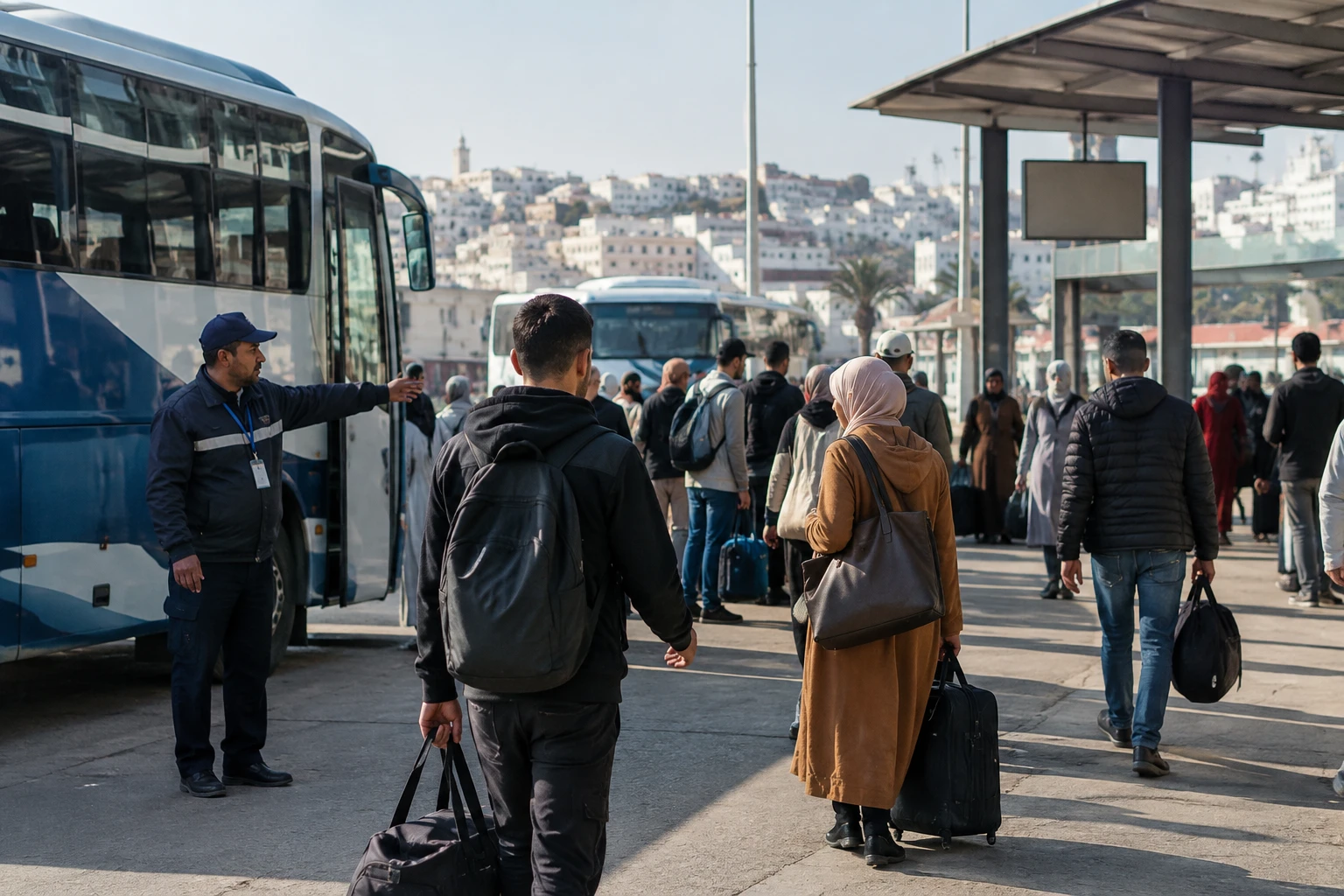
In Ceuta, just a few hours were enough to turn a border into a point of tension between Rabat and Madrid. Beyond the arrivals, the May 2021 crisis brought a more enduring question into focus: who sets the rules for migration cooperation whose effects are felt on both sides of the Strait?
A border crisis amid diplomatic tensions
Ceuta is a Spanish enclave on the North African coast, bordering Morocco. The border separating it from the kingdom is also a crossing point into the European Union. The management of movements there therefore depends on coordination between Moroccan and Spanish authorities, in a context where migration issues are intertwined with diplomatic relations.
The immediate precedent dates back to 17 and 18 May 2021. Around 8,000 people reached Ceuta on foot or by swimming, according to Amnesty International, which also reported the presence of around 2,000 unaccompanied minors. Reuters reported a similar figure, citing Spanish authorities. These figures do not correspond to “more than 70,000 crossings in July”, as the original text states: the date and tally given there are incorrect.
The episode took place during a crisis between Rabat and Madrid. It followed, among other events, the hospitalisation in Spain of Brahim Ghali, leader of the Polisario Front, a Sahrawi independence movement. This timing fuelled political interpretations. However, on its own, it is not enough to establish all the intentions of the Moroccan authorities. Spanish and Moroccan officials have not publicly offered a shared reading of the event.
The crisis also had tangible consequences for the people who arrived in Ceuta. Amnesty International denounced summary expulsions and stressed that asylum applications must be examined individually. Children were among those affected. Migration is therefore not just a matter of border control: it also involves protection obligations and the treatment of people.
The king’s message to Parliament
On 8 October 2021, in Rabat, King Mohammed VI opened the first session of the new legislature. The date corrects another error in the original material, which placed his speech on 9 October. Legislative elections had been held on 8 September, not 23 September. The National Rally of Independents (RNI) came first; the Authenticity and Modernity Party (PAM) was not the leading party in the vote.
In his address, the sovereign said the migration cooperation model had reached its limits and announced that a document setting out a new vision would be submitted to Morocco’s partners. He argued for a partnership based on reciprocal commitments. He also criticised political and media statements that he considered irresponsible, without directly naming Spain in the passages reported on cooperation.
This statement was an announcement of a change in direction, not the presentation of an agreement already negotiated. The speech specified neither a timetable for submitting the document nor its implementation mechanisms. It therefore does not support the claim that the rules of cooperation had been changed at that point. The distinction matters: a political statement sets a course, while its translation into practice depends on subsequent negotiations and concrete decisions.
Cooperation beyond border control
For Morocco, migration cooperation concerns security, diplomacy and the management of movements. The kingdom is a country of departure, transit and settlement for people with different journeys. A policy focused solely on interceptions does not, by itself, address the challenges of protection, asylum, returns or regular migration.
The partnership also has a European dimension. The European Union funds programmes related to migration management in Morocco. The European Commission reported budget support of €101.5 million for the 2019–2021 period, dedicated to an integrated, rights-respecting approach. This relationship gives Rabat leverage in negotiations, while Madrid and Brussels seek to manage arrivals at the EU’s external borders.
The interests do not coincide. Governments often prioritise reducing irregular crossings and police cooperation. For residents of border areas, measures can affect movement and activities that depend on the border. For migrants, the consequences concern access to asylum, safety and opportunities to move legally. A balanced overhaul should take these realities into account, not just the goals of national capitals.
A bilateral issue with African implications
Moroccan-Spanish relations are part of a broader diplomatic history in which migration issues can become linked to other disagreements. The 2021 crisis showed how this interdependence makes cooperation vulnerable to political tensions. It also highlighted how a breakdown or easing of border controls can quickly place thousands of people at the centre of a power struggle beyond their control.
The debate extends beyond Ceuta. Morocco takes part in Euro-African discussions on migration and hosts the African Observatory for Migration, established at the initiative of the African Union. This continental dimension opens up another perspective: migration policies also concern movement between African countries, data collection and the protection of rights, not just departures for Europe.
After the 2021 speech, the issue to watch was what followed the announcement: the document’s contents, the partners consulted and the place given to the rights of those affected. Without these elements, the call for a new model remains a political direction. The Ceuta crisis, however, left an immediate lesson: when disagreements between states spill over onto a border, the first consequences are often borne by the people crossing it.
To check the dates, figures and context, see the summary of Morocco’s 2021 legislative elections, Amnesty International’s account of arrivals in Ceuta, the figures reported by Reuters and the European Commission’s response on migration-related funding.