
 Algeria
 Egypt
 Libya
 Sudan
 Tunisia
 Benin
 Burkina Faso
 Cabo Verde
 Côte d'Ivoire
 Ghana
 Guinea
 Guinea-Bissau
 Liberia
 Mali
 Mauritania
 Niger
 Nigeria
 Senegal
 Sierra Leone
 The Gambia
 Togo
 Cameroon
 Central African Republic
 Chad
 DR Congo
 Equatorial Guinea
 Gabon
 Republic of the Congo
 São Tomé and Príncipe
 Burundi
 Comoros
 Djibouti
 Eritrea
 Ethiopia
 Kenya
 Madagascar
 Malawi
 Mauritius
 Mozambique
 Rwanda
 Seychelles
 Somalia
 South Sudan
 Tanzania
 Uganda
 Angola
 Botswana
 Eswatini
 Lesotho
 Namibia
 South Africa
 Zambia
 Zimbabwe
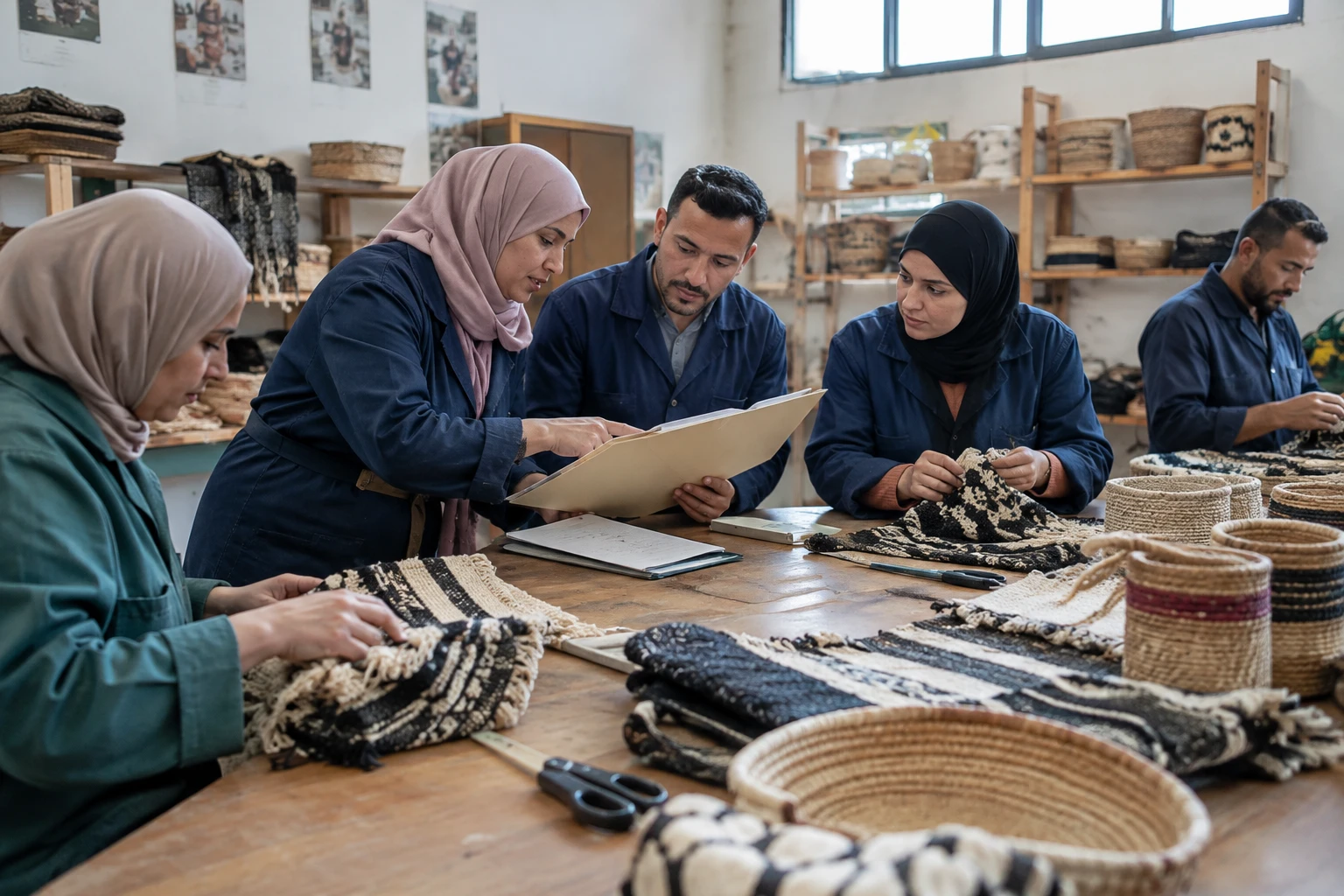
A cooperative is a business, but not like any other: its members collectively own its capital and take part in decisions. In Morocco, this autonomy is at the heart of a renewed institutional debate prompted by a simple question: how far can the state support these organisations without taking the place of those who make them work?
A growing sector, and an agency with a broad remit
Established in 1962, the Office for the Development of Cooperation (ODCO) is responsible for supporting and organising Morocco’s cooperative movement. The public institution maintains the central register, supports cooperatives, contributes to their training and checks that their management complies with the law. Its mandate therefore places the agency both in a supporting role and in certain oversight functions.
The available figures show the scale of the challenge. At the end of November 2025, Morocco had 65,315 cooperatives and 788,969 members, including 272,583 women and 18,036 young people, according to the ODCO’s figures. The figure of 63,445 cooperatives, cited in a public debate in January 2026, corresponds to an earlier count. The agency’s data now break the total down across twelve regions and numerous sectors, from agriculture to crafts, as well as services and recycling.
These organisations do not form a uniform group. Some are based in cities and have easier access to markets and digital tools. Others depend on agricultural or craft activity, often linked to local areas and seasons. Their needs for support, financing and training therefore vary according to their members, regions and sectors.
The tension between public oversight and autonomy
Moroccan Law No. 112-12 makes autonomy and independence one of the cooperative principles. It also affirms democratic member control. The question is not whether a cooperative must comply with the law: it must. The debate is instead about the boundary between oversight intended to protect members and intervention that would limit their decision-making power.
This distinction matters in practice. Proportionate oversight can help prevent abuse and protect cooperative members or their partners. But if procedures become too burdensome or internal decisions are dictated from outside, members risk losing control of their business. Small organisations, which rarely have specialised administrative departments, can be particularly affected by the burden of formalities.
The criticism of the ODCO in the text that prompted this debate centres precisely on this tension. Its author argues that public supervision and oversight duties may conflict with cooperative autonomy. The author also refers to criticisms made by national oversight bodies. However, the material available here does not make it possible to verify the precise contents of the reports cited or to independently establish the allegations. They therefore cannot be presented as confirmed findings.
An international framework that calls for consultation
Recommendation No. 193 of the International Labour Organization (ILO), adopted on 20 June 2002, defines a cooperative as an autonomous association based on voluntary membership and democratic control. It does not rule out public action: it encourages governments to establish a supportive framework and facilitate access to services and finance, while respecting the distinctive nature of cooperatives. It also recommends consulting cooperative organisations when policies and rules affecting them are drawn up or revised.
The question therefore goes beyond choosing between state intervention and withdrawal. It is about how to provide useful support without weakening member governance. Training, legal advice, access to finance and new market opportunities can strengthen a cooperative. Conversely, funding subject to conditions that shift decision-making power can undermine its independence. Transparent criteria and cooperative members’ participation then become essential.
In Morocco, the ODCO has presented a 2026-2028 roadmap focused on structuring the sector, digital transformation, skills and market access. Measures announced include the introduction of electronic filing across the board from June 2026 and a system for evaluating cooperatives based on their performance. These tools could simplify oversight and better target support. Their impact will nevertheless depend on how they are implemented, their accessibility to small organisations and the role members are given in decisions that affect them.
A national issue with African resonance
The debate comes at a time when cooperatives are being promoted as drivers of employment and economic inclusion. The ODCO says 24,558 additional jobs were generated in one year, according to its figures for the end of 2025. This figure comes from the institution itself and should be read as such: it reflects the official assessment, but is not enough to measure job security, members’ incomes or disparities between regions.
The closing of the International Year of Cooperatives in Rabat on 28 January 2026 also placed the cooperative model in the context of African and international co-operation. For Morocco, the challenge now is to align the sector’s growth objectives with its founding principles. Across the continent, the same question runs through policies supporting cooperatives: how can public expertise and resources be mobilised while leaving members to govern their businesses?
The next steps will show whether this balance can be achieved: the introduction of the announced digital tools, the application of the oversight framework and the actual participation of cooperative networks in shaping the rules. For cooperative members, the decisive measure will not simply be the number of organisations created. It will also be their ability to make their own decisions, access markets and defend their members’ interests over the long term.



