Algeria
 Egypt
 Libya
 Sudan
 Tunisia
 Benin
 Burkina Faso
 Cabo Verde
 Côte d'Ivoire
 Ghana
 Guinea
 Guinea-Bissau
 Liberia
 Mali
 Mauritania
 Niger
 Nigeria
 Senegal
 Sierra Leone
 The Gambia
 Togo
 Cameroon
 Central African Republic
 Chad
 DR Congo
 Equatorial Guinea
 Gabon
 Republic of the Congo
 São Tomé and Príncipe
 Burundi
 Comoros
 Djibouti
 Eritrea
 Ethiopia
 Kenya
 Madagascar
 Malawi
 Mauritius
 Mozambique
 Rwanda
 Seychelles
 Somalia
 South Sudan
 Tanzania
 Uganda
 Angola
 Botswana
 Eswatini
 Lesotho
 Namibia
 South Africa
 Zambia
 Zimbabwe
A Moroccan product crosses a new regulatory frontier
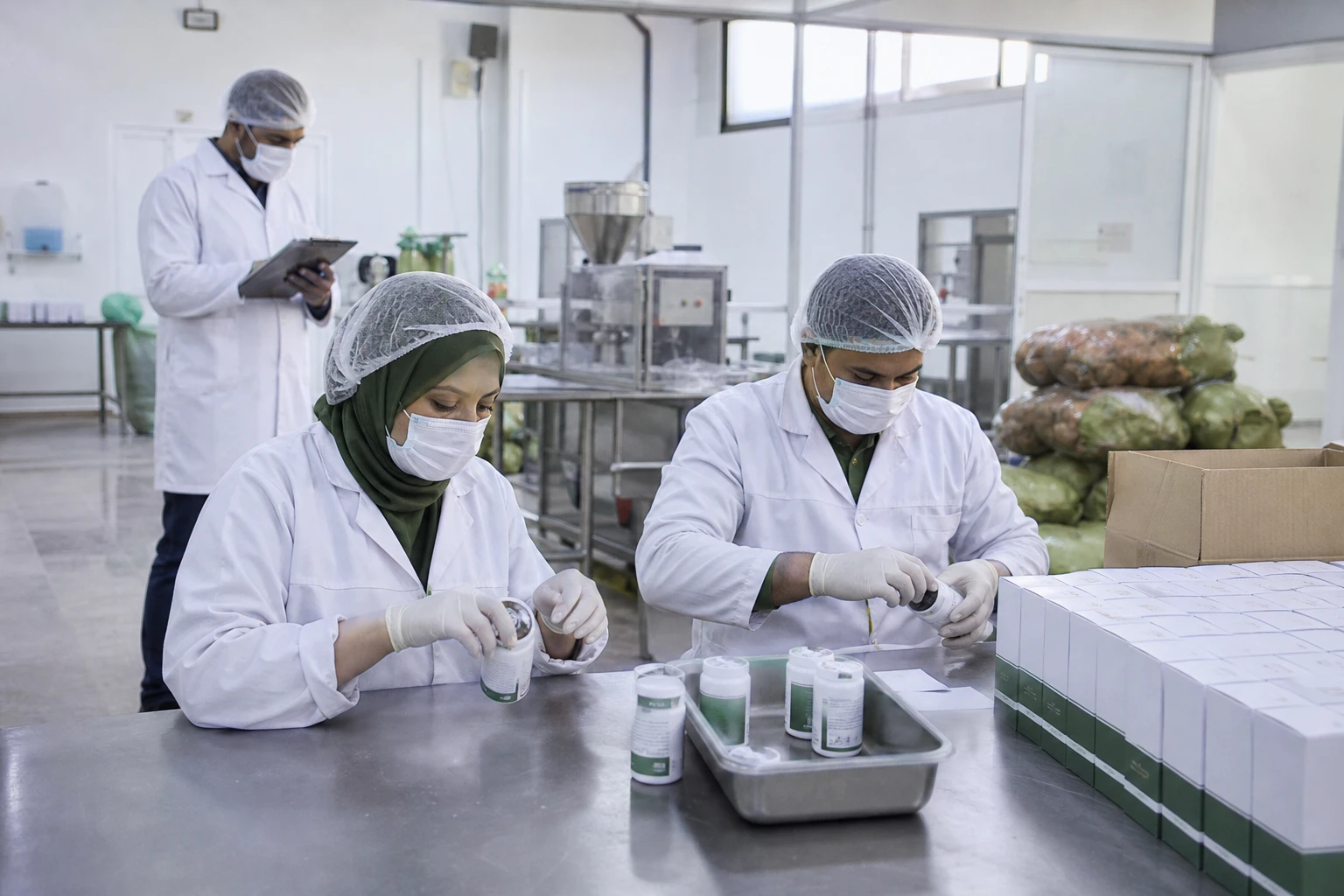
The medical cannabis market is no longer played out only in the fields of northern Morocco. It is also played out in laboratories, compliance dossiers and pharmaceutical supply chains, where real added value is created. For Moroccan producers, the challenge is no longer simply to grow the crop. They must now process, certify and export it in accordance with very strict rules.
This move upmarket is taking place within a specific national framework. Moroccan Law No. 13-21, promulgated on 14 July 2021, authorises the cultivation, processing, marketing and export of cannabis under the conditions set out in the text, under the supervision of the National Agency for the Regulation of Activities Related to Cannabis, ANRAC. The stated aim is to build a licit, traceable and economically useful sector for production areas.
The door to the Swiss market opened in 2022
Switzerland is a distinctive market. Since 1 August 2022, Swiss doctors have been able to prescribe cannabis-based medicines without exceptional authorisation from the Federal Office of Public Health. Non-medical sales and consumption remain prohibited, but therapeutic use has become more straightforward. This change in the rules has made the market more accessible to operators able to meet Swiss pharmaceutical standards.
In this context, a product derived from the local Beldia variety, legally cultivated in Morocco, was said to have been supplied to licensed Swiss pharmacies after two years of regulatory and quality-related work. The operation was carried out with a pharmaceutical partner based in Stansstad, Switzerland. The claim here is a commercial breakthrough reported by the operator, but it sits within a very real Swiss regulatory framework, where the prescription and distribution of medical cannabis are subject to requirements for oversight, traceability and pharmaceutical quality.
For Morocco, this move into Switzerland has symbolic significance. It shows that a local variety, long associated with the informal economy, can enter an international pharmaceutical supply chain if it meets standards for processing, labelling and safety. This represents a change in status as much as a change of market.
From raw material to medicine: the industrial challenge
Morocco’s plans are not limited to a one-off export. In Rabat, the authorities have sent increasingly strong signals in support of a more structured sector. In March 2026, AMMPS and ANRAC signed an agreement to establish a framework for the registration of cannabis-based products. This kind of closer cooperation matters because it links agricultural regulation with pharmaceutical regulation. Without this step, exports would remain limited to raw volumes or low-margin products.
The economic rationale is clear. Morocco is seeking to move beyond its role as a supplier of biomass alone. The aim is to capture more value domestically through processing, quality control and pharmaceutical manufacturing. This shift also aligns with the Kingdom’s broader strategy on health sovereignty and industrial upgrading, already visible in other health sectors.
The shift also affects cultivation regions. In the Rif and other authorised areas, the licit sector is intended to offer a legal alternative for thousands of small-scale producers, cooperatives and processing units. The stakes are concrete: more stable incomes, better traceability and access to formal markets. But the demands are high. Pharmaceutical compliance requires investment, expertise and standards that not all operators have yet mastered.
What this breakthrough says about Morocco and the continent
This development tells a story that goes beyond a simple export to Europe. It shows that Morocco is trying to build an agricultural and pharmaceutical sector capable of engaging with demanding markets, rather than remaining trapped in an economy based on rents or illegality. It also shows that African competitiveness in health and bioproduction often depends as much on mastering standards as on mastering production.
Across the continent, the development is being closely watched. Several African countries are exploring the medical, industrial or export uses of cannabis, each in its own way. Morocco’s experience is therefore seen as a test: can a plant long associated with the parallel market be turned into a regulated, exportable industrial supply chain that creates formal jobs? The answer will depend on sustained investment, reliable public oversight and operators’ ability to maintain consistent quality.
One decisive step remains: turning these first breakthroughs into a sustainable flow. Export announcements are not enough. There will need to be regular volumes, clearly identified products, recurring markets and strong coordination between cooperatives, manufacturers and health authorities. For people in Rabat and producers in the rural areas concerned, that is what will determine the difference between a commercial coup and a genuine national industry.