
 Algeria
 Egypt
 Libya
 Sudan
 Tunisia
 Benin
 Burkina Faso
 Cabo Verde
 Côte d'Ivoire
 Ghana
 Guinea
 Guinea-Bissau
 Liberia
 Mali
 Mauritania
 Niger
 Nigeria
 Senegal
 Sierra Leone
 The Gambia
 Togo
 Cameroon
 Central African Republic
 Chad
 DR Congo
 Equatorial Guinea
 Gabon
 Republic of the Congo
 São Tomé and Príncipe
 Burundi
 Comoros
 Djibouti
 Eritrea
 Ethiopia
 Kenya
 Madagascar
 Malawi
 Mauritius
 Mozambique
 Rwanda
 Seychelles
 Somalia
 South Sudan
 Tanzania
 Uganda
 Angola
 Botswana
 Eswatini
 Lesotho
 Namibia
 South Africa
 Zambia
 Zimbabwe
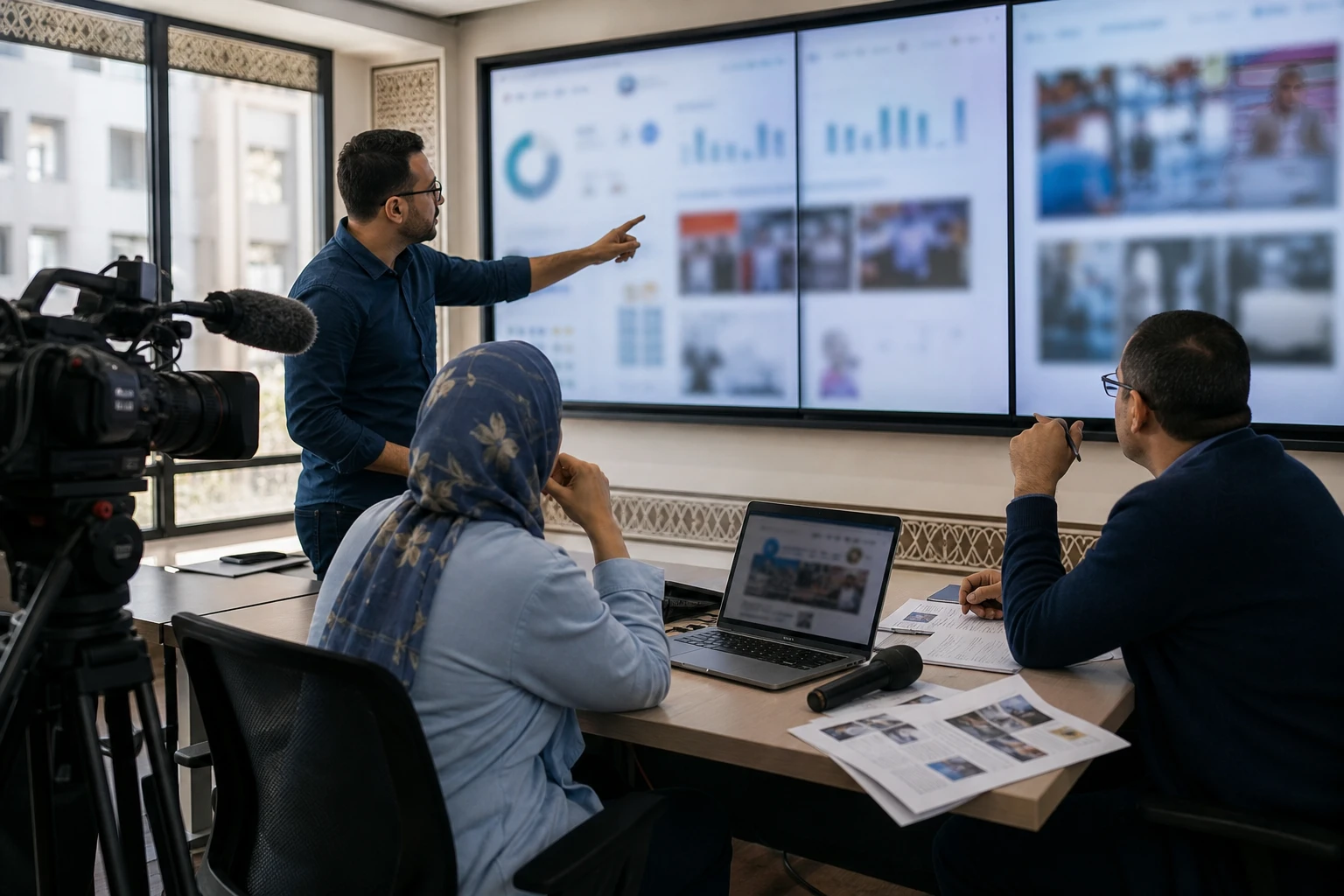
An air corridor that signals more than a simple resumption of flights
In Marrakech, the resumption of direct links with Tel Aviv is not merely a commercial announcement. It also tells the story of a Morocco where diplomacy, the tourism economy and public opinion often move at different speeds. On one side, industry operators are seeking visitors, revenue and jobs. On the other, a visible part of society continues to reject normalisation with Israel, against the backdrop of the war in Gaza.
This sequence began on 10 December 2020, when Rabat, Washington and Tel Aviv formalised a trilateral rapprochement. In the same move, the United States recognised Moroccan sovereignty over Western Sahara, a central issue in the kingdom’s foreign policy. This equation established a lasting framework: openly acknowledged cooperation at the top, and ongoing debate below.
What the resumption of the Tel Aviv–Marrakech route shows
According to several Moroccan media outlets, Israeli airline Arkia resumed direct flights to Marrakech on 19 August 2026, ahead of the announced start of regular services on 24 August, with two round trips a week. The route had been suspended after 7 October 2023, in the wake of the war in Gaza. Arkia initially resumed the route alone, before other Israeli carriers subsequently joined it, a sign that demand remains real.
The details matter. Three weekly flights, or two depending on airlines’ schedules at launch, remain well below pre-crisis levels, but are already enough to fill seats. Israeli customers are part of a specific ecosystem: hotels, riads, guides, drivers, kosher restaurants, tour agencies and local services. In Marrakech and Casablanca, this niche has helped build very tangible value chains, often spanning the formal economy and self-employment.
Available figures also show that this is not a marginal market. A source close to the sector cites several tens of thousands of Israeli visitors to Morocco in the years before the break, with a clear increase after the 2020 normalisation. The same document notes that trade between Morocco and Israel reached $105.5 million in the first half of 2026, a marked year-on-year increase. These figures point to a real economic link, even if it remains modest on the scale of Moroccan tourism as a whole.
Tourism, an economic lifeline and a political fault line
For Morocco, tourism is not a secondary sector. The finance ministry said the country had welcomed 10.2 million visitors by the end of August 2023, up 10% on 2019, and that tourism revenues were rising sharply. Against this backdrop, the target set for 2030 remains ambitious, driven by the national strategy and the 2030 World Cup, which Morocco is co-hosting with Spain and Portugal.
This ambition gives weight to every source market, including Israel. When an air route reopens, it is more than a symbol. It means hotel occupancy outside the peak season, airport transfers, more guides, meals served, tours in the south, and steadier income for thousands of employees and self-employed workers. Conversely, every closure leaves an immediate mark on booking records and on occupations highly exposed to geopolitical uncertainty.
But the issue is also political. Pro-Palestinian demonstrations remain frequent in Morocco. In Rabat and other cities, rallies have denounced normalisation with Israel and the war in Gaza. The Moroccan Front in Support of Palestine and Against Normalisation plays a leading role in them. The palace, meanwhile, continues to frame its position around official support for the Palestinian cause and Mohammed VI’s chairmanship of the Al-Quds Committee, fuelling a two-track interpretation: political solidarity on one side, bilateral cooperation on the other.
A Moroccan issue, but also a Maghreb and continental one
This coexistence of popular rejection and institutional pragmatism is not unique to Morocco. It says something broader about several Arab and African capitals: states make choices based on strategic interests, while civil societies also weigh the moral and symbolic cost of rapprochement. In Morocco, the balance is particularly sensitive because Western Sahara remains at the heart of the kingdom’s diplomatic priorities and those of its partners.
Across the continent, the issue is a reminder that tourist flows, air routes and diplomatic agreements are never neutral. They can support urban employment, boost foreign currency earnings and open up markets. They can also rekindle political divisions if public opinion believes economic cooperation is moving faster than stated principles. In North Africa, where links with the Middle East have deep roots, Morocco’s case therefore remains a useful barometer. Above all, it will be important to monitor the expansion of airline services, their actual effect on arrivals in Marrakech, and the authorities’ ability to maintain a consistent course between national interest, the regional arena and pressure from the streets.



