Algeria
 Egypt
 Libya
 Sudan
 Tunisia
 Benin
 Burkina Faso
 Cabo Verde
 Côte d'Ivoire
 Ghana
 Guinea
 Guinea-Bissau
 Liberia
 Mali
 Mauritania
 Niger
 Nigeria
 Senegal
 Sierra Leone
 The Gambia
 Togo
 Cameroon
 Central African Republic
 Chad
 DR Congo
 Equatorial Guinea
 Gabon
 Republic of the Congo
 São Tomé and Príncipe
 Burundi
 Comoros
 Djibouti
 Eritrea
 Ethiopia
 Kenya
 Madagascar
 Malawi
 Mauritius
 Mozambique
 Rwanda
 Seychelles
 Somalia
 South Sudan
 Tanzania
 Uganda
 Angola
 Botswana
 Eswatini
 Lesotho
 Namibia
 South Africa
 Zambia
 Zimbabwe
An underused corridor between Rabat and New Delhi
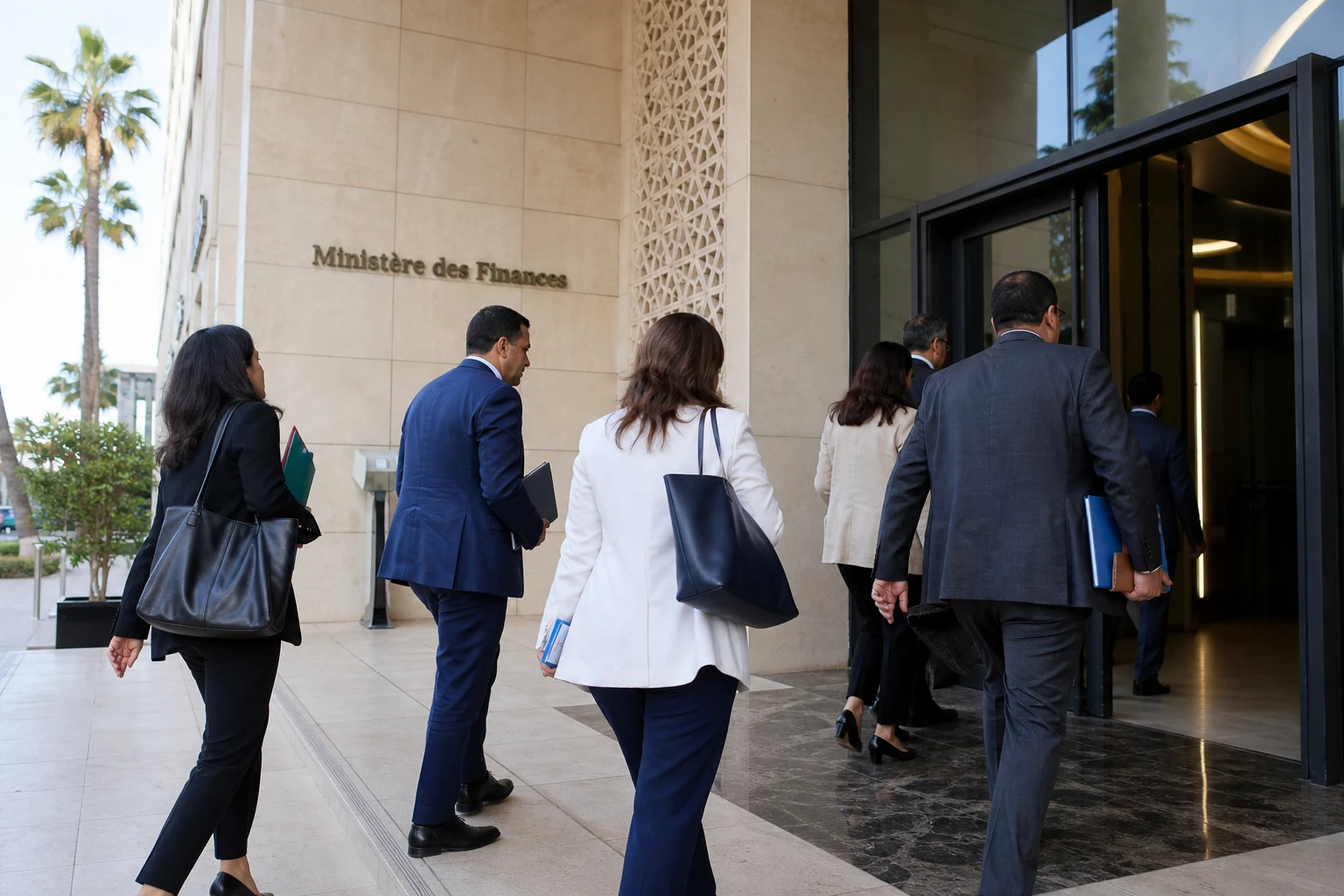
Morocco wants to move faster than its statistics. The country already has factories, ports, logistics platforms and a growing industrial base. Yet much of the trade potential between Rabat and New Delhi remains untapped. The question is no longer whether the two economies can engage with each other. It is how they can turn a solid diplomatic relationship into deeper, more balanced exchanges that bring greater benefits to their businesses.
The debate comes at a particular moment for Morocco. The Kingdom is focused on moving its industry up the value chain, digitising foreign trade and expanding its markets beyond its traditional partners. The government has also launched a 2025-2027 roadmap to broaden the export base and strengthen Morocco’s international economic presence.
What was agreed in Rabat
On 24 August 2026, at the seventh session of the Moroccan-Indian Joint Commission, Morocco’s Secretary of State for Foreign Trade, Omar Hejira, cited $2.6 billion in untapped bilateral trade potential. According to figures presented on that occasion, $1.4 billion relates to potential Moroccan exports to India, and $1.2 billion to Indian exports to Morocco.
The momentum did not come out of nowhere. Institutional relations between the two countries are longstanding and well-established. India’s Ministry of External Affairs says the Joint Commission for Trade and Investment remains one of the pillars of bilateral dialogue. The same document says cooperation also covers health, water, mining, counter-terrorism, renewable energy, space and fertilisers.
Trade figures already show a clear upward trend. India’s Ministry of External Affairs says bilateral trade reached $3.819 billion in 2025, up from $2.66 billion in 2024. Growth is therefore strong, even though the reported level remains below the potential cited in Rabat.
What the two countries stand to gain
Morocco’s first aim is to diversify its markets. India is a vast, competitive market with growing demand for industrial inputs, chemicals, materials and technical solutions. For a country such as Morocco, which has expanded its capacity in automotive manufacturing, aerospace, textiles, pharmaceuticals and certain recycling segments, India could become more than a customer. It could help Morocco move up the value chain.
India, for its part, is seeking to consolidate its presence in North Africa. Its exports to Morocco are already diversified, including petroleum products, car parts, textiles, chemicals, plastics, equipment and pharmaceuticals. In the other direction, Morocco remains a strategic supplier of phosphates and phosphoric acid, a decisive asset for India’s fertiliser industry. This complementarity reduces the risk of a purely opportunistic relationship. It opens the way to more stable partnerships, including joint ventures.
The issue also extends beyond trade ministries. Morocco has embarked on an industrialisation policy aimed at attracting more investment, increasing local content and strengthening its value chains. In recent months, Moroccan authorities have highlighted industrial projects in batteries, infrastructure and exports. In this context, an Indian presence could provide an additional lever, particularly in automotive manufacturing, engineering, pharmaceuticals and digital technology.
There is also a social dimension. When trade expands, the immediate winners are often businesses able to export, import and meet quality standards. But the effects eventually reach logistics, transport, port services, sanitary compliance, industrial maintenance and training. In other words, industrial cities and port zones capture the value first, and the benefits can then spread to other areas if the wider ecosystem is in place.
A relationship that benefits Morocco and the Africa-Asia axis
The signing of two memorandums of understanding, one on cultural exchanges for 2026-2030 and the other on food safety, gives the meeting another dimension. It shows that Rabat and New Delhi do not want simply to increase cargo volumes. They also want to establish clear rules, standards and trust between businesses. That is often where the true depth of a trade partnership is determined.
Morocco can also leverage its regional position. The Kingdom is part of the Maghreb and Mediterranean regions, while asserting its wider African vocation. Its commitment to the African Continental Free Trade Area, AfCFTA, and its ambition to serve as a platform linking Africa, Europe and the rest of the world lend greater purpose to stronger ties with Asia. For India, Morocco is therefore a credible gateway to African and Euro-Mediterranean markets.
At the continental level, the stakes are clear. Africa is not short of talk about diversifying its partners. Too often, however, it lacks value chains genuinely connected to Asia without relying solely on traditional routes. If Rabat and New Delhi meet their goal of doubling trade in five years, they will offer a useful example: a South-South relationship built on industry, technology, standards and market access, rather than on aid.
The next test will be practical. It will be necessary to track the implementation of the commitments made in Rabat, the activation of market-prospecting mechanisms, and the ability of Moroccan and Indian businesses to turn this ambition into contracts, joint ventures and sustainable supply chains. That is when the $2.6 billion in potential will cease to be a theoretical figure and become an economic reality.