Algeria
 Egypt
 Libya
 Sudan
 Tunisia
 Benin
 Burkina Faso
 Cabo Verde
 Côte d'Ivoire
 Ghana
 Guinea
 Guinea-Bissau
 Liberia
 Mali
 Mauritania
 Niger
 Nigeria
 Senegal
 Sierra Leone
 The Gambia
 Togo
 Cameroon
 Central African Republic
 Chad
 DR Congo
 Equatorial Guinea
 Gabon
 Republic of the Congo
 São Tomé and Príncipe
 Burundi
 Comoros
 Djibouti
 Eritrea
 Ethiopia
 Kenya
 Madagascar
 Malawi
 Mauritius
 Mozambique
 Rwanda
 Seychelles
 Somalia
 South Sudan
 Tanzania
 Uganda
 Angola
 Botswana
 Eswatini
 Lesotho
 Namibia
 South Africa
 Zambia
 Zimbabwe
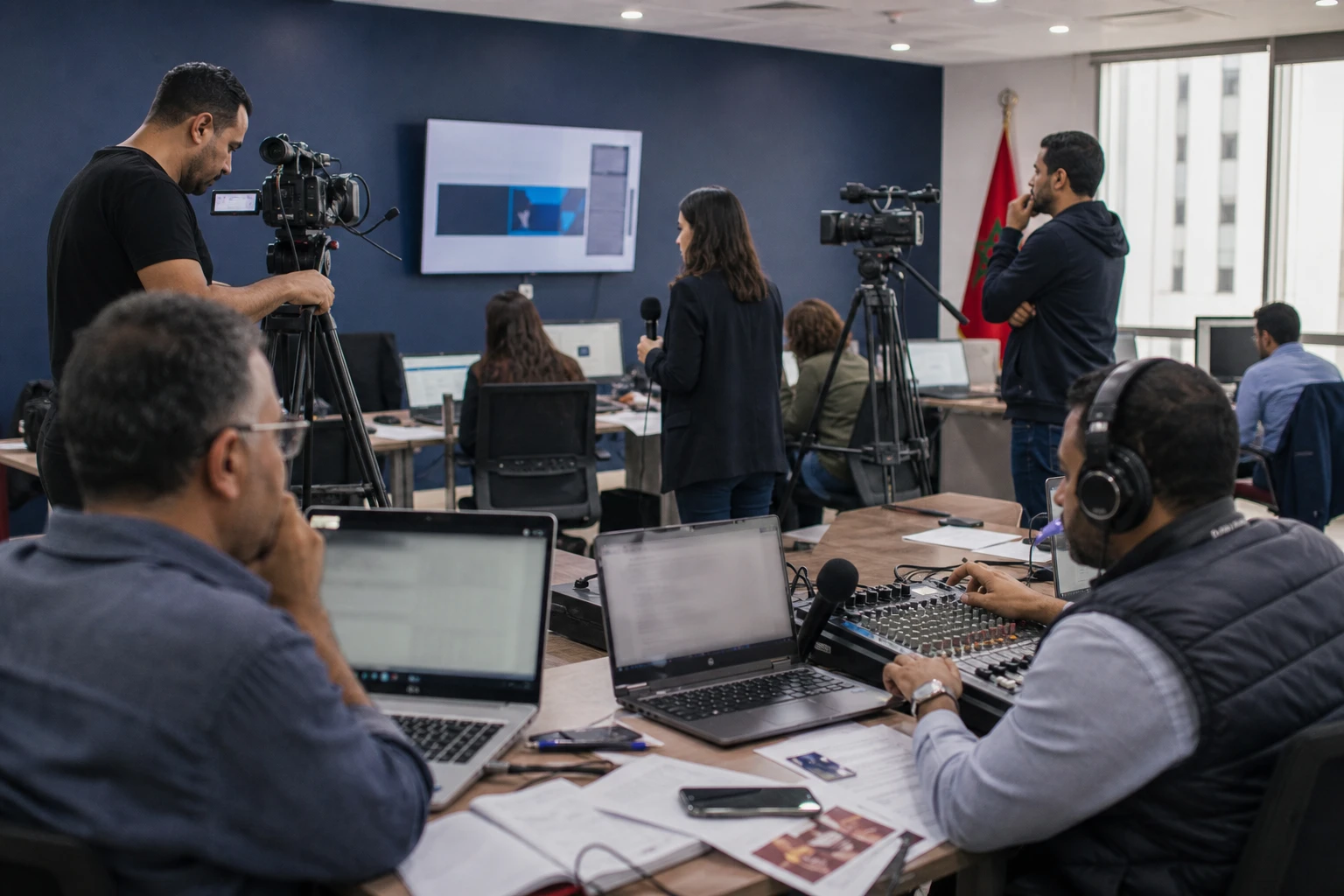
A meeting that signals more than a simple thaw
In Rabat, a diplomatic meeting is never just a matter of protocol. It also reflects the state of a balance of power, the place a partner wants to reclaim and the issues that need to be put back on the table without unnecessary noise. Between Morocco and France, this return to an intense political sequence marks the two capitals’ determination to turn the page on a period of tension and re-establish a more direct working method.
The regional context matters. Morocco is not focused solely on its face-to-face relationship with Paris. Rabat is also seeking to consolidate its African, Mediterranean and Atlantic foothold, while France is trying to preserve political, economic and security access to a key North African partner. In this framework, the Arab Maghreb Union remains stalled, but bilateral relations carry all the more weight because they often serve as a diplomatic shortcut in a region where multilateral frameworks move slowly.
What was at stake in Rabat
On Thursday 16 July 2026, Moroccan head of government Aziz Akhannouch and French Prime Minister Sébastien Lecornu co-chaired the 15th Morocco-France High-Level Meeting in Rabat. The event brought together a large French delegation, with around ten government members accompanying the French head of government, and continued the momentum of President Emmanuel Macron’s state visit to Morocco in late October 2024.
This meeting was far from incidental. The high-level meeting format had lain dormant for several years. Moroccan authorities recalled that the previous edition had taken place seven years earlier, which explains the symbolic significance of its resumption. On the French side, the official message emphasised an “exceptional” relationship to be deepened over time, while Rabat presented the relaunch as the first government-level implementation of the new political framework defined by the two heads of state in 2024.
The visit also included a highly coded gesture: the laying of wreaths at the Mohammed V Mausoleum, where Mohammed V and Hassan II are buried. This visit to a place of memory is more than a communications detail. It places the relationship within a long history of institutional closeness, tensions and successive renewals, with the aim of reaffirming the political bond at the highest level.
The underlying tensions have not disappeared
The current rapprochement does not erase sensitive issues. The Pegasus spyware case, which an investigative consortium attributed to several states, including Morocco, had long poisoned relations. In 2021, media and NGO reports alleged that French officials, including Emmanuel Macron, were among the potential targets. Rabat denied the accusations, but the affair left a lasting mark on bilateral trust.
Since then, Paris and Rabat have opted for a different approach: resuming talks on useful issues without making the Pegasus episode the sole focus of the relationship. It is a pragmatic choice. For France, the aim is to secure cooperation deemed essential in justice, security, economic exchanges, higher education and culture. For Morocco, the stakes are broader: keeping an influential European power on its side as the kingdom strengthens its African partnerships and consolidates its position as a crossroads between Europe, the Atlantic and the Sahel.
Western Sahara remains the other underlying issue. In July 2024, France officially stated that, in its view, the present and future of Western Sahara fall within the framework of Moroccan sovereignty, a position subsequently reiterated in its bilateral relations documents. This shift carried considerable weight in Moroccan diplomacy. It paved the way for political normalisation with Paris and the October 2024 state visit.
Practical effects for governments, businesses and mobility
Beyond the customary formulas, the consequences are highly tangible. Franco-Moroccan relations affect investment, industry, education, student mobility, police and judicial cooperation, as well as high-profile sectors such as energy, agriculture, culture and digital technology. Bilateral exchanges therefore involve more than foreign ministries. They also affect businesses, universities, local authorities and families on both sides of the Mediterranean.
Morocco is also using this period to strengthen its position as an African hub. In debates on Sahelian countries’ access to the Atlantic, supply chains, food security and investment flows into Africa, Rabat wants to be seen as a connector rather than simply a sphere of influence. This view, widespread in Moroccan business circles, gives the rapprochement with France a significance that goes beyond bilateral ties.
For Moroccans living in France, students, entrepreneurs and cultural figures, political stability between Rabat and Paris matters as much as major speeches. It shapes visas, projects, university partnerships, artistic tours and investment. For the authorities, it also makes it possible to put the relationship back on a more predictable footing after years in which every diplomatic episode could be viewed through the lens of an ongoing crisis.
A period to watch in the coming months
The continental significance of this issue lies in its timing. The 2024 state visit restarted the political engine. The Rabat meeting in July 2026 is now testing its administrative and economic strength. The next step announced by Paris is a state visit to France by King Mohammed VI, described as imminent in official statements. That visit will show whether the rapprochement has merely been restored or genuinely consolidated.
In a North African region where balances remain fragile, Morocco-France relations therefore carry symbolic weight. They influence European policy choices, security cooperation in the western Mediterranean and Rabat’s African partnerships. Above all, they are a reminder that between two states bound by history, language, interests and frictions, trust cannot simply be decreed. It is built, meeting by meeting and issue by issue, through visible political gestures and measurable results.