Algeria
 Egypt
 Libya
 Sudan
 Tunisia
 Benin
 Burkina Faso
 Cabo Verde
 Côte d'Ivoire
 Ghana
 Guinea
 Guinea-Bissau
 Liberia
 Mali
 Mauritania
 Niger
 Nigeria
 Senegal
 Sierra Leone
 The Gambia
 Togo
 Cameroon
 Central African Republic
 Chad
 DR Congo
 Equatorial Guinea
 Gabon
 Republic of the Congo
 São Tomé and Príncipe
 Burundi
 Comoros
 Djibouti
 Eritrea
 Ethiopia
 Kenya
 Madagascar
 Malawi
 Mauritius
 Mozambique
 Rwanda
 Seychelles
 Somalia
 South Sudan
 Tanzania
 Uganda
 Angola
 Botswana
 Eswatini
 Lesotho
 Namibia
 South Africa
 Zambia
 Zimbabwe
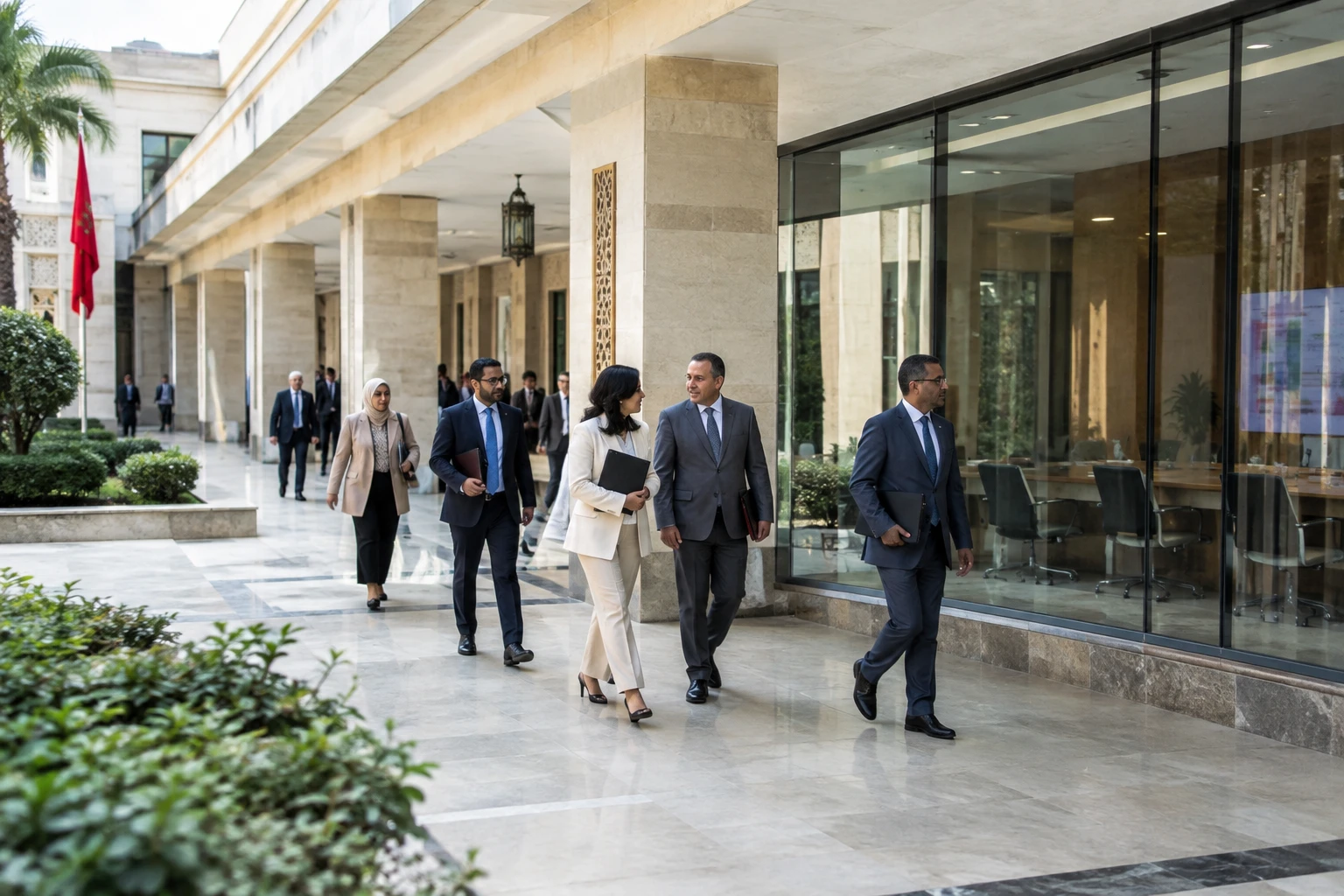
Securing a majority in Morocco means more than simply adding up seats. It also requires agreement on the priorities of a government expected to address jobs, public services and investment. The Party of Authenticity and Modernity (PAM) has found three partners, but their agreement must still be translated into a programme and a ministerial team.
An alliance of 207 MPs, nine seats above the threshold
On 13 October, the PAM, the Istiqlal Party, the Socialist Union of Popular Forces (USFP) and the Party of Progress and Socialism (PPS) announced the formation of a parliamentary majority. Together, they hold 207 of the 395 seats in the House of Representatives. An absolute majority is set at 198 seats.
The breakdown gives the PAM 97 MPs, Istiqlal 65, the USFP 26 and the PPS 19. The total corresponds to the results announced after the legislative elections of 23 September. The National Rally of Independents (RNI), which led the outgoing government and won 66 seats, is not joining the alliance.
Head of Government Fatima Ezzahra El Mansouri must now continue forming her team. Appointed by King Mohammed VI on 29 September, she was tasked with leading consultations following the PAM’s victory. The agreement between the parties provides for each to propose candidates for ministerial posts and for the parties to negotiate a joint programme.
The results and the coalition announcement have been reported by Moroccan media outlets SNRT News and Hespress. The official portal Maroc.ma confirms the agreement between the four parties. International media have also reported on the results and the appointment of the head of government.
Election result opens the way to negotiations
The vote put the PAM in first place, without giving it the majority needed to govern on its own. Its 97 seats make it the largest group in the House, but it therefore needed to bring several partners on board. The announced coalition brings together parties with different histories and outlooks: Istiqlal, a longstanding nationalist party; the USFP, which emerged from the socialist movement; and the PPS, also rooted in the Moroccan left.
This choice does not simply return the outgoing team to office. The RNI, which came second after leading the previous government, remains outside the announced majority. This configuration reshapes parliamentary roles: the four parties will have to coordinate their positions, while MPs who are not part of the coalition will form the parliamentary opposition.
In Morocco, the king appoints the head of government from the party that comes first in the legislative elections, in accordance with Article 47 of the Constitution. The formation of a majority is then crucial to passing legislation and supporting government action. The 2011 Moroccan Constitution governs this procedure. The announcement of an agreement between the parties therefore marks an important political milestone, but does not in itself mean the government has been fully installed.
From political compromise to everyday priorities
The coalition’s challenge will be to turn its number of MPs into coherent decisions. The parties have announced that they will prepare a government programme, but the choices still need to be made: the allocation of portfolios, the timetable for reforms and budgetary commitments. Voters will be able to judge the new executive on concrete results, not just on the balance between parties.
Expectations vary from place to place. In major cities, access to jobs, housing and transport weighs on daily life. In less urbanised areas, access to healthcare, schools and infrastructure remains a central concern. Workers in the informal economy, who do not always enjoy the same protections as formally employed workers, are also affected by measures on incomes and social protection.
The new government will also have to manage the major investments announced in Morocco, particularly those linked to preparations for the 2030 FIFA World Cup, co-hosted with Spain and Portugal. These projects could support economic activity and modernise infrastructure. Their impact will, however, depend on how they are distributed across regions, their cost and their capacity to create lasting jobs. The challenge will be to reconcile these projects with spending that directly affects households.
A national issue in a Maghreb neighbourhood
This political reshuffle is taking place at national level, but it is also set in a regional context. Morocco is a member of the Arab Maghreb Union (AMU), established in 1989 with Algeria, Libya, Mauritania and Tunisia. The organisation aims to foster cooperation between neighbouring North African countries. The parliamentary coalition does not in itself alter regional relations, but the next government’s economic and diplomatic policy will influence how Rabat advances its interests and partnerships.
The government will also have to represent Morocco in continental discussions, particularly within the African Union. For now, the immediate task is domestic: define the programme, allocate responsibilities and secure the support needed in Parliament. The coalition’s 207 seats give it a margin of nine votes above an absolute majority. This gives it room to get started, but the stability of its work will depend on the four parties’ ability to honour their agreements beyond the announcement.