
 Algeria
 Egypt
 Libya
 Sudan
 Tunisia
 Benin
 Burkina Faso
 Cabo Verde
 Côte d'Ivoire
 Ghana
 Guinea
 Guinea-Bissau
 Liberia
 Mali
 Mauritania
 Niger
 Nigeria
 Senegal
 Sierra Leone
 The Gambia
 Togo
 Cameroon
 Central African Republic
 Chad
 DR Congo
 Equatorial Guinea
 Gabon
 Republic of the Congo
 São Tomé and Príncipe
 Burundi
 Comoros
 Djibouti
 Eritrea
 Ethiopia
 Kenya
 Madagascar
 Malawi
 Mauritius
 Mozambique
 Rwanda
 Seychelles
 Somalia
 South Sudan
 Tanzania
 Uganda
 Angola
 Botswana
 Eswatini
 Lesotho
 Namibia
 South Africa
 Zambia
 Zimbabwe
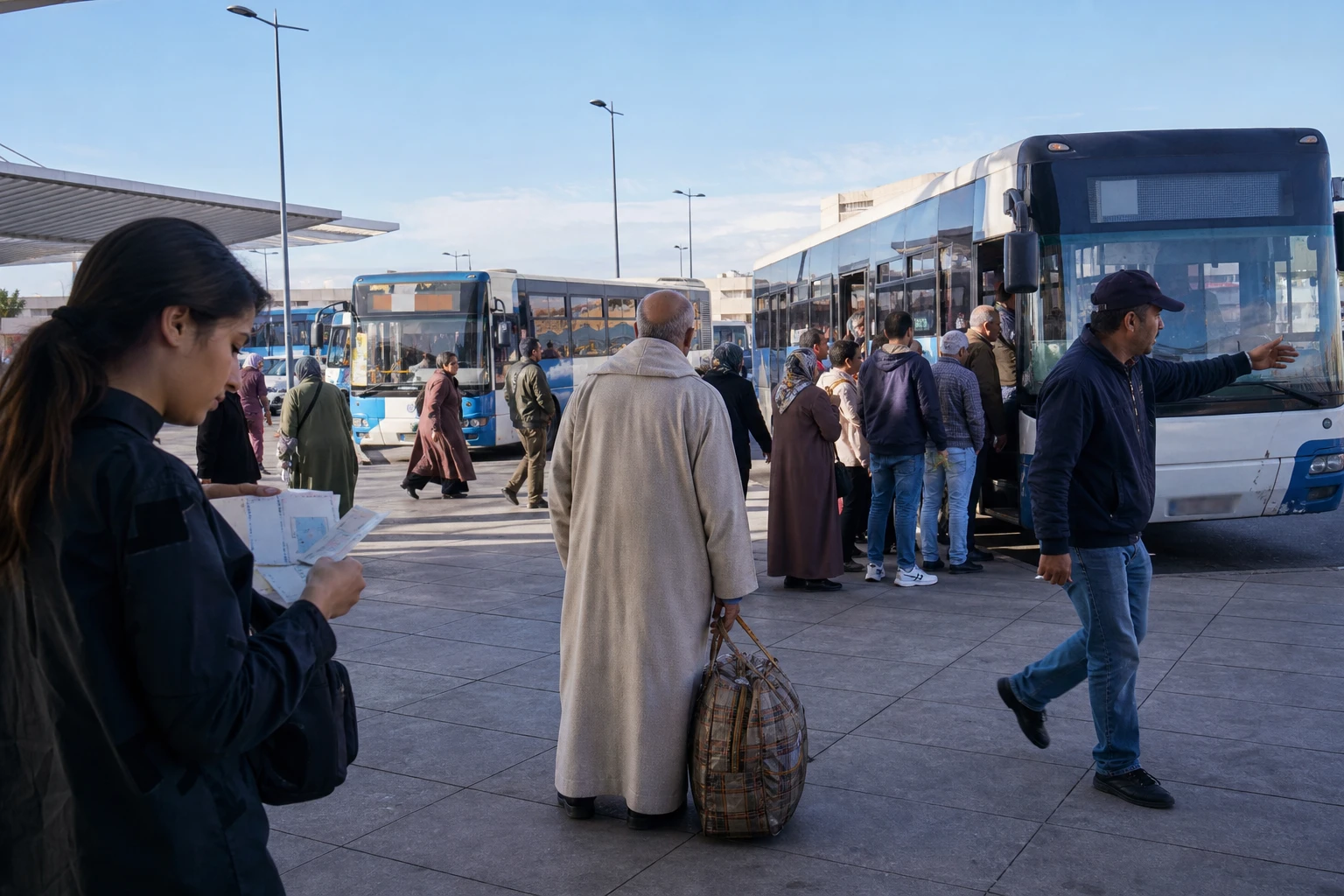
In Rabat and Morocco’s other major cities, the 23 September 2026 election brings two realities into focus. On the one hand, a crowded contest, with 395 seats up for grabs in the House of Representatives. On the other, a registered electorate marked by a stark generational imbalance and uncertainty over youth turnout.
A national election with rules already set
Moroccans will elect members of the House of Representatives on Wednesday 23 September 2026. The chamber examines legislation, scrutinises the government’s actions and plays a part in forming the parliamentary majority. Voting is by direct universal suffrage, under a list-based system.
This will be the twelfth parliamentary election held since Morocco’s independence. The government set the election date in March 2026. The campaign opened on 10 September and ends at midnight on 22 September, in accordance with the official timetable.
A total of 15,801,162 voters are on the general electoral rolls. The figure was published by Morocco’s official portal, which also sets out the composition of the electorate. Twenty-eight parties, including an alliance formed for this election, as well as two lists of independent candidates, are competing for the 395 seats.
The contest includes 1,850 candidate lists and 7,288 candidates nationwide. That amounts to an average of more than 18 candidates for each seat. Among them, 227 sitting MPs are seeking re-election.
Women’s presence among candidates is growing. The authorities have recorded 2,658 female candidates. These include 235 regional lists reserved exclusively for women, comprising 1,783 candidates. The arrangement is intended to maintain women’s representation in an electoral system where access to elected office remains contested.
An ageing electorate faces new expectations
The make-up of the electoral rolls offers an important indication of the challenge of mobilising voters. People aged 60 and over account for more than 29% of registered voters. By contrast, voters aged 18 to 24 make up only 4% of the electorate. Those aged 25 to 34 account for 15%.
This distribution does not mean that young Moroccans are absent from public life. Rather, it is a reminder that reaching the age of majority does not automatically lead to registration on the electoral rolls. To vote, citizens must register under the conditions set out in electoral law. This may help explain the small share of 18- to 24-year-olds on the final rolls.
The electorate also remains predominantly male. Men make up 54% of registered voters, compared with 46% for women. Most voters also live in urban areas, which account for 55%, compared with 45% in rural areas.
These disparities matter in a campaign centred on jobs, purchasing power, housing and social protection. Priorities, however, vary by region. In major cities, access to stable employment and housing costs often top people’s concerns. In rural areas, access to services, regular incomes and infrastructure remains decisive.
Youth employment at the heart of the contest
The employment question gives the generational imbalance on the electoral rolls a concrete significance. According to the High Commission for Planning, the strict unemployment rate among 15- to 24-year-olds stood at 29.2% in the first quarter of 2026. It then fell to 27.2% in the second quarter, while remaining the highest rate among the age groups tracked.
The national strict unemployment rate reached 9.5% in the second quarter of 2026. Unemployment is higher in urban areas and among women. These disparities show that employment cannot be reduced to a single national indicator. It varies according to age, sex, qualifications and place of residence.
For young graduates, the challenge is securing a first job and aligning training with businesses’ needs. For some young people in rural areas, it also involves mobility, vocational training and the chance to earn a living without leaving their home region.
Parties must therefore persuade an older electorate, which is often better represented on the rolls, while addressing the expectations of a generation less represented among registered voters. This gap could affect perceptions of party platforms and trust in institutions.
Turnout and trust as political tests
The outcome on 23 September will not be measured solely by the number of seats won. Turnout will be another important indicator. It will show whether parties can mobilise voters beyond their usual networks and reconnect with those who feel distant from institutional politics.
The authorities have tightened the rules governing the campaign. Oversight of spending, rules on the use of public media and efforts to combat false information are among the measures highlighted for this election. Campaign accounts must be filed within 90 days of the results being declared.
Oversight also relies on the presence of domestic and international observers. The special commission responsible for accreditation has provided for the participation of independent organisations. A mission from the League of Arab States is also among the observers announced.
Moroccans living abroad vote by proxy, under the arrangements set out in the organic law on the House of Representatives. This allows the diaspora to take part from outside the country, without introducing direct voting at consular offices.
An election watched beyond Morocco’s borders
The next government will have to act in a context in which Morocco is pursuing major investments in infrastructure, transport and public facilities. Preparations for the 2030 World Cup, hosted with Spain and Portugal, add an economic and regional dimension to the choices facing the next parliament.
Budget decisions will affect both the major cities involved in projects linked to the competition and the regions hoping for more lasting benefits. The question will be how to align international investment, local job creation and better public services.
In North Africa, Morocco’s election comes at a time when the political and economic paths of Maghreb countries remain very different. Morocco is not part of an active regional economic community comparable to ECOWAS or SADC. Its regional engagement takes place notably through the Arab Maghreb Union, the African Union and its economic partnerships across the continent.
The first provisional results are expected from 24 September 2026. They will show the new balance of power in the House of Representatives. Above all, they will indicate whether political parties have succeeded in turning concerns over jobs, purchasing power and public services into electoral participation.



