
 Algeria
 Egypt
 Libya
 Sudan
 Tunisia
 Benin
 Burkina Faso
 Cabo Verde
 Côte d'Ivoire
 Ghana
 Guinea
 Guinea-Bissau
 Liberia
 Mali
 Mauritania
 Niger
 Nigeria
 Senegal
 Sierra Leone
 The Gambia
 Togo
 Cameroon
 Central African Republic
 Chad
 DR Congo
 Equatorial Guinea
 Gabon
 Republic of the Congo
 São Tomé and Príncipe
 Burundi
 Comoros
 Djibouti
 Eritrea
 Ethiopia
 Kenya
 Madagascar
 Malawi
 Mauritius
 Mozambique
 Rwanda
 Seychelles
 Somalia
 South Sudan
 Tanzania
 Uganda
 Angola
 Botswana
 Eswatini
 Lesotho
 Namibia
 South Africa
 Zambia
 Zimbabwe
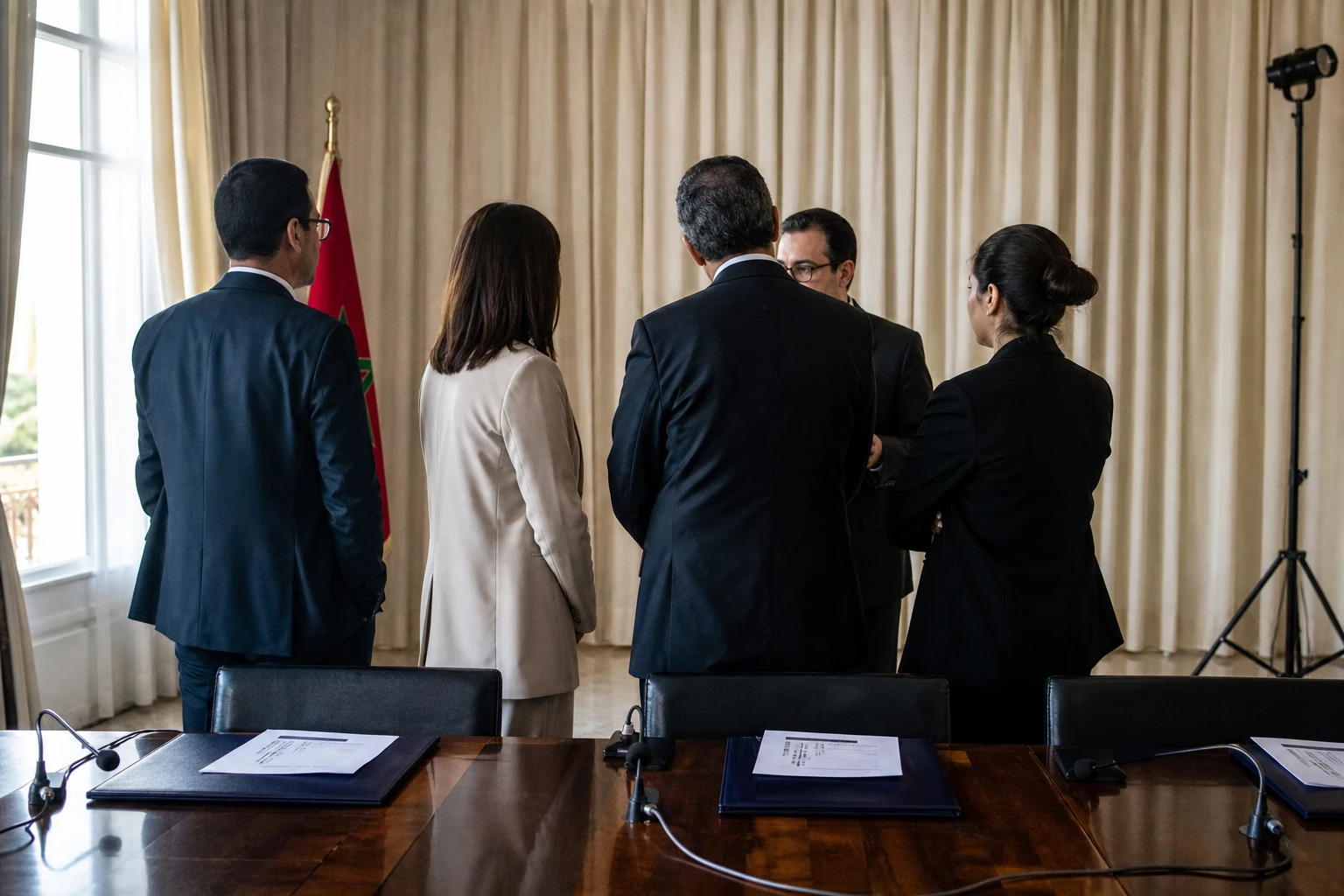
A campaign focused on purchasing power and trust
In Rabat, the campaign for the 23 September 2026 legislative elections opens in a climate where the economy weighs as heavily as politics. The vote comes as the average Moroccan awaits concrete answers on jobs, regional disparities and the quality of public services, in a country where official discourse has for years stressed reducing the divide between towns and rural areas.
The timetable is now set. The official campaign begins at midnight on Thursday 10 September 2026 and is due to end at midnight on 22 September, ahead of the vote the following day. The framework was prepared by the Ministry of the Interior, HACA and public authorities, which have issued numerous rules and reminders on pluralism, administrative neutrality and the monitoring of election spending.
This is not merely a party-political event. It also tests the ability of Moroccan institutions to foster a clear debate, in a country where the head of government is appointed by the king from among members of the party that comes first in the legislative elections, while the monarch retains responsibility for the main strategic direction. The vote therefore puts the balance between electoral competition, government leadership and institutional continuity at stake.
The 2026 vote, a barometer of the post-2021 period
Politically, the National Rally of Independents, the party in power since 2021, is entering the campaign aiming to stay in first place. Moroccan authorities say 27 parties are taking part in the vote and that 702 candidate lists had already been submitted through the electronic platform by early September. The announced electorate stands at around 16 million registered voters, 46% of them women.
The RNI is seeking to defend its record after five years in government, following an executive led by Aziz Akhannouch until his withdrawal from the party leadership, though this has not removed the party’s profile from the campaign. The Authenticity and Modernity Party and Istiqlal, meanwhile, want to carry more weight in a majority where competition for first place remains fierce, in a system where the order in which parties finish determines the shape of the government.
The opposition is trying to reassert itself on social issues. The Justice and Development Party is once again banking on denouncing corruption and criticising the handling of inequality, after its heavy defeat in 2021. Other parties prefer to outbid one another with economic pledges, while several observers note that the campaign remains short on substance and heavily dependent on local dynamics.
Few young voters, visible youth mobilisation
Here lies Morocco’s paradox. Young people dominate public debate, but have little weight at the ballot box. Official data cited by several outlets indicate that 18- to 24-year-olds account for around 3% of registered voters. That is a small share, even as people under 35 remain the most exposed to unemployment and the insecurity of entering the workforce.
In its recent work on the labour market, the High Commission for Planning has shown that unemployment remains particularly acute among younger people, even though statistical methods were revised in 2026. This reality fuels a sense of disconnect between political promises and daily life, particularly in urban outskirts, small towns and rural areas, where access to formal employment remains more limited.
The monarch himself has brought the issue of uneven development back to the fore, calling for an end to a model that moves at different speeds and for social and regional reforms to be accelerated. This echoes a recurring observation in national debate: major infrastructure projects are advancing, but their translation into stable jobs, better-distributed public services and social mobility is slower than expected.
Social pressure does not come from statistics alone. Tensions observed around Ceuta at the end of July were a reminder of the depth of discontent among some young people, particularly online and in informal protests. The migration issue, often viewed through the lens of relations with Spain, also reflects very real Moroccan experiences: departure, waiting, being stranded and searching for an economic way forward.
Beyond Morocco, a signal for North Africa
The campaign is also of regional interest. Morocco remains a central North African player, at the intersection of Mediterranean, Maghreb and African dynamics. In this context, the way Rabat manages a change of government or its continuation affects its institutional credibility, its image among investors and its ability to advance major diplomatic and economic issues.
The 2026 vote also has continental significance because of the rules governing it. HACA has emphasised pluralism in audiovisual media and the representation of women, young people, Moroccans living abroad and people with disabilities. The issue goes beyond electoral mechanics: it says something about the place Morocco wants to give to regulated political expression, in an Africa where the quality of electoral processes remains both a test of stability and a marker of public trust.
The next stage will come quickly. The campaign is short, expectations are high and each camp has limited room for manoeuvre. The real verdict will not rest solely on the scores of the RNI, the PAM or Istiqlal. It will also show whether Moroccan voters still see legislative elections as a means of correcting the social disparities the country continues to face, or as just another political ritual.



