
 Algeria
 Egypt
 Libya
 Sudan
 Tunisia
 Benin
 Burkina Faso
 Cabo Verde
 Côte d'Ivoire
 Ghana
 Guinea
 Guinea-Bissau
 Liberia
 Mali
 Mauritania
 Niger
 Nigeria
 Senegal
 Sierra Leone
 The Gambia
 Togo
 Cameroon
 Central African Republic
 Chad
 DR Congo
 Equatorial Guinea
 Gabon
 Republic of the Congo
 São Tomé and Príncipe
 Burundi
 Comoros
 Djibouti
 Eritrea
 Ethiopia
 Kenya
 Madagascar
 Malawi
 Mauritius
 Mozambique
 Rwanda
 Seychelles
 Somalia
 South Sudan
 Tanzania
 Uganda
 Angola
 Botswana
 Eswatini
 Lesotho
 Namibia
 South Africa
 Zambia
 Zimbabwe
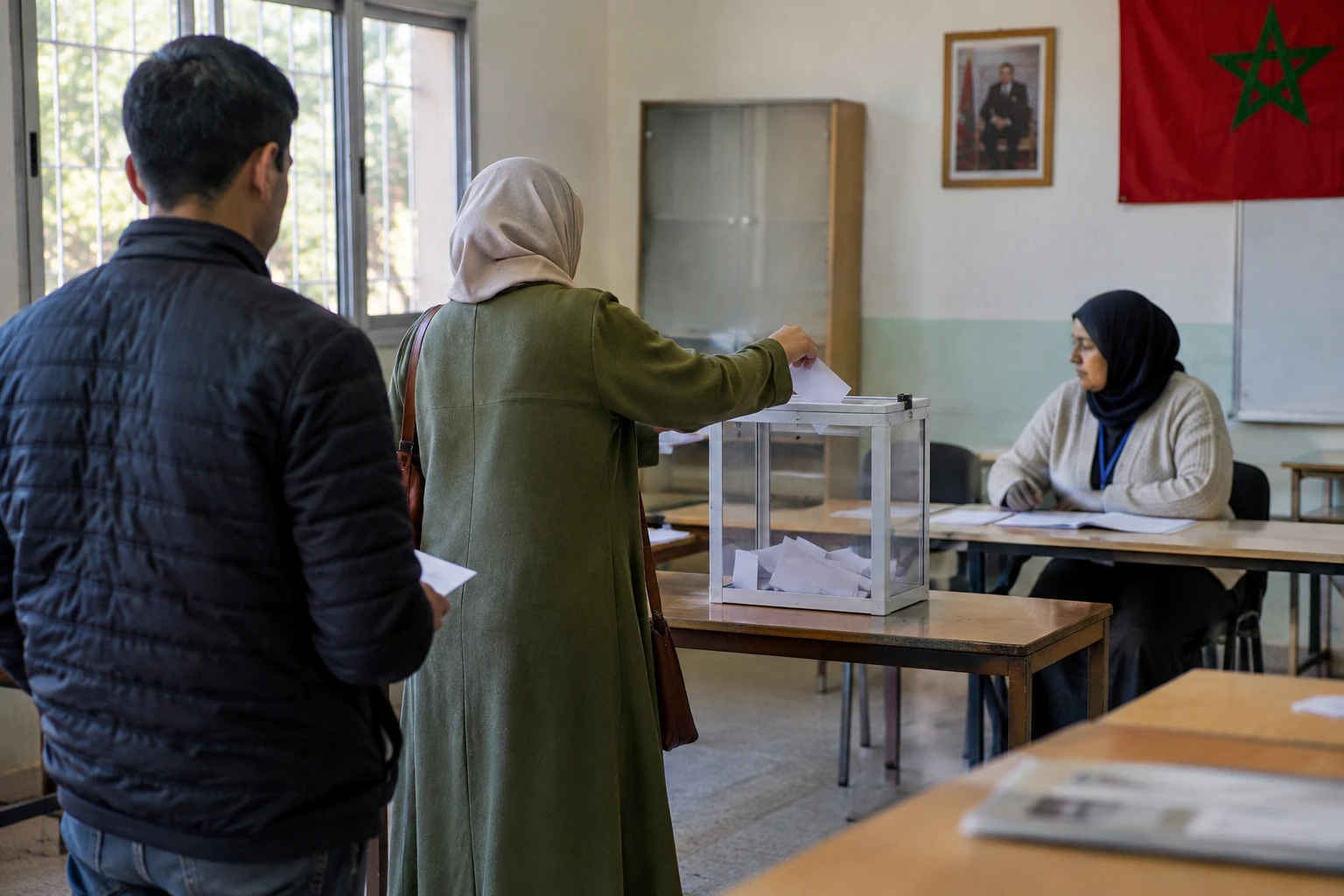
In Morocco, appointing a woman to head the government has crossed a symbolic threshold. But for Moroccan women, the measure of change will also lie in laws, public services and real opportunities to study and work.
A symbol now faces decisions
On 29 September 2026, King Mohammed VI appointed Fatima Ezzahra El Mansouri as head of government and tasked her with forming the executive. The first woman to hold the post in Morocco, she now leads a government formed following the legislative elections of 23 September. The coalition brings together the Authenticity and Modernity Party (PAM), Istiqlal, the Socialist Union of Popular Forces and the Party of Progress and Socialism. The official Moroccan statement on her appointment and national media confirm this political development.
The debate over women’s place in power has also surfaced in public reactions. Former Justice Minister Mustapha Ramid invoked a religious saying to challenge a woman’s legitimacy to lead the government. This position, reported in the original material, illustrates the resistance within the debate. It does not, however, represent either the views of Moroccan society or the country’s religious interpretations as a whole.
In an interview published before the appointment, Moroccan activist Yasmina Benslimane highlighted the new head of government’s political career, as well as inequalities in access to networks of power. This distinction is essential: a first can shift perceptions without, by itself, changing the rules that shape women’s everyday lives.
The Moudawana: the first political test
Reform of the family code, known as the Moudawana, will be one of the most revealing issues. The code governs marriage, divorce, child custody and inheritance, among other matters. Proposed revisions were put forward after a process launched in 2023. In December 2024, the Royal Cabinet said that more than a hundred proposals had been reviewed and that some issues had been referred to the Supreme Council of Ulema, the official body responsible for issuing religious opinions. The Royal Cabinet statement on the review describes this stage.
The proposals address sensitive issues, including child marriage, polygamy, divorce and inheritance. They are not yet equivalent to an enacted law: the text must go through the necessary political and legislative stages. The Supreme Council of Ulema considers issues deemed to fall within religious references. The government will therefore have to work with parliament, religious institutions, political parties and associations that hold sometimes opposing positions.
Inheritance rules remain a concern for women’s rights organisations, particularly in cases where daughters inherit a smaller share than sons in comparable circumstances. The issue is not limited to the principle of equality: it also concerns women’s access to property and their economic autonomy. The consequences vary according to families, regions and available resources.
Education and services: persistent gaps
Access to education shows why symbols must be followed by practical policies. Data published by the High Commission for Planning (HCP) show that in 2025, the enrolment rate for rural girls aged 15 to 17 was 62%. This is below the rates in urban areas. It also differs from the 55% rate cited in the original material: the indicators and statistical series should therefore not be conflated. The HCP publication on rights and school enrolment documents this persistent gap.
For adolescent girls in rural areas, distance from schools, travel costs and economic pressures can make it difficult to continue their studies. Menstrual health needs are also among the obstacles cited by young Moroccan women. A lasting response requires measures suited to local realities: transport, school infrastructure, social support and access to hygiene products.
These policies also affect the economy. An interrupted education narrows young women’s choices in training and employment. Conversely, accessible services can broaden their participation in economic life, in cities and rural areas alike. Outcomes will depend on budgets, local implementation and the ability of public administrations to reach those furthest from services.
Shared power, high expectations
Morocco is a constitutional monarchy in which the king retains significant powers, while the government conducts public policy within the framework set by the Constitution. This division of responsibilities makes it unlikely that an appointment, however historic, could by itself change the direction of the state. El Mansouri nevertheless has a political platform and direct responsibility for her team’s priorities.
On 19 October, she presented the government programme for 2026–2031 to both chambers of parliament. The public broadcaster SNRT reported that the programme linked the executive’s priorities to women’s empowerment, education, employment and social protection. Announced commitments will need to be distinguished from measures that are actually funded and implemented. SNRT News’s report on the presentation to parliament provides an initial indication of the stated priorities.
The issue extends beyond Morocco’s borders without obscuring the differences between North African countries. It forms part of a continental debate on political representation: how many women reach the highest offices, and what changes follow their arrival? In Morocco, the next benchmarks will be legislative decisions on the Moudawana, the resources devoted to services and measurable outcomes in education and employment. The appointment opened a door. The government’s actions, and the scrutiny exercised by institutions and society, will show what it really makes possible.



