Algeria
 Egypt
 Libya
 Sudan
 Tunisia
 Benin
 Burkina Faso
 Cabo Verde
 Côte d'Ivoire
 Ghana
 Guinea
 Guinea-Bissau
 Liberia
 Mali
 Mauritania
 Niger
 Nigeria
 Senegal
 Sierra Leone
 The Gambia
 Togo
 Cameroon
 Central African Republic
 Chad
 DR Congo
 Equatorial Guinea
 Gabon
 Republic of the Congo
 São Tomé and Príncipe
 Burundi
 Comoros
 Djibouti
 Eritrea
 Ethiopia
 Kenya
 Madagascar
 Malawi
 Mauritius
 Mozambique
 Rwanda
 Seychelles
 Somalia
 South Sudan
 Tanzania
 Uganda
 Angola
 Botswana
 Eswatini
 Lesotho
 Namibia
 South Africa
 Zambia
 Zimbabwe
A power measured by its direction, not just its infrastructure
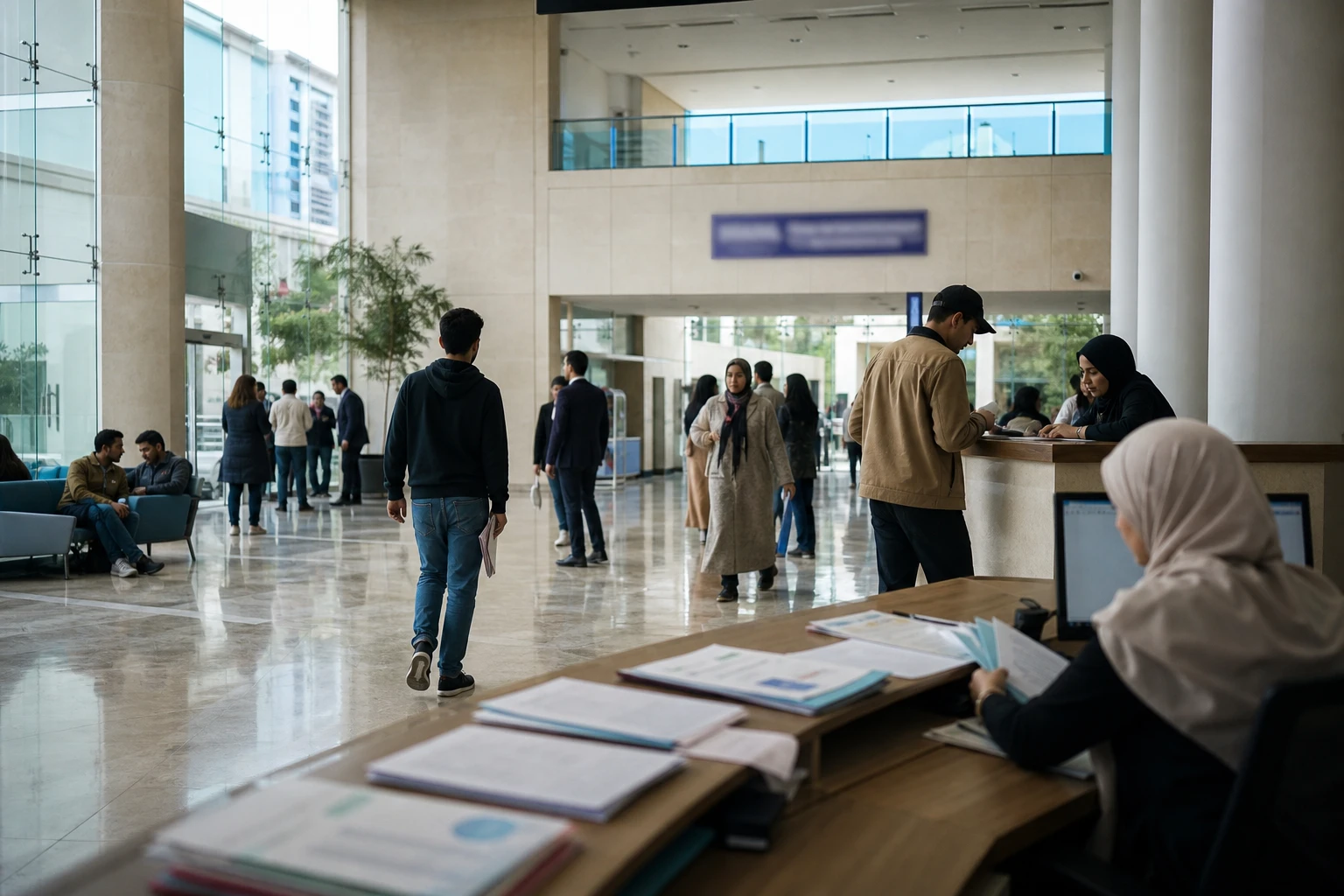
In Rabat, the question is no longer simply whether Morocco has moved up a gear. It is more demanding: is this transformation creating real opportunities for Moroccans, especially young people and communities far from the main transport routes? Recent figures show that a country can be on a solid economic trajectory while leaving too many people behind. In 2025, unemployment among 15- to 24-year-olds remained high in Morocco, at 37.2%, according to the High Commission for Planning.
At the same time, several indicators confirm the Kingdom’s growing strength. In 2025, the International Monetary Fund described the economy as resilient, supported by domestic demand and reforms intended to boost employment. The World Bank, too, stressed in 2026 the need to transform a model still too dependent on public investment into one that generates more private-sector jobs.
Rabat, the political centre of a Morocco looking towards Africa
Morocco is part of North Africa, with Rabat as its political capital and Casablanca as its main economic hub. For several years, the Kingdom has sought to combine industrialisation, logistics, finance and economic diplomacy. This strategy also extends across the continent. In 2025, the Africa Investment Forum was held in Rabat, highlighting $15.3 billion in investment interest for 39 bankable projects. The event also attracted more than 1,700 delegates, according to the African Development Bank.
This positioning is no trivial matter. In its analyses of Morocco, the African Development Bank highlights a country with a developed financial system, favourable access to international markets and expected growth of around 4.7% in 2025, after 3.8% in 2024. UNCTAD also notes that foreign direct investment in Morocco rose by 55% in 2024, to $1.6 billion, as North Africa attracted a significant share of capital from across the continent and beyond.
What the facts say about Morocco’s model
The heart of the debate is this: Morocco has developed real strengths, but their benefits remain unevenly distributed. The World Bank estimates that deeper structural reform could enable the country to create an additional 1.7 million jobs by 2035. The same assessment calls for greater openness to small and medium-sized enterprises, women’s employment and the integration of young people into the formal economy.
The labour market remains the main test of credibility. In 2025, the HCP counted 1.621 million unemployed people, with a national rate of 13.3% and rising underemployment. The contrast between cities and rural areas remains stark. Rural areas are more exposed to climate hazards and the seasonal nature of agriculture, weighing on income stability. The IMF has also noted that agricultural job losses since 2019 have contributed significantly to undermining social stability.
In this context, the reforms announced by Rabat have concrete implications. In 2025, the government set out a new employment roadmap, including a strengthened ANAPEC, the public employment agency, and particular attention to unemployed people without qualifications. At the same time, it continued to anchor its development policy in the New Development Model, launched following the work of a commission established by royal decision. This framework aims for a more productive Morocco, but also one that is more equitable between urban centres and outlying areas.
External strength, domestic vulnerability
Morocco is therefore advancing on two fronts at once. Abroad, it is consolidating its image as a regional hub, able to host major financial forums, raise capital and speak the language of investors. At home, it still has to meet a simple expectation: that growth translates into more jobs, distributed more evenly and more accessible to all. That is where the difference between influence and lasting power will be decided.
The social question is all the more sensitive as the country prepares for major sporting and economic events, with substantial needs in infrastructure, training and services. The IMF believes these projects can support activity and employment, provided labour-market and business-climate reforms keep pace. Without that, growth risks benefiting capital-intensive sectors more than young workers, graduates and less integrated regions.
For urban households, the issue is the quality of the jobs created and the cost of living. For rural households, it is first and foremost about securing incomes that are less dependent on water availability and harvests. For entrepreneurs, the challenge is access to credit, public procurement and clearer rules. For the state, the priority is to turn macroeconomic performance into lasting social confidence. Strength is not measured only by the ability to attract capital. It is also judged by how that capital reaches communities and reduces disparities.
What Morocco says to the rest of the continent
The implications are continental. Morocco exemplifies a central African debate: how to build an economic power without reproducing pockets of exclusion. This question also runs through North Africa, the African Union and regional organisations, as states seek capital, jobs and greater productive sovereignty. The fact that Rabat hosts major investment events is therefore more than symbolic. It confirms the Kingdom’s role as a crossroads between Africa, the Mediterranean and international markets.
The next stage will be shaped by a very concrete timetable: execution of the 2026 budget, the scaling-up of employment reforms, and the ability of industrial and logistics projects to absorb more local labour. If these initiatives lead to more formal jobs, training and regional equity, Morocco will strengthen its standing as a regional power that delivers. Otherwise, the gap between macroeconomic success and social justice will remain the model’s main blind spot.