
 Algeria
 Egypt
 Libya
 Sudan
 Tunisia
 Benin
 Burkina Faso
 Cabo Verde
 Côte d'Ivoire
 Ghana
 Guinea
 Guinea-Bissau
 Liberia
 Mali
 Mauritania
 Niger
 Nigeria
 Senegal
 Sierra Leone
 The Gambia
 Togo
 Cameroon
 Central African Republic
 Chad
 DR Congo
 Equatorial Guinea
 Gabon
 Republic of the Congo
 São Tomé and Príncipe
 Burundi
 Comoros
 Djibouti
 Eritrea
 Ethiopia
 Kenya
 Madagascar
 Malawi
 Mauritius
 Mozambique
 Rwanda
 Seychelles
 Somalia
 South Sudan
 Tanzania
 Uganda
 Angola
 Botswana
 Eswatini
 Lesotho
 Namibia
 South Africa
 Zambia
 Zimbabwe
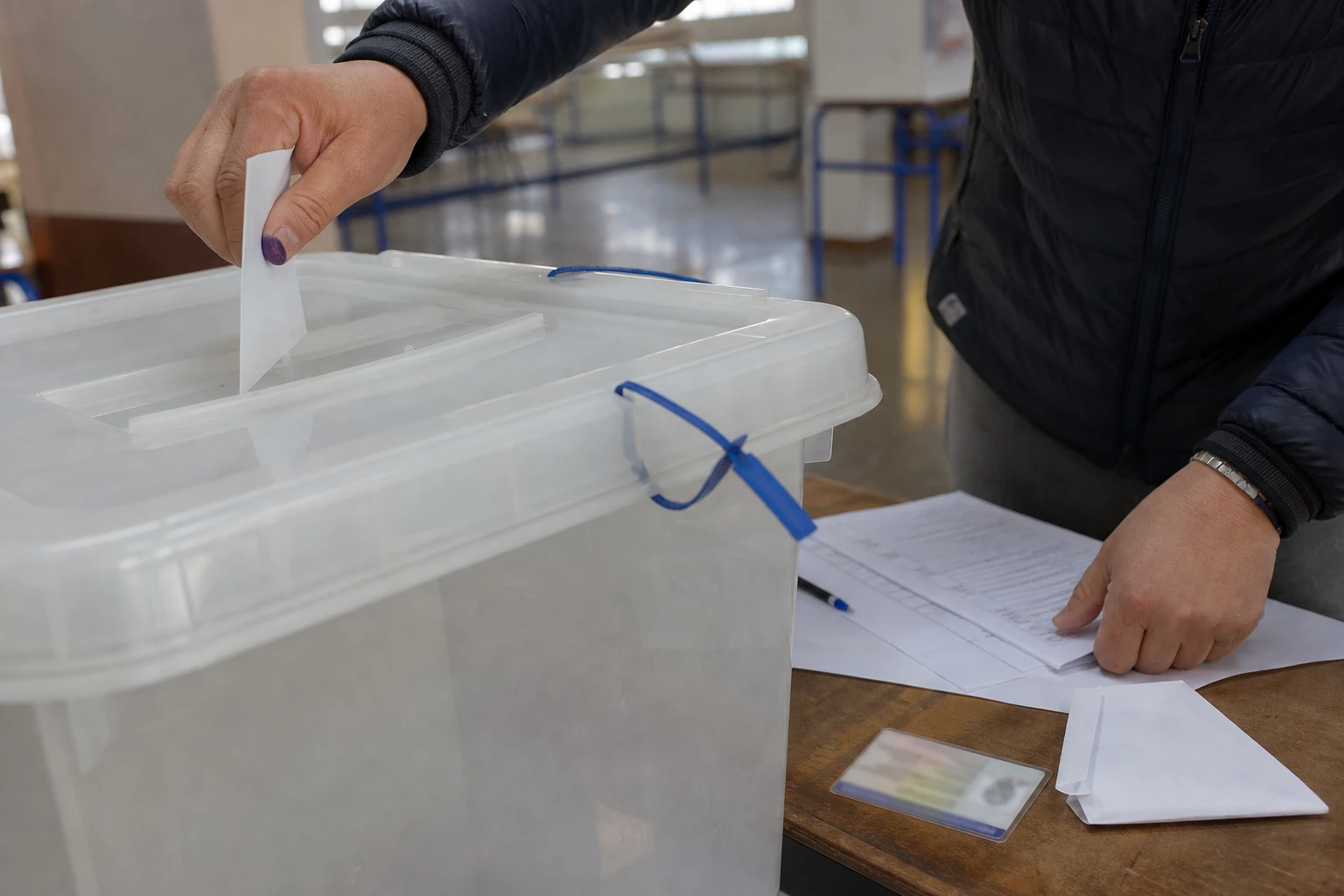
A diaspora vital to the economy, but kept at arm’s length from the ballot box
Morocco knows very well how to count its citizens abroad when it comes to foreign currency, border crossings or logistical organisation. Their place in national representation, by contrast, remains unclear. Two days before the 23 September 2026 legislative elections, the contradiction is stark: the diaspora carries significant economic weight, but no seats are reserved for it in the House of Representatives.
This issue goes beyond the mechanics of voting. It concerns how Rabat regards a community estimated at several million people, with a strong presence in Europe and the Gulf, often called upon as a source of investment, family support and the kingdom’s influence abroad. In the Maghreb, where states are still seeking a balance between sovereignty, mobility and the political rights of expatriates, Morocco’s case remains one of the most revealing.
The September election locks in the territorial framework
On 23 September 2026, 395 seats are at stake in the House of Representatives. Nominations closed on 9 September, after 1,850 lists and 7,288 candidacies had been registered across all local and regional constituencies. The official campaign began on 10 September and ends on 22 September. Overseas constituencies have no place in this framework.
Moroccans living abroad are not entirely excluded from voting. Those registered on the electoral rolls can vote in their constituency of attachment in Morocco, or cast a proxy vote. The administration has also highlighted an electronic procedure, E-Procuration, to facilitate this mechanism. But the principle remains the same: the diaspora votes remotely from where it lives, without being able to choose directly a member of parliament to represent it from abroad.
The contrast is all the more striking given that the Interior Ministry has already laid out the election’s structure in detail. The lists are territorial. The seats are territorial. Representation therefore remains tied to the kingdom’s internal geography, not to the real geography of the lives of millions of Moroccans settled outside the country.
An old debate, never settled
This is not a new issue. Article 17 of the 2011 Constitution recognises the right of Moroccans living abroad to vote and stand for election. But the text leaves the practical arrangements to the law. In other words, the principle is there, but its political implementation remains incomplete.
Morocco had already had a form of overseas representation between 1984 and 1992, with five MPs elected in constituencies established outside the national territory. Since then, that arrangement has not been restored. Back in 2005, King Mohammed VI had announced the idea of legislative constituencies abroad. Twenty-one years later, the promise has not been translated into votes.
Political parties have repeatedly tried to reopen the debate. In 2021, Istiqlal argued for direct participation from countries of residence. Other parties later advocated a dedicated list or overseas constituencies. But the state chose a different approach: encouraging candidates from the diaspora to stand in ordinary constituencies, without creating a specific mandate.
The economic weight of Moroccans abroad makes the gap more visible
The figures show the scale of the gap. According to the Foreign Exchange Office, remittances from Moroccans living abroad reached 122.023 billion dirhams in 2025, up from 118.979 billion a year earlier. By the end of July 2026, they had already reached 74.788 billion dirhams, an increase of 8.1% compared with the same period in 2025. These flows support the balance of payments and underpin the consumption of many households.
The kingdom also knows how to mobilise these citizens logistically. Operation Marhaba 2026 welcomed 4,137,594 Moroccans living abroad between 10 June and 15 September, according to figures reported this week, with very high passenger numbers at ports and airports at peak times. Here too, the state has demonstrated remarkable organisational capacity. But this efficiency does not translate into equivalent political rights.
This asymmetry is at the heart of the debate. Moroccans living abroad are courted for their remittances, expertise, investment and role in promoting the country’s image. In return, their own agenda remains largely invisible in the electoral arena: taxation, pensions, inheritance, language education, consular services and recognition of transnational life experiences. This is why the absence of reserved seats is more than an institutional detail.
Institutional reform announced, but not yet brought to life
The royal speech of 6 November 2024 restarted the process. It announced a revamp of the Council of the Moroccan Community Abroad (CCME) and the creation of the Mohammedian Foundation for Moroccans Living Abroad. The aim is to rationalise responsibilities scattered across several bodies and give public policy towards the diaspora a clearer operational arm. But on the eve of the election, the arrangement has not led to new elected representation.
The CCME remains an advisory body. According to the information available, the announced Foundation is intended to coordinate public action. This could improve administrative, cultural or economic support. It does not replace a parliamentary mandate. Nor does it resolve the fundamental question: who represents the specific interests of a Moroccan in Brussels, Montreal, Madrid or Turin within the legislature?
For North Africa, the issue has wider significance. Mobility is extensive, families are transnational, and local economies often depend on transfers from abroad. In this context, Morocco offers a hybrid model: highly open to the movement of people and well organised to capture their contributions, but still cautious when it comes to giving them autonomous institutional weight. The question will not disappear after 23 September. It will return with the next electoral reform, the next remittance figures and, above all, the next generation of Moroccans born outside the kingdom.



