
 Algeria
 Egypt
 Libya
 Sudan
 Tunisia
 Benin
 Burkina Faso
 Cabo Verde
 Côte d'Ivoire
 Ghana
 Guinea
 Guinea-Bissau
 Liberia
 Mali
 Mauritania
 Niger
 Nigeria
 Senegal
 Sierra Leone
 The Gambia
 Togo
 Cameroon
 Central African Republic
 Chad
 DR Congo
 Equatorial Guinea
 Gabon
 Republic of the Congo
 São Tomé and Príncipe
 Burundi
 Comoros
 Djibouti
 Eritrea
 Ethiopia
 Kenya
 Madagascar
 Malawi
 Mauritius
 Mozambique
 Rwanda
 Seychelles
 Somalia
 South Sudan
 Tanzania
 Uganda
 Angola
 Botswana
 Eswatini
 Lesotho
 Namibia
 South Africa
 Zambia
 Zimbabwe
A Mediterranean border under digital pressure
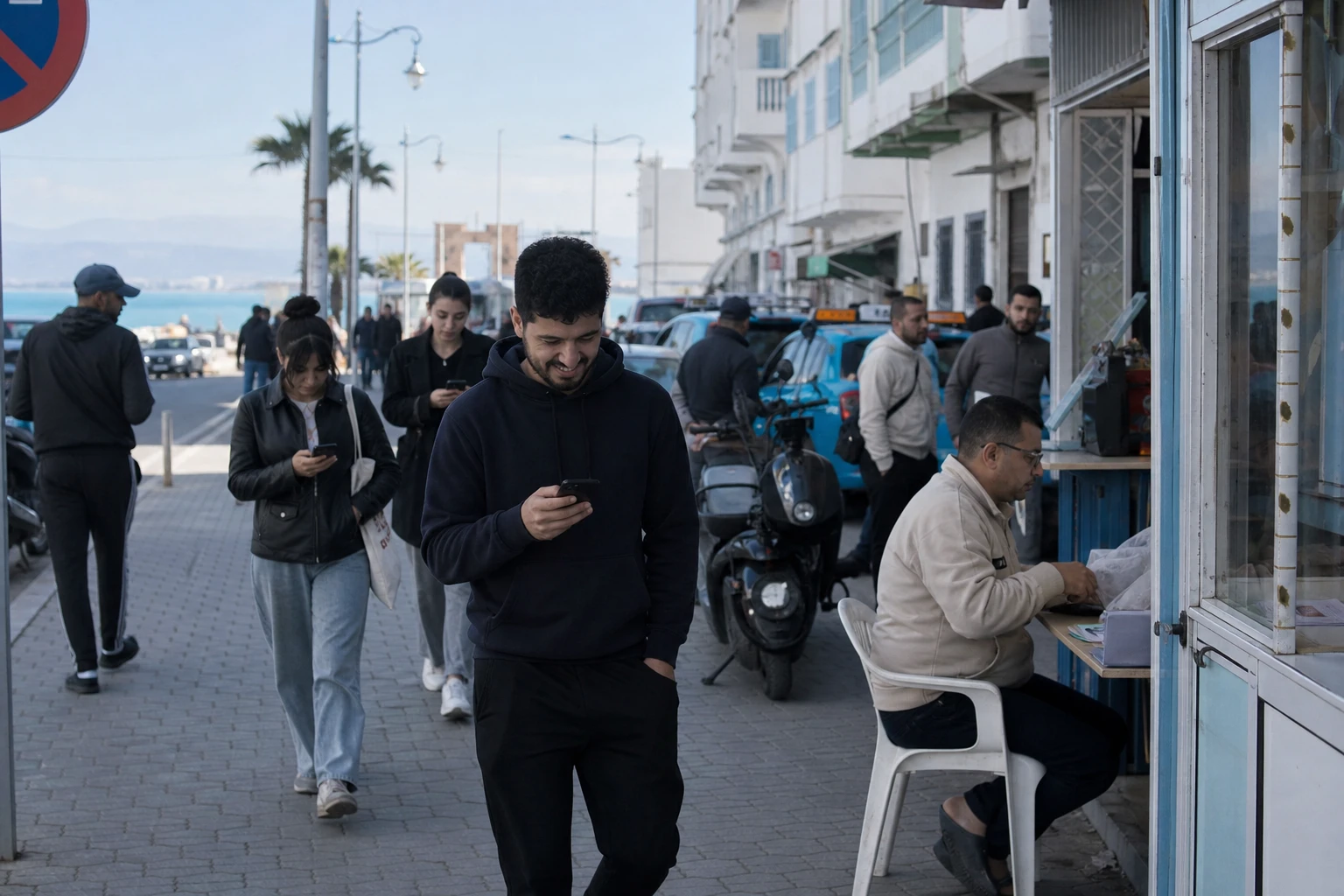
In Fnideq, tension does not always begin at the fence. It now emerges on phones, in private groups and viral videos promising an easy crossing into Ceuta. In northern Morocco, this digital rumour is enough to prompt a rise in troop numbers, close off space and serve as a reminder that a border is not merely a line on a map. It is also a test of control, foresight and credibility for the authorities on both shores.
Morocco lies at the heart of a sensitive migration corridor, between the western Mediterranean, Andalusia and the two Spanish enclaves of Ceuta and Melilla. These two autonomous cities, together with Moroccan territory, are the European Union’s only land borders on the African continent. The issue therefore goes beyond local concerns. It also affects Rabat, Madrid and, more broadly, the management of mobility between Europe and Africa.
What Rabat has decided to do
On Wednesday 13 August 2026, Morocco announced stepped-up security along the border with Ceuta after calls for mass crossings resurfaced on social media. The AP news agency observed the deployment of hundreds of police officers in riot gear, with water cannon and ambulances visible on the Moroccan side. The interior ministry spoke of a «continuous vigilance system» and said all necessary measures had been taken to prevent any attempt at an illegal crossing.
In its statement, the ministry also said it had arrested and placed under investigation a group suspected of incitement. This detail matters because it shows that the Moroccan state is not treating the issue solely as a public-order problem. It also sees it as a phenomenon organised online, capable of mobilising young people through messages that are often anonymous and difficult to trace.
The developments come as messages circulated suggesting a new attempt on Saturday 16 August, amid an atmosphere shaped by events in late July. According to AP, around 72,000 migrants then tried to reach Ceuta, mainly by swimming or crossing the breakwater, and at least 80 people died, according to official figures cited by the agency.
The late-July wave left its mark
The precedent is recent and grave. On 30 July 2026, thousands of people crossed the border from Morocco into Ceuta, prompting Spain to deploy the army in support of the police. AP reported at least nine deaths in the episode, while Spanish authorities attributed the crisis to a massive, sudden influx that was difficult to contain without reinforcements.
In Morocco, this pressure is felt first in Fnideq and neighbouring municipalities, but its effects quickly extend to security services, families and the local economy. In a border town, a migration alert can slow traffic, disrupt businesses, overwhelm emergency services and tie up logistical resources that could have been used elsewhere. For residents, the border then becomes a place of work, transit and surveillance all at once.
This is not the first time the region has seen rising tension over Ceuta and Melilla. In 2022, the National Human Rights Council, an official Moroccan institution based in Rabat, reported 23 deaths and 217 injuries during clashes at the Nador-Melilla crossing. The Council stressed the dangers of mass movements, denounced the circulation of fake images and called for the investigation to establish responsibility fully.
What the episode says about Morocco-Spain relations
Geography explains part of the problem, but not all of it. Ceuta and Melilla are European enclaves in Africa, with borders immediately exposed to migration pressures, economic disparities and the effects of rumours. At every mass crossing, Madrid calls for reinforcements, Rabat deploys its forces, and the same question returns: how can pressure that is now also organised on social media be contained?
Morocco is in a delicate position. On the one hand, it wants to preserve public order and prevent deaths on its territory. On the other, it remains a country of transit, departure and return, with enduring links to Europe and a summer season marked by diaspora travel. Operation Marhaba 2025, organised to welcome Moroccans living abroad, had already demonstrated the Kingdom’s ability to manage large flows of people in a structured way, including at the Bab Sebta and Melilla border posts.
This dual reality matters to Rabat and Brussels alike. It is a reminder that the border is not merely a security issue. It is also a matter of governance, public communication and operational co-operation between Morocco, Spain and, beyond them, the European Union. Every local crisis thus weighs on the European debate over borders, returns, asylum rights and irregular movement in the Mediterranean.
A local alert with continental repercussions
Across Africa, the episode is a reminder of a reality that is often underestimated: large-scale migration movements are not reducible to departures for Europe. They are also shaped by border economies, digital networks, social expectations and family decisions. Northern Morocco is a point of contact between Africa and the Schengen area, but also a zone where security, mobility and political representation intersect.
The next moment to watch will be less a date than a chain reaction. If online calls persist, pressure could shift to other points along the coast or towards Melilla. If, by contrast, Moroccan controls hold, the episode could end without another mass wave. Either way, these developments confirm that Africa’s most sensitive borders are now digital borders too.



