Algeria
 Egypt
 Libya
 Sudan
 Tunisia
 Benin
 Burkina Faso
 Cabo Verde
 Côte d'Ivoire
 Ghana
 Guinea
 Guinea-Bissau
 Liberia
 Mali
 Mauritania
 Niger
 Nigeria
 Senegal
 Sierra Leone
 The Gambia
 Togo
 Cameroon
 Central African Republic
 Chad
 DR Congo
 Equatorial Guinea
 Gabon
 Republic of the Congo
 São Tomé and Príncipe
 Burundi
 Comoros
 Djibouti
 Eritrea
 Ethiopia
 Kenya
 Madagascar
 Malawi
 Mauritius
 Mozambique
 Rwanda
 Seychelles
 Somalia
 South Sudan
 Tanzania
 Uganda
 Angola
 Botswana
 Eswatini
 Lesotho
 Namibia
 South Africa
 Zambia
 Zimbabwe
A big win in Treichville that says more than the score
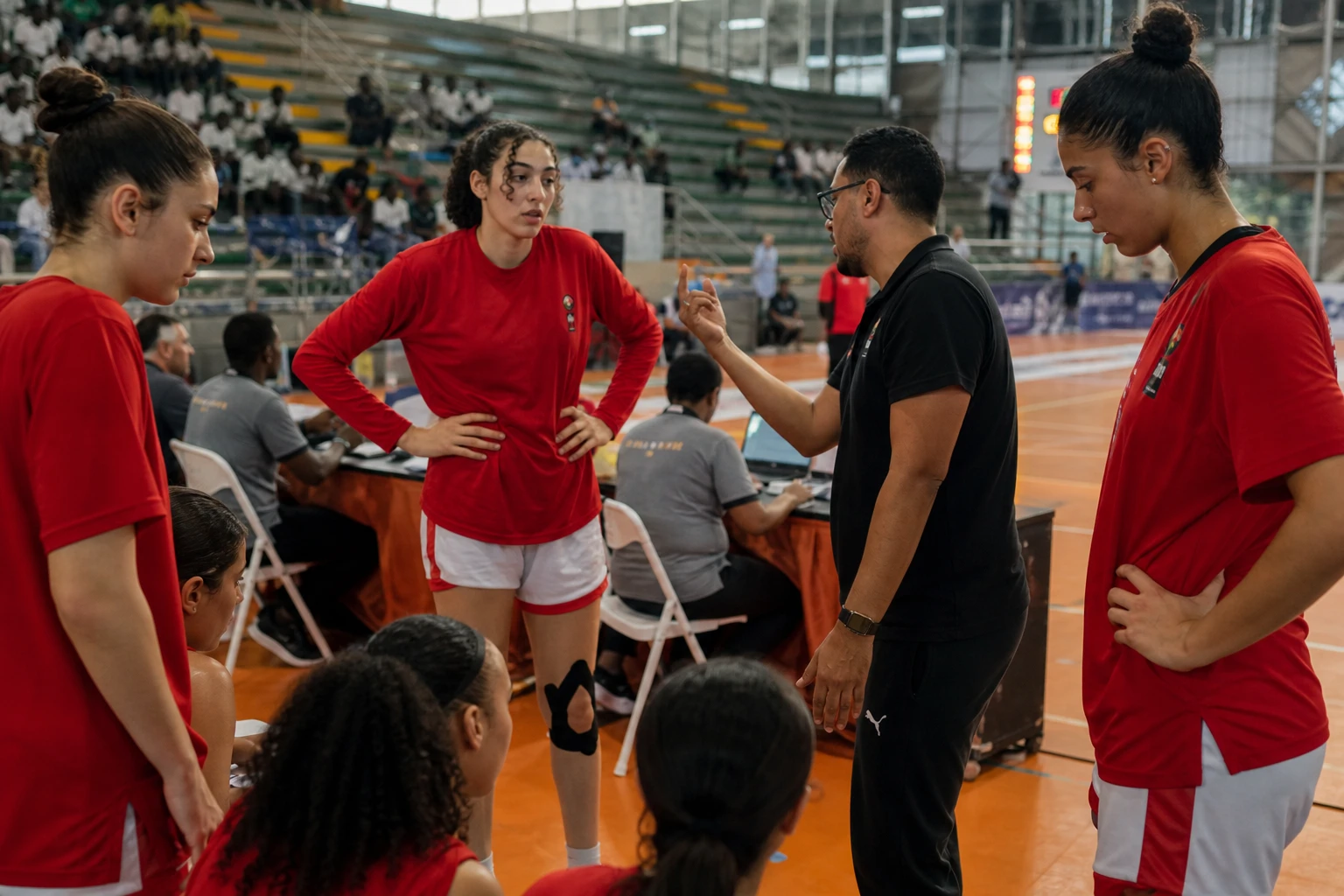
In a youth tournament, the scoreboard often says something beyond what happened on the day. For Morocco, a convincing win over the Central African Republic confirmed above all a rise in form in a competition that leaves no room for improvisation. The match was played in Treichville, in southern Abidjan, at the heart of a continental event that also serves as a springboard to the U19 World Cup.
FIBA Africa entrusted Côte d’Ivoire with hosting the 2026 edition of the FIBA U18 Women’s AfroBasket. The finals are being held in Abidjan from 5 to 16 August 2026, with 12 national teams taking part. The format then establishes a full ranking, including classification games for places 9 to 12, such as the one played by Morocco against the Central African Republic.
Morocco controlled all four quarters
On Wednesday 12 August 2026, Morocco won 75-35 at the Treichville multi-purpose hall. The final 40-point margin reflected a match dominated from start to finish. The Moroccans took the lead from the outset, stepped up markedly in the second quarter and then kept up the pressure after the break.
The first quarter remained close, with Morocco holding a slight advantage. The game turned when the players from Rabat imposed a higher tempo, won the duels and closed down space. By half-time, Morocco had built a clear lead. The second half confirmed the imbalance, with a more compact defence and a more consistent attack.
The shooting statistics neatly sum up the difference in control. Morocco was more accurate from two-point range, from three-point range and at the free-throw line. The Moroccan team also put together the best run of the game, scoring nine consecutive points without conceding, while the Central African Republic’s offence remained much more erratic.
Another telling indicator: the Moroccans spent most of the match ahead on the scoreboard. They led for more than 34 minutes, compared with just under four minutes for their opponents. In a youth tournament, that matters as much as the final score. It shows a team able to stick to its game plan without losing focus.
A sporting challenge, but also a measure of development
This win does more than change a line in the standings. It offers insight into the state of a development pathway. In Morocco, the growth of women’s basketball remains tied to the quality of youth competitions, the regularity of training camps and continuity between the junior and senior categories. A big win like this suggests that the foundations are strengthening. It guarantees nothing on its own, but it signals a group that already knows how to play together.
The continental context makes this progress easier to see. The FIBA U18 Women’s AfroBasket is not simply an end-of-season tournament. It serves as a pathway to the next U19 World Cup. The two best teams at the 2026 edition will qualify. In other words, every match counts towards the final placing, but also towards the players’ international exposure.
For the Central African Republic, this defeat highlights another challenge: squad depth and the regular staging of youth competitions. In many African countries, U18 women’s teams operate with unequal resources. The gaps quickly become apparent when the local talent pool is limited or players lack regular competition. The result in Treichville therefore also says something about the imbalance between national sporting programmes.
The Abidjan tournament gives Côte d’Ivoire a central role in the landscape of African basketball. The country’s economic capital is hosting both the men’s and women’s teams, making it a showcase for the host nation’s organisational capabilities. For the continent’s federations, holding such an event in Abidjan also shows that major junior competitions are no longer reserved for a handful of traditional strongholds.
What this game signals for what comes next
For Morocco, what follows will depend above all on its ability to turn a convincing win into sustained momentum. In a continental youth championship, the hardest part is not just beating a struggling opponent. It is stringing wins together, maintaining consistent intensity and remaining competitive against better-equipped teams in the decisive rounds. The tournament schedule also shows that the final places will be decided in closely contested games.
In recent years, Moroccan basketball has already shown it can establish itself in African youth tournaments. The country’s presence in Zone 1 of the U18 qualifiers, alongside Algeria and Tunisia, is a reminder that regional competition remains strong. In this sporting neighbourhood, every generation is a test. The result in Treichville can therefore be read as a positive signal for Rabat, but also as a starting point that must be confirmed.
Across Africa, the stakes go beyond the standings. U18 competitions shape the next generation of women’s elite players on a continent where women’s basketball is growing in depth, but remains highly uneven across regions. The 2026 edition, hosted in Côte d’Ivoire, will provide a useful benchmark for which countries can turn junior potential into sustained results. Morocco has just sent a clear message: it will have to be reckoned with in that conversation.