
 Algeria
 Egypt
 Libya
 Sudan
 Tunisia
 Benin
 Burkina Faso
 Cabo Verde
 Côte d'Ivoire
 Ghana
 Guinea
 Guinea-Bissau
 Liberia
 Mali
 Mauritania
 Niger
 Nigeria
 Senegal
 Sierra Leone
 The Gambia
 Togo
 Cameroon
 Central African Republic
 Chad
 DR Congo
 Equatorial Guinea
 Gabon
 Republic of the Congo
 São Tomé and Príncipe
 Burundi
 Comoros
 Djibouti
 Eritrea
 Ethiopia
 Kenya
 Madagascar
 Malawi
 Mauritius
 Mozambique
 Rwanda
 Seychelles
 Somalia
 South Sudan
 Tanzania
 Uganda
 Angola
 Botswana
 Eswatini
 Lesotho
 Namibia
 South Africa
 Zambia
 Zimbabwe
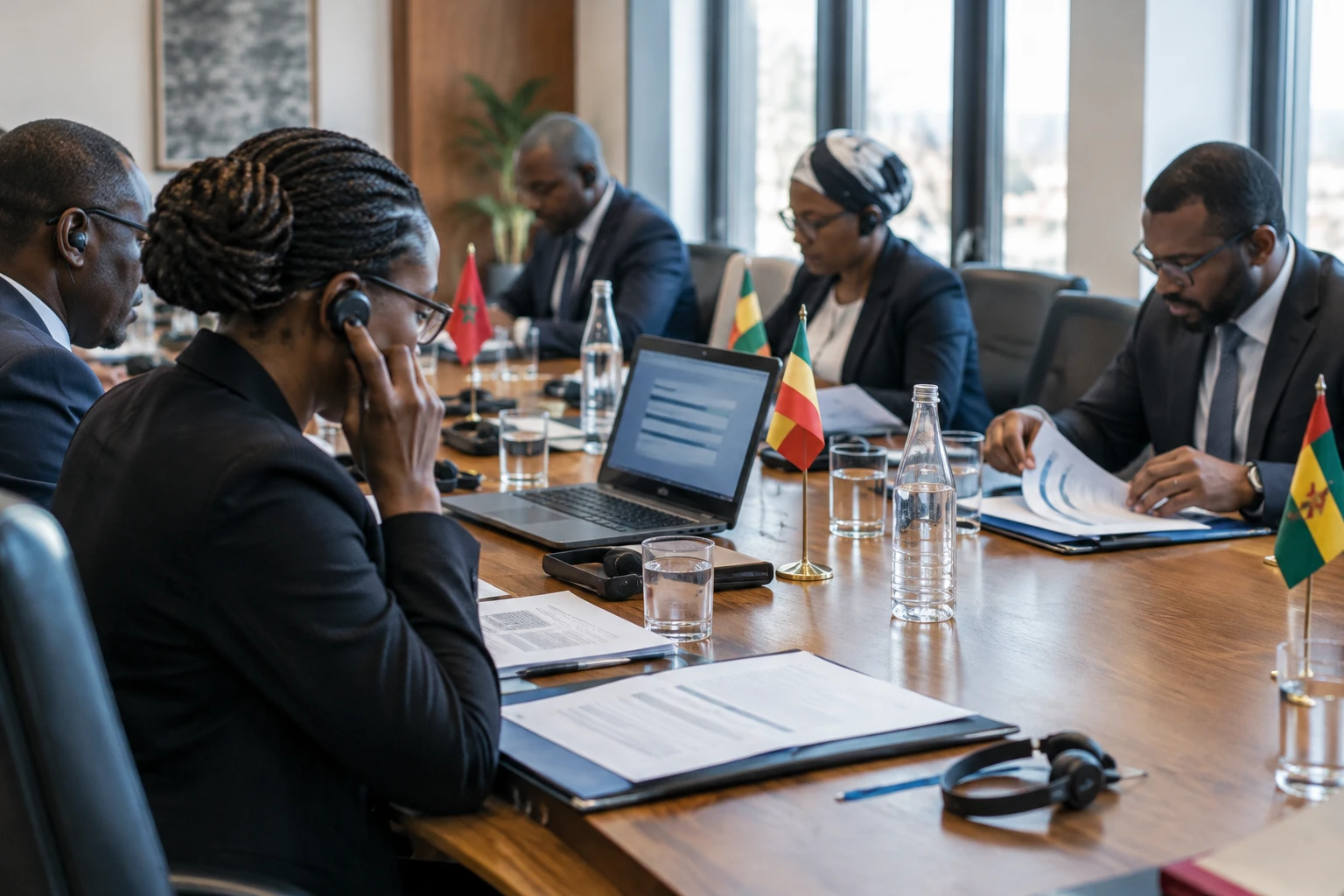
In Morocco, artificial intelligence has become a ministerial portfolio in its own right. The move gives a political face to targets already set for 2030. Above all, it raises a practical question: how can digital ambitions be turned into jobs, more accessible public services and local technological capacity?
A new portfolio at the heart of the digital strategy
On 16 October 2026, in Rabat, King Mohammed VI appointed Ahmed Rahhou Minister of Artificial Intelligence, Digital Transformation and Administrative Reform. He is leaving the presidency of the Competition Council, which he had led since March 2021. The new government team is led by Fatima Ezzahra El Mansouri, according to the official announcement of the government’s composition. The composition of Morocco’s new government confirms the existence of a portfolio explicitly bringing together AI, digital technology and administrative reform.
The appointment follows several years of preparation for digital policies. The Digital Morocco 2030 strategy, unveiled in 2024, aims to develop the digital economy and modernise public services. Its targets include 240,000 direct jobs in the sector and a contribution of 100 billion dirhams to gross domestic product by 2030. These figures describe targets, not results already achieved. The government’s presentation of Digital Morocco 2030 also places the strategy among the priorities of competitiveness and inclusion.
The Morocco AI 2030 roadmap, unveiled in September 2026, sets out the artificial intelligence component in more detail. It sets three targets: 100 billion dirhams in added value to GDP, 50,000 direct and indirect jobs, and 200,000 people trained or certified by 2030. Morocco’s ministry responsible for digital affairs detailed these targets at a presentation in Rabat. Moroccan outlet Médias24 also reported on this milestone and the initiatives announced. The official targets of the Morocco AI 2030 roadmap are based in particular on infrastructure, training and the development of local solutions. Médias24’s review of Morocco AI 2030 initiatives provides an independent perspective on their progress.
From banking to economic regulation
Ahmed Rahhou’s career has spanned several sectors. A graduate of the École Polytechnique in 1980 and the École nationale supérieure des télécommunications in 1982, he began working in IT at Royal Air Maroc. He later worked in banking and took charge of Lesieur Cristal in 2003. From 2009 to 2019, he led Crédit immobilier et hôtelier, before becoming Morocco’s ambassador to the European Union. In 2021, he became head of the Competition Council, the institution responsible, among other things, for ensuring compliance with competition rules.
In that role, he oversaw proceedings involving GlovoApp Morocco, a food ordering and delivery platform. Launched in February 2024, they concluded in July 2025 with a settlement agreement. It provides for the removal of exclusivity clauses imposed on partner restaurants and caps the platform’s commissions at 30%. The case illustrates an issue that will also accompany digital policy: supporting innovation while regulating the economic power of platforms.
This regulatory experience could prove valuable in a ministry that will have to balance several interests. Public administrations will seek to digitise their procedures. Technology companies will call for infrastructure, skills and predictable rules. Small businesses and self-employed workers, meanwhile, will need accessible tools and appropriate protections. The strategy will therefore be measured not only by the number of projects launched, but also by how their benefits are distributed.
Skills and regions: the decisive test
The jobs and training targets give an indication of the scale of the challenge. Training or certifying 200,000 people in AI by 2030 will require programmes tailored to students, employees and people changing careers. Training will also need to be linked to the actual needs of businesses and public services. A national figure alone does not guarantee that opportunities will reach regions far from the main economic centres.
The roadmap refers to computing infrastructure, data centres, platforms shared between public administrations and national language models. These tools can strengthen local control over data and facilitate the creation of services suited to Moroccan users. But their usefulness will depend on very practical conditions: network quality, access costs, data availability and the ability of public administrations to operate the new systems.
Administrative reform gives this strategy a direct connection with everyday life. Better-designed procedures can reduce delays and simplify access to services. However, digitisation must not turn a lack of equipment or skills into an additional obstacle. Users in rural areas, people less comfortable with digital tools and small organisations face different difficulties from large companies or central government departments.
Morocco’s ambitions in a regional race
In the Maghreb, Morocco is pursuing this policy as part of a drive for competitiveness, investment and digital sovereignty. The Arab Maghreb Union provides the formal regional framework, although digital cooperation between neighbouring countries remains to be developed. At continental level, the African Union has adopted an artificial intelligence strategy that encourages capabilities, skills and uses suited to African realities. The shared challenge is to develop useful technologies without becoming entirely dependent on infrastructure, platforms or models designed elsewhere.
Ahmed Rahhou’s appointment now gives implementation a clearly identified political lead. It does not guarantee that the announced targets will be met. The next benchmarks will be the budgets actually mobilised, training programmes launched, infrastructure brought into operation and the first services rolled out. The scope of Morocco’s strategy will be measured by these results, and by how they are distributed among regions and economic players.



