
 Algeria
 Egypt
 Libya
 Sudan
 Tunisia
 Benin
 Burkina Faso
 Cabo Verde
 Côte d'Ivoire
 Ghana
 Guinea
 Guinea-Bissau
 Liberia
 Mali
 Mauritania
 Niger
 Nigeria
 Senegal
 Sierra Leone
 The Gambia
 Togo
 Cameroon
 Central African Republic
 Chad
 DR Congo
 Equatorial Guinea
 Gabon
 Republic of the Congo
 São Tomé and Príncipe
 Burundi
 Comoros
 Djibouti
 Eritrea
 Ethiopia
 Kenya
 Madagascar
 Malawi
 Mauritius
 Mozambique
 Rwanda
 Seychelles
 Somalia
 South Sudan
 Tanzania
 Uganda
 Angola
 Botswana
 Eswatini
 Lesotho
 Namibia
 South Africa
 Zambia
 Zimbabwe
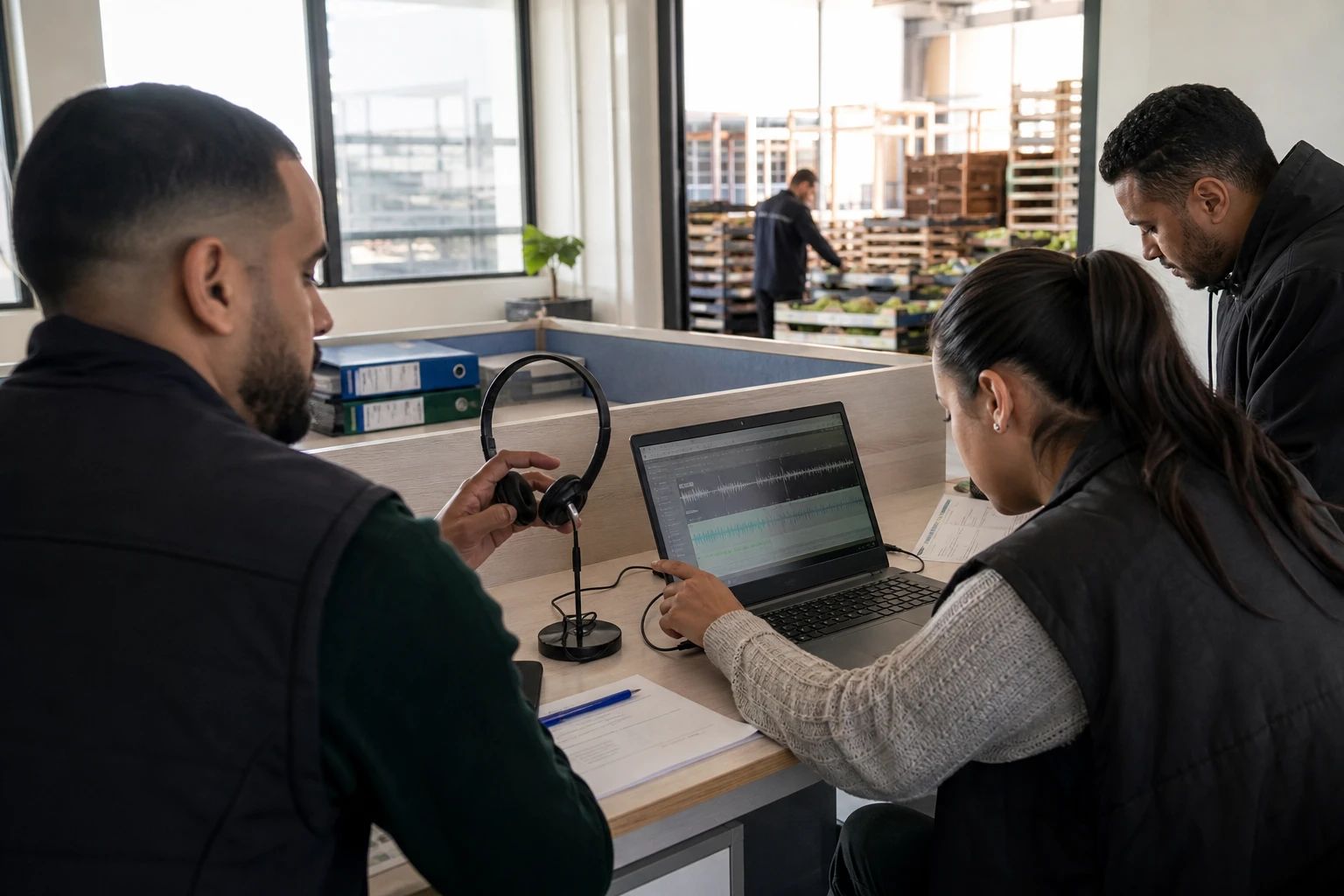
In Rabat, the challenge of artificial intelligence is no longer limited to computing power. It also concerns the ability of digital tools to understand the languages actually spoken by Moroccans. With this in mind, Morocco’s Ministry of Digital Transition and Administrative Reform and Mistral AI presented, on 29 September 2026, two initial open-source components adapted to Darija.
Technology designed for Morocco’s linguistic practices
The first component is a classifier capable of identifying several varieties of Arabic. In particular, it is designed to distinguish Moroccan Darija from other Arabic dialects. This function may seem technical. Yet it plays an important role in routing content to the right processing tool.
The second component is based on Voxtral, Mistral AI’s family of models dedicated to speech processing. It is designed to automatically transcribe conversations in Moroccan Darija. The model also takes account of conversations in which speakers switch between Arabic, French and English.
This linguistic mix is common in professional, administrative and commercial exchanges in Morocco. It also appears in the media, customer service centres and digital conversations. A system trained only on standard Arabic therefore risks losing some of the meaning or incorrectly transcribing everyday expressions.
The ministry describes the two tools as reusable components. At this stage, they do not constitute a consumer application deployed across all government departments. Their value lies instead in the possibility for Moroccan developers to integrate them into their own services.
From technical announcement to practical applications
Several fields are concerned. In public services, transcribing spoken interactions could make digital platforms easier to access. It could also help process calls, meetings and audiovisual content in the languages used by citizens.
In education, these tools could support the transcription of lessons and the creation of accessible resources. The media could also use them to index audio archives or produce subtitles more quickly. For businesses, Darija recognition could improve customer support and the analysis of conversations.
These prospects, however, depend on the models’ actual quality. Moroccan Darija includes regional variations, idiomatic expressions and different forms of writing on social media. Multilingual conversations add another layer of difficulty, particularly when speakers switch languages in the middle of a sentence.
Making the tools available as open source can facilitate independent testing. It also allows researchers, start-ups and government departments to examine the models’ performance, adapt them and identify their limitations. Openness does not automatically guarantee a reliable tool. It does, however, create favourable conditions for collective improvement.
A step in the “Morocco Digital 2030” strategy
The partnership is part of the “Morocco Digital 2030” strategy and the “AI Made in Morocco” roadmap. The Moroccan government is seeking to develop uses of artificial intelligence linked to national priorities while strengthening local expertise.
The decision to focus on language is strategic. General-purpose models are often built using large volumes of data in English, Chinese, French or standard Arabic. Less-resourced languages and varieties have fewer digital corpora, which can reduce the accuracy of the tools available.
For Morocco, the aim is therefore less to create a new general-purpose model immediately than to adapt existing technologies to its linguistic environment. This approach can shorten development times. It also makes it possible to focus efforts on specific needs, such as transcription, document search or access to public services.
Co-operation with Mistral AI does not mean that the entire technology chain becomes Moroccan. The foundation models and some of the expertise come from a French company. However, linguistic adaptations, the data used, evaluations and applications can all help advance Morocco’s ecosystem.
The question of digital sovereignty
This distinction is essential. Digital sovereignty does not rest solely on owning a model. It also depends on the ability to control data, infrastructure, expertise and the conditions under which tools are used.
For government departments, one particular challenge will be protecting the exchanges processed by these systems. Voice recordings may contain personal, commercial or administrative information. Their collection, storage and processing will therefore have to comply with Moroccan rules applicable to data and public services.
Performance will also have to be assessed in real-world situations. A model may work well on clear recordings and fail in a noisy conversation, with several accents or rapid language changes. Results will need to be measured across regions, sectors and user profiles.
This scrutiny also concerns linguistic representation. Darija is not uniform. The tools will have to take account of diverse practices without treating certain ways of speaking as the sole standard. The gradual integration of Amazigh into digital services is also an important issue in a country where the language has official status.
A signal for Africa’s ecosystem
Morocco’s approach extends beyond the national context. It speaks to a question facing many African countries: how to develop digital tools capable of processing local languages when major platforms still prioritise languages with extensive digital resources.
In the Maghreb, exchanges often combine several languages and registers. In West Africa, developers are working on languages such as Wolof, Hausa, Bambara and Yoruba. In Central and East Africa, other projects target Lingala, Swahili and national languages used in public services and education.
Morocco’s experience may therefore be of interest to researchers and government departments across the continent. It shows that an artificial intelligence policy can begin with specialised, measurable and reusable tools. It also highlights that an international partnership will produce lasting results only if it is accompanied by local expertise and effective access to technology.
The next stage will be adoption. It will be necessary to see which organisations take up these models, under what conditions and with what results. The partnership’s real impact will be measured less by the release of the components than by their integration into reliable, accessible services adapted to Morocco’s linguistic realities.



