Algeria
 Libya
 Morocco
 Sudan
 Tunisia
 Benin
 Burkina Faso
 Cabo Verde
 Côte d'Ivoire
 Ghana
 Guinea
 Guinea-Bissau
 Liberia
 Mali
 Mauritania
 Niger
 Nigeria
 Senegal
 Sierra Leone
 The Gambia
 Togo
 Cameroon
 Central African Republic
 Chad
 DR Congo
 Equatorial Guinea
 Gabon
 Republic of the Congo
 São Tomé and Príncipe
 Burundi
 Comoros
 Djibouti
 Eritrea
 Ethiopia
 Kenya
 Madagascar
 Malawi
 Mauritius
 Mozambique
 Rwanda
 Seychelles
 Somalia
 South Sudan
 Tanzania
 Uganda
 Angola
 Botswana
 Eswatini
 Lesotho
 Namibia
 South Africa
 Zambia
 Zimbabwe
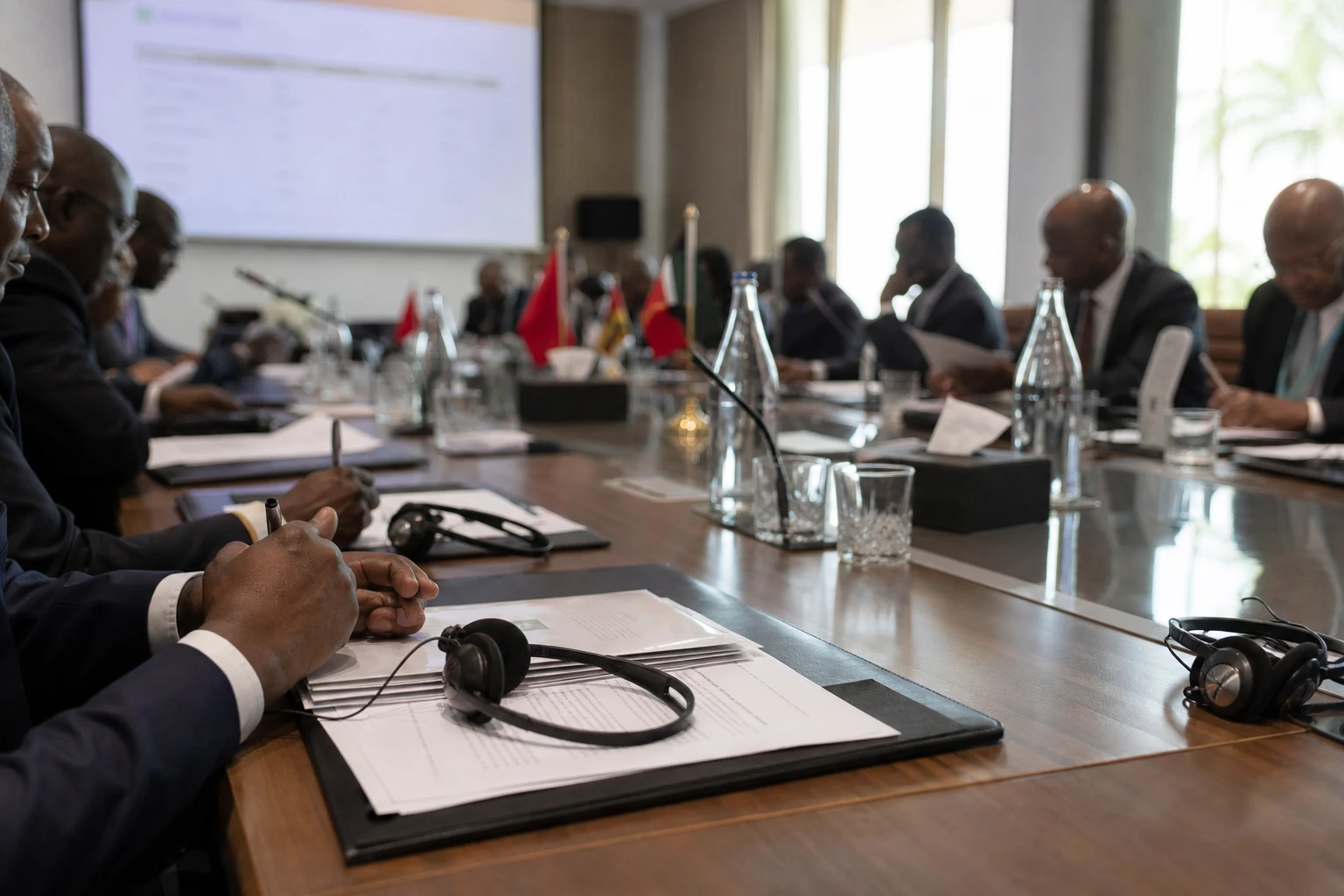
A useful benchmark for Moroccan football
In Morocco, the FIFA rankings do more than fuel conversations in cafés or television debates. They also say something more concrete: the place Moroccan football has secured in draws, perceptions and the balance of power on the continent. The latest official ranking published by FIFA on 20 July 2026 confirms Morocco’s leading position in Africa, with the country now sixth in the world.
This snapshot comes at a particular moment. For several months, African national teams have been seeking to turn occasional performances into lasting consistency. In this landscape, regularity matters as much as moments of brilliance. Morocco, for its part, has established itself in a rare bracket for an African national team: that of sides no longer at the mercy of the rankings, but seeking to shape them.
A position consolidated by FIFA’s method
FIFA’s official website lists Morocco sixth in the men’s rankings updated on 20 July 2026. On its rankings page, FIFA also explains that the calculation is based on the method in force since August 2018 and that updates follow the international windows. In other words, the hierarchy shifts with every window of matches recognised as senior internationals.
This system highlights one essential point: a high position is never guaranteed. Morocco had already reached a symbolic milestone in January 2026, when FIFA ranked it eighth in the world following the Africa Cup of Nations. Six months later, it has climbed further to reach its highest-ever ranking, according to FIFA.
The signal is all the stronger because African competition remains intense. In January, FIFA also noted the progress of Senegal, Egypt, Côte d’Ivoire, Algeria and DR Congo near the top of the continental table. This pool of teams shows that Morocco’s leadership is not based on a lack of challengers, but on genuine competition.
What this ranking really changes
A good ranking does not fill a stadium on its own. It can, however, influence fixtures, seedings and the way opponents approach a match. For a federation such as the Royal Moroccan Football Federation, the value of the FIFA ranking also lies in its ability to extend a performance cycle. The Moroccan national team is sending a clear message: it is no longer simply a competitive side, but has become a continental benchmark.
For players, this foothold at the highest level sustains a constant demand for excellence. For the public, it fosters a sense of continuity rarely achieved in African football, where cycles are often more fragile. For governing bodies, finally, it lends weight to sporting strategy, development and technical management. This is where the result goes beyond a mere points table.
Morocco also benefits from an image boost beyond the pitch. In North Africa, where sporting rivalries shape much of the region’s international visibility, this top African ranking serves as a marker of continuity. It puts Rabat at the centre of the continent’s sporting debate, with an obvious symbolic benefit for Morocco, but also for the Maghreb as a whole.
A signal that extends beyond Morocco
Across Africa, this ranking says something about the growing strength of the continent’s national teams. CAF, the Confederation of African Football, now sees several teams competing in a tighter space than before. Morocco, Senegal, Egypt, Nigeria, Algeria, Côte d’Ivoire and Cameroon remain major players in this shifting hierarchy.
The continental significance is considerable. With major international competitions just months away, every point gained can count for draws, confidence and the continuity of sporting projects. Morocco is therefore capitalising on a period in which sporting performance, institutional development and global visibility are moving in the same direction. It is this combination, more than the ranking itself, that explains the strength of Morocco’s current position.
For African observers, the lesson is simple. The continental summit is no longer fixed. It is won over time, through results, but also through method. Morocco understood this earlier than others. The ranking of 20 July 2026 offers further proof.