
 Algeria
 Egypt
 Libya
 Morocco
 Sudan
 Tunisia
 Benin
 Burkina Faso
 Cabo Verde
 Côte d'Ivoire
 Ghana
 Guinea
 Guinea-Bissau
 Liberia
 Mali
 Mauritania
 Niger
 Nigeria
 Senegal
 Sierra Leone
 The Gambia
 Togo
 Cameroon
 Central African Republic
 Chad
 Equatorial Guinea
 Gabon
 Republic of the Congo
 São Tomé and Príncipe
 Burundi
 Comoros
 Djibouti
 Eritrea
 Ethiopia
 Kenya
 Madagascar
 Malawi
 Mauritius
 Mozambique
 Rwanda
 Seychelles
 Somalia
 South Sudan
 Tanzania
 Uganda
 Angola
 Botswana
 Eswatini
 Lesotho
 Namibia
 South Africa
 Zambia
 Zimbabwe
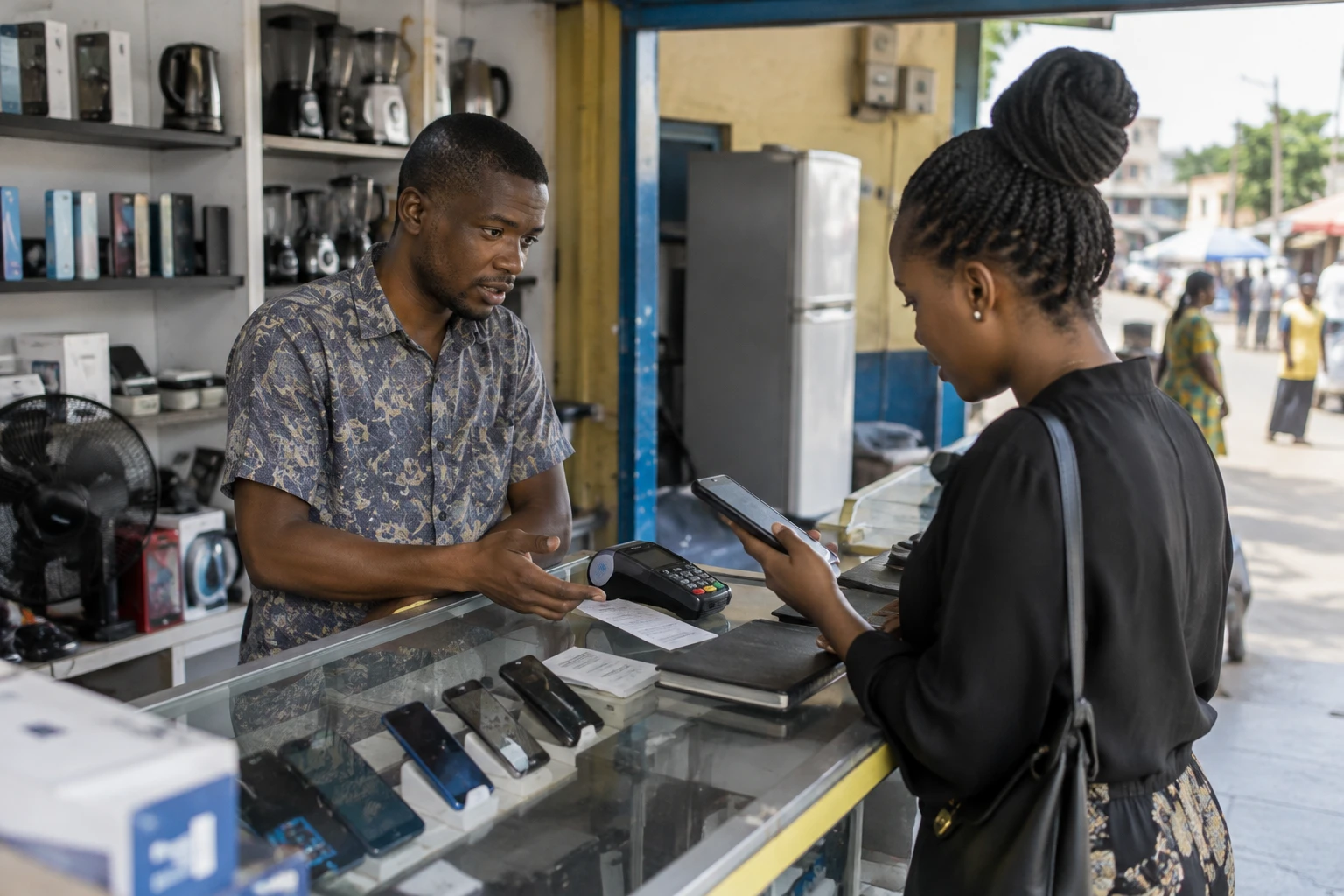
In Kinshasa, the challenge for a new payment tool is not simply enabling people to buy without having the full amount immediately available. It also involves a practical question: how can instalments be protected when a customer waits several weeks to receive their goods? This is one of the issues Molo Molo Pay will need to clarify if its plans to establish a presence in the Democratic Republic of the Congo go ahead.
A project still at the discussion stage
The Ivorian fintech is exploring the Congolese market and has begun talks with potential partners in Kinshasa. Its founder and chief executive, Oussoumanou Sehou, travelled to the capital to meet figures from the business, financial and technology sectors. At this stage, no launch date, investment announcement or confirmed local partner is known.
The proposed principle is simple: the customer chooses an item from a partner retailer and pays for it in several instalments. They receive the product after paying in full, either by collection or delivery, depending on the arrangements. The platform therefore presents the system as a prepaid purchase, rather than a loan that allows customers to take the goods immediately and repay later.
The service was officially launched in Côte d’Ivoire on 1 April 2025. The company claims to have more than one million users in the country. This figure comes from the company and, on its own, does not show how many customers are active, how many purchases have been completed or the value of transactions. Nor does it predict how the model would be received in DR Congo.
Payment by instalments, without credit upfront
The system is aimed in particular at people who receive irregular income or are paid at frequent intervals. Rather than waiting until they have saved the full amount, they can spread the payment over time. In Côte d’Ivoire, the company’s catalogue includes phones, furniture, household appliances and motorbikes.
This approach can help people plan a major expense without taking out a conventional loan. But the absence of credit does not mean there is no risk. Until the full amount has been paid, the consumer does not have the product and their payments remain tied up in the purchasing process. A cancellation, delivery delay or dispute with the seller could therefore have a different impact on a household with limited resources.
The terms published for the Ivorian market provide for a fixed fee of 1,000 CFA francs when an order is created. They also refer to a fee equivalent to 10% of the sums already paid if the user changes the product or retailer. They also set out the conditions for cash refunds of amounts paid. These rules apply to the Ivorian service: no pricing schedule for DR Congo has been announced.
Trust will also depend on the local framework
For Congolese customers, several points remain to be clarified: who will hold the funds paid, how they will be protected, in what circumstances a refund will be possible and what recourse will be available in the event of a dispute. Delivery rules, payment deadlines and the respective responsibilities of the platform and retailers will also need to be set out.
These questions matter in a market where digital payments already rely on banks, electronic money operators and specialised providers. The register of the Central Bank of the Congo (BCC), dated 15 July 2026, lists 48 approved ancillary service providers. Depending on the functions performed by Molo Molo Pay — particularly whether it collects or transfers payments — its activities could require authorisation or the use of authorised partners. The BCC specifies that payment system operators and certain providers must obtain prior approval.
The fintech has announced neither Congolese authorisation nor an agreement with a local financial player. The ongoing discussions will therefore need to produce a model that complies with national rules and is also clear to users. For retailers, the potential benefit would be access to customers who cannot pay upfront. In return, the transfer of funds to the seller, the actual availability of products and the handling of discontinued orders will need to be clarified.
Expansion to be measured by more than registrations
The company’s progress in Côte d’Ivoire offers an initial point of reference, not a guarantee of success in DR Congo. Patterns of use, available payment methods and retailer networks differ from one country to another. The number of registrations claimed in Côte d’Ivoire will also need to be distinguished from more revealing indicators: completed purchases, amounts involved, delivery times and the frequency of refunds or complaints.
At regional level, the project illustrates the growing movement of digital solutions between African markets. It also shows that financial innovation is not just about technology: the quality of partnerships, transparent fees and customer protection will determine adoption. In DR Congo, the next decisive step will be the publication of concrete terms and confirmation of local partners, under the regulator’s scrutiny.
Sources consulted: Molo Molo Pay’s presentation and published figures, terms and conditions of the Ivorian marketplace, register of approved providers of the Central Bank of the Congo, BCC rules on authorisations for payment providers, independent coverage of the expansion project in DR Congo.



