Algeria
 Egypt
 Libya
 Sudan
 Tunisia
 Benin
 Burkina Faso
 Cabo Verde
 Côte d'Ivoire
 Ghana
 Guinea
 Guinea-Bissau
 Liberia
 Mali
 Mauritania
 Niger
 Nigeria
 Senegal
 Sierra Leone
 The Gambia
 Togo
 Cameroon
 Central African Republic
 Chad
 DR Congo
 Equatorial Guinea
 Gabon
 Republic of the Congo
 São Tomé and Príncipe
 Burundi
 Comoros
 Djibouti
 Eritrea
 Ethiopia
 Kenya
 Madagascar
 Malawi
 Mauritius
 Mozambique
 Rwanda
 Seychelles
 Somalia
 South Sudan
 Tanzania
 Uganda
 Angola
 Botswana
 Eswatini
 Lesotho
 Namibia
 South Africa
 Zambia
 Zimbabwe
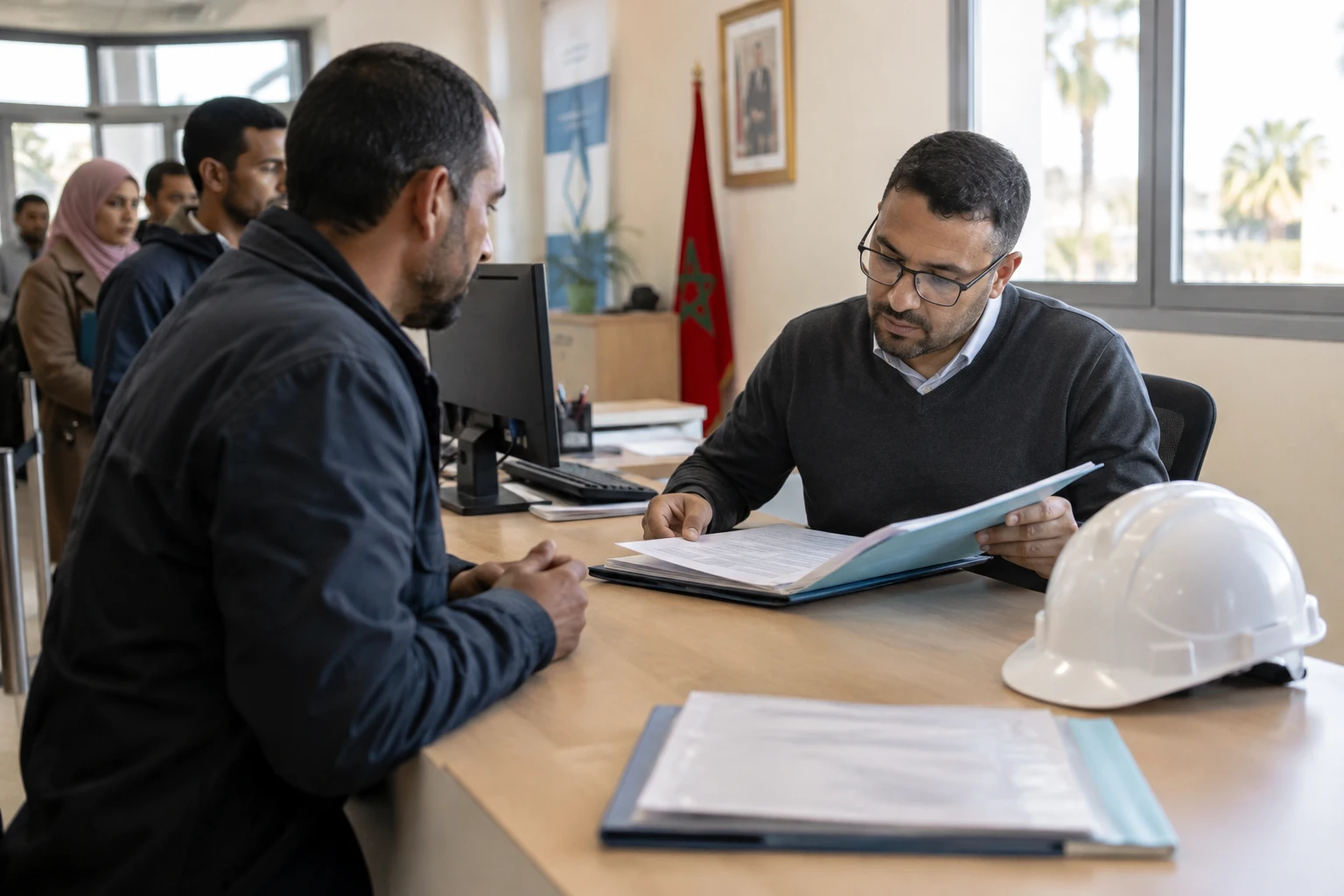
Manufacturing in Morocco rather than simply delivering equipment there: that is the shift signalled by the announcement from Indian group MKU. Its project in Nouaceur could bring some production closer to the Royal Armed Forces, while giving the kingdom a new gateway to African markets.
Nouaceur, an industrial link under construction
On 7 October 2026, MKU announced its intention to establish a factory in the Nouaceur defence industrial acceleration zone, near Casablanca. The group plans to produce electro-optical systems there — equipment combining sensors and optics to observe, monitor or identify a target — as well as ballistic protection.
The announced product range includes surveillance and reconnaissance systems, bulletproof vests, helmets, shields and armour for platforms. MKU describes the future site as a production base for Morocco and an export hub for Africa. The company also cites European markets as potential outlets, without specifying their scale.
The timeline, investment amount and factory capacity have not been disclosed. At this stage, therefore, this is an announced project, not a site where construction or production has begun. MKU says it has supplied optronics and personal protection equipment to Moroccan forces for five years. The group presents this commercial relationship as the industrial starting point.
Moroccan strategy goes beyond military purchases
Rabat has for several years sought to attract defence equipment manufacturers and develop local production. The stated aim is to strengthen industrial skills and, over time, reduce dependence on imports. This does not mean the kingdom can manufacture all the equipment its army needs on its own: control of components, software and supply chains remains a separate challenge.
The national framework became more defined with Law 10.20 on defence equipment and materials, which came into force in 2020. It notably governs licences related to the manufacture and trade of such equipment. Morocco has also created dedicated zones and provided for tax incentives to attract investors. These measures can facilitate the establishment of factories, but do not by themselves guarantee significant technology transfer or the emergence of Moroccan suppliers.
The MKU project is part of a period in which foreign partnerships are taking on a more concrete industrial form. In September 2025, a Tata Advanced Systems factory was inaugurated in Berrechid to produce WhAP 8×8 armoured vehicles. The facility illustrates another aspect of the strategy: manufacturing locally equipment designed as part of Moroccan-Indian cooperation, with markets beyond the domestic one also cited.
Caution is still warranted over drone projects sometimes mentioned in presentations of Morocco’s industrial ecosystem. Some announcements involving foreign companies have circulated without detailed public confirmation of their timeline or production level. Distinguishing them from inaugurated factories or officially announced projects avoids presenting an industrial base still taking shape as an accomplished fact.
Benefits will depend on what is produced locally
For Moroccan forces, manufacturing closer to the user could facilitate supply and, depending on the agreements reached, the maintenance or adaptation of some equipment. For workers and companies in the country, the benefits will depend on the jobs created, the training offered and the share of components or services purchased locally. No such data has yet been published for the Nouaceur project.
The export component could also change the economic equation. A factory supplying several markets would have greater reason to keep its production lines running and develop specialised skills. But access to markets depends on practical constraints: product certification, export permits, maintenance, competition and the rules of each country. MKU’s announcement does not yet make it possible to assess these prospects.
The presence of a foreign manufacturer also raises a fundamental question for Morocco: how much of the value will remain in the country? Local assembly, component manufacturing, research, engineer training and the ability to maintain systems represent different degrees of autonomy. The contracts and their implementation will show where the factory actually sits on that scale.
A regional issue, but no uniform African market
Nouaceur could help make Morocco an industrial platform between North Africa, West Africa and Europe. But the continent is not a single market: needs, budgets, standards and security choices differ from one state to another. The announced exports will therefore have to materialise country by country, in a sector subject to strict controls.
For African countries, developing local capabilities can create opportunities for maintenance, training and closer supply. It also raises a shared question: how can skills and production be strengthened without replacing one external dependency with another? MKU’s project alone does not yet answer that question.
The next step will be less about the announcement than its execution: the construction timeline, investment, start of production lines and local content. The official MKU website confirms the planned product categories, while information published by Morocco’s official portal on the Tata factory in Berrechid shows that other production projects have already reached the inauguration stage. For Rabat, it is this distinction between intentions, investment made and skills transferred that will show whether the sector is taking durable shape.