Algeria
 Egypt
 Libya
 Morocco
 Sudan
 Tunisia
 Benin
 Burkina Faso
 Cabo Verde
 Côte d'Ivoire
 Ghana
 Guinea
 Guinea-Bissau
 Liberia
 Mauritania
 Niger
 Nigeria
 Senegal
 Sierra Leone
 The Gambia
 Togo
 Cameroon
 Central African Republic
 Chad
 DR Congo
 Equatorial Guinea
 Gabon
 Republic of the Congo
 São Tomé and Príncipe
 Burundi
 Comoros
 Djibouti
 Eritrea
 Ethiopia
 Kenya
 Madagascar
 Malawi
 Mauritius
 Mozambique
 Rwanda
 Seychelles
 Somalia
 South Sudan
 Tanzania
 Uganda
 Angola
 Botswana
 Eswatini
 Lesotho
 Namibia
 South Africa
 Zambia
 Zimbabwe
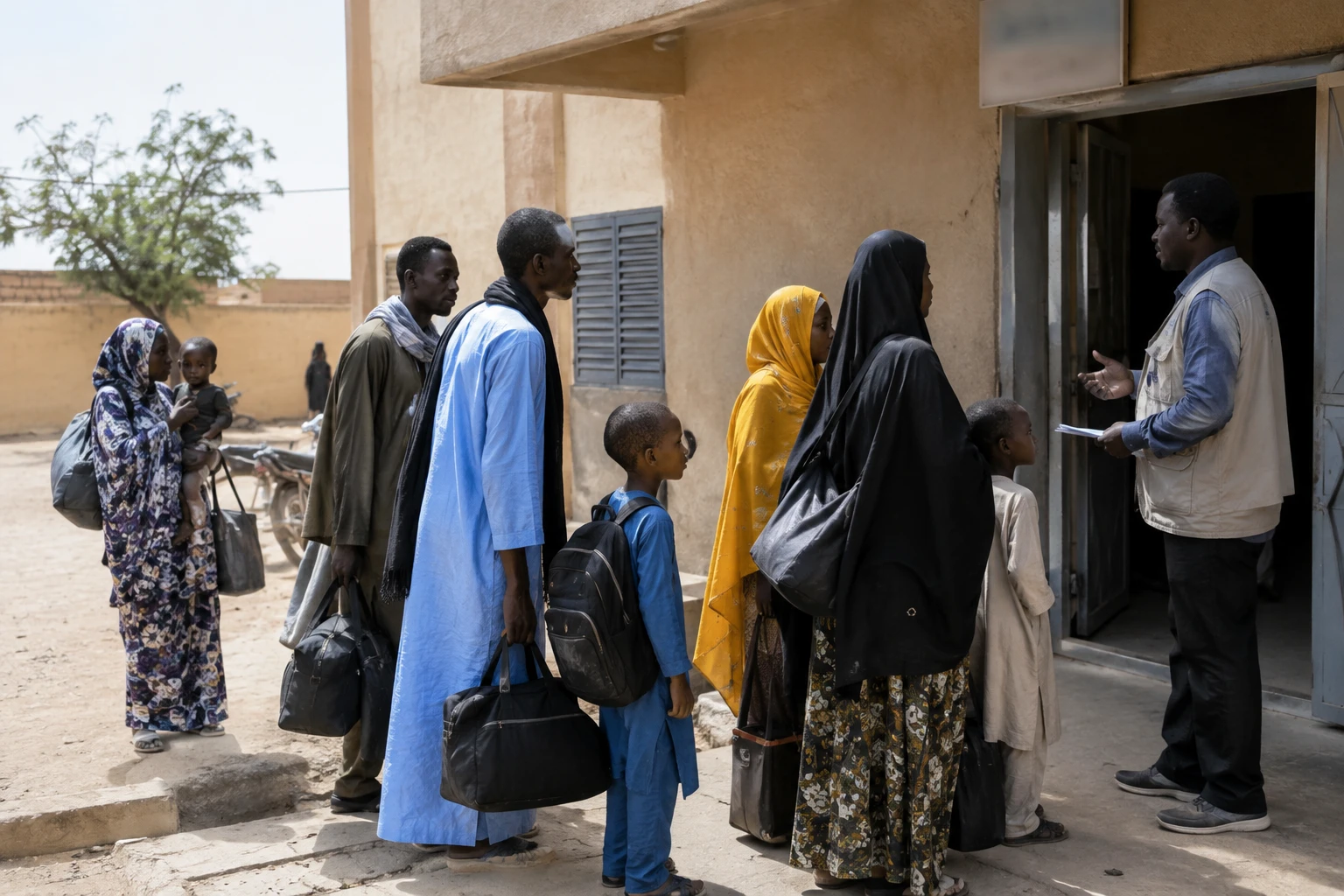
In Tagadayat, in north-eastern Mali, violence has once again struck residents who were not taking part in the fighting. The attack on Sunday 18 October also forced families to leave their homes for Ménaka, where the arrival of displaced people is increasing the need for protection and aid.
Toll reported by the Idaksahak community
The executive office of the Idaksahak community announced that 48 civilians had been killed in Tagadayat. In its statement on Monday 19 October, it blamed the attack on armed men affiliated with the Islamic State group in the Sahel. The assailants reportedly arrived on motorcycles. Injuries have also been reported.
These details were reported by the community and carried by several media outlets, including the African news agency APA, the Malian outlet Malijet and the Anadolu news agency. So far, the Malian authorities have not publicly confirmed the toll, and the attack has not been claimed. The figure announced by Idaksahak representatives should therefore be distinguished from an officially established death toll.
The community office says families have fled to the town of Ménaka, including women, children and older people. The total number of displaced people has not been specified in the information available. The community is calling for emergency aid and stronger measures to protect civilians.
In Ménaka, the home of Moussa Ag Acharatoumane, described in the available material as a community leader, was also reportedly attacked on the same day. The information reviewed does not independently confirm this incident or clarify the circumstances. It should therefore remain attributed and separate from the toll announced for Tagadayat.
Ménaka, a border region under pressure
The Ménaka region lies in north-eastern Mali, near the borders with Niger and Burkina Faso. In this area, where borders are vast and populations mobile, armed groups move between several territories. Clashes and attacks on civilians are part of a security crisis that extends beyond a single locality.
The region has already experienced displacement and repeated violence. In a report submitted to the United Nations Security Council in 2023, annexed documents described attacks on Idaksahak civilians and calls to strengthen their protection. This precedent does not prove the circumstances of the current attack. It does, however, underline that the risks facing rural communities in Ménaka are longstanding and documented.
The Malian authorities, for their part, have announced military operations under Dougoukoloko, a plan to secure the territory. The material provided refers to strikes against positions attributed to armed groups in the week before the attack. However, corroborated information does not establish that the assault on Tagadayat was retaliation for these operations. This hypothesis should remain attributed to those advancing it, rather than being presented as an established fact.
The immediate cost for residents
For families who have left Tagadayat, reaching Ménaka does not mean their difficulties are over. They need to find shelter, water, healthcare and livelihoods. Abandoning a home or livestock can also undermine incomes over the long term, particularly in a region where rural and pastoral activities are essential.
The effects are not the same for everyone. Displaced people need immediate assistance, while Ménaka residents may find local resources under greater strain. In rural areas, the distance from services makes access to healthcare and aid more difficult. The information available does not yet provide details on specific needs or the humanitarian response under way.
Protection is measured not only by the number of military operations announced. It also depends on the ability to prevent attacks on civilians, maintain access routes for services and respond swiftly to displacement. This is a practical challenge for the authorities, as well as for humanitarian actors and community representatives.
A regional issue that calls for verifiable facts
The situation also concerns Mali’s neighbours. The movement of armed groups and population displacement cross the borders of the central Sahel. Cooperation between states in the region therefore remains an issue, even as political frameworks and alliances evolve. For people in border areas, the priority remains everyday security and the ability to move without being targeted.
The next step is to obtain more precise information: confirmation of the toll, the number of displaced people, the condition of the injured and measures taken to secure Tagadayat and its surroundings. An investigation or statement from the authorities could also shed light on the circumstances of the attack and the identity of its perpetrators. Until such information is available, the attribution to the Islamic State group remains that made by the Idaksahak community, while the toll of 48 dead remains a figure announced by its representatives.
Sources consulted: the African news agency APA, the Malian outlet Malijet, the Anadolu news agency and a United Nations report on Mali.