Algeria
 Egypt
 Libya
 Morocco
 Sudan
 Tunisia
 Benin
 Burkina Faso
 Cabo Verde
 Côte d'Ivoire
 Ghana
 Guinea
 Guinea-Bissau
 Liberia
 Mali
 Niger
 Nigeria
 Senegal
 Sierra Leone
 The Gambia
 Togo
 Cameroon
 Central African Republic
 Chad
 DR Congo
 Equatorial Guinea
 Gabon
 Republic of the Congo
 São Tomé and Príncipe
 Burundi
 Comoros
 Djibouti
 Eritrea
 Ethiopia
 Kenya
 Madagascar
 Malawi
 Mauritius
 Mozambique
 Rwanda
 Seychelles
 Somalia
 South Sudan
 Tanzania
 Uganda
 Angola
 Botswana
 Eswatini
 Lesotho
 Namibia
 South Africa
 Zambia
 Zimbabwe
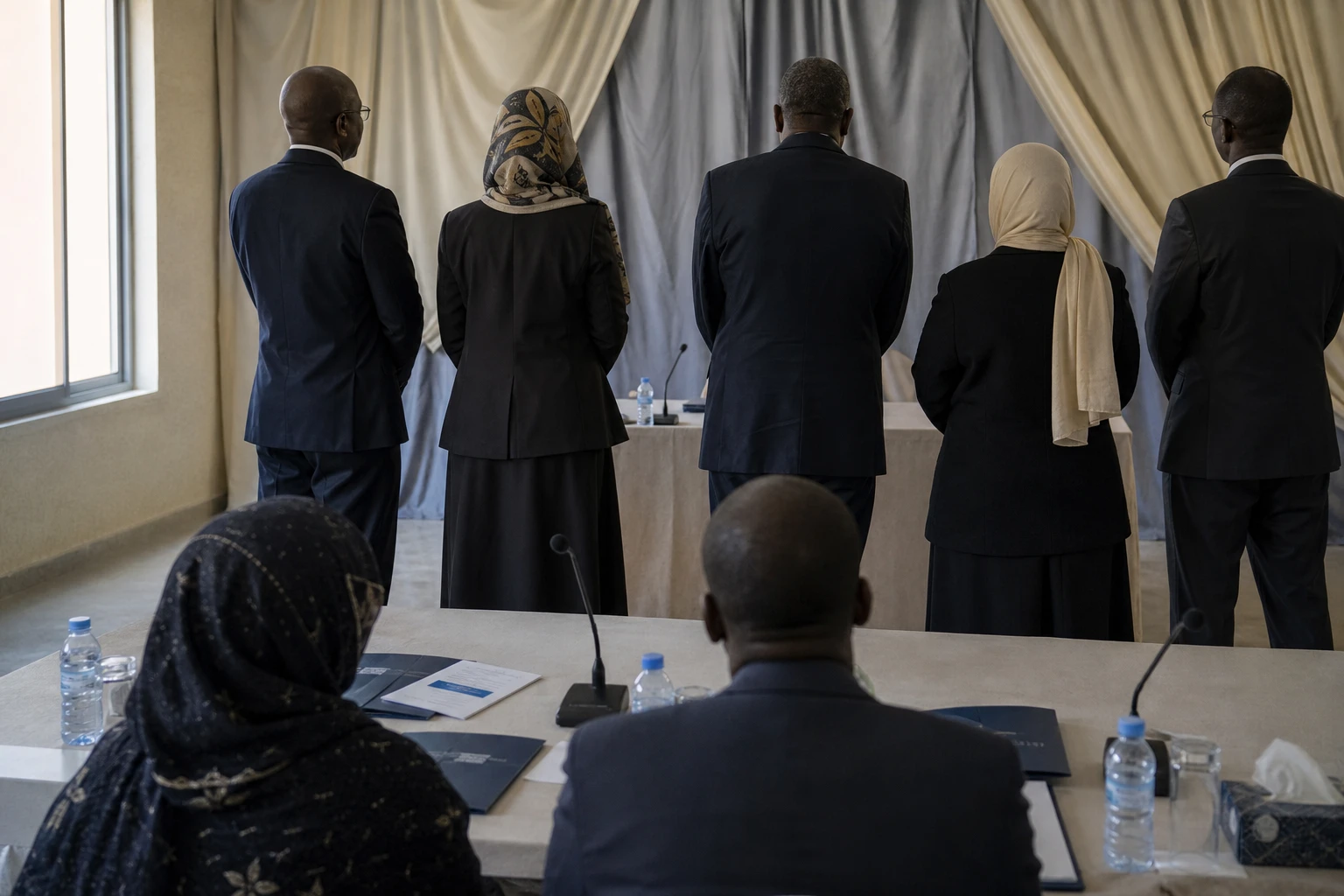
In Nouakchott, a case that goes beyond a crime story
When a seven-year-old girl is raped, the first question is not only one of horror. It is also about the public response. In Mauritania, the incident has revived long-standing anger: that of families demanding faster protection, activists denouncing impunity, and institutions being called on to prove they can deal with sexual violence against children without delay or ambiguity.
The case took place in Toujounine, on the outskirts of Nouakchott, the Mauritanian capital. The national police announced the arrest of a suspect a few days after the reported incident, while several organisations and local media confirmed the mobilisation of associations, MPs and human rights groups. The location matters. In a major city, social expectations are high: residents want to see justice act quickly, and the capital often becomes a mirror of shortcomings elsewhere in the country.
A more comprehensive legal framework, but its effectiveness remains contested
On paper, Mauritania already has legal tools to protect children. The Justice Ministry points to the 2005 ordinance on the criminal protection of children, followed by the 2018 General Child Code. It also says it has established a special juvenile court and a Directorate for the Judicial Protection of Children. In other words, the framework is in place. But that framework is not enough if complaints move slowly, victims lack support, or criminal definitions remain too imprecise.
Several major reports also point to persistent limitations. The National Human Rights Commission’s 2022 report notes that Mauritanian law lacks a definition of rape, while international assessments highlight inadequate support for victims of gender-based violence and unequal access to justice. Human Rights Watch has also said that the absence of a clearer framework can make it harder to protect women and girls who file complaints.
What the anger reveals: protecting girls remains a test of credibility
The reaction to the rape of this child is not limited to emotion. It lays bare a concrete chain of events: reporting, investigation, hospitalisation, protection of the victim, prosecution and then trial. At every stage, a failure can break the chain of safety. When a maternal and child health association, a rights watchdog or a parliamentary group call both for swift justice and more deterrent penalties, they are speaking first of a basic need: for the victim to be heard, for the investigation to be independent, and for the alleged perpetrator not to disappear into administrative gaps.
The case also serves as a reminder of a wider reality. UNICEF estimates that, despite progress, children in Mauritania remain exposed to violence, exploitation and harmful practices such as early marriage and female genital mutilation, which are still reported at high levels. The problem is therefore not isolated. It forms part of a continuum of vulnerabilities that affects girls more, particularly when poverty, family dependence and a lack of specialist services limit opportunities to report assaults.
There is also an issue of trust. In a country where civil society and the CNDH regularly call for better handling of sexual violence, every widely reported case becomes a test of credibility for the police, prosecutors, hospitals and social services. If the public response appears slow or confused, the message to families is simple: protection exists in the law, but not always in practice.
A Mauritanian issue, but also a West African and continental one
The issue extends beyond Nouakchott. Mauritania belongs to the African Union and the Arab Maghreb Union, and shares the same challenge as several African countries: turning protective laws into mechanisms that are genuinely accessible. Across the continent, the fight against sexual violence against minors depends less on proclaiming principles than on the ability to fund specialist police units, medical services, legal assistance and witness protection. That is where the difference between symbolic reform and useful reform lies.
For Mauritania, the issue is immediate. The coming weeks will show whether the case leads to exemplary proceedings capable of reassuring the public and protecting the victim, or to yet another wave of outrage. Beyond this particular case, the country faces a broader question: how can justice, the police, health services and social affairs agencies work together from the first report? Only then will the protection of girls cease to be a slogan and become a measurable reality.