Algeria
 Egypt
 Libya
 Morocco
 Sudan
 Tunisia
 Benin
 Burkina Faso
 Cabo Verde
 Côte d'Ivoire
 Ghana
 Guinea
 Guinea-Bissau
 Liberia
 Mali
 Niger
 Nigeria
 Senegal
 Sierra Leone
 The Gambia
 Togo
 Cameroon
 Central African Republic
 Chad
 DR Congo
 Equatorial Guinea
 Gabon
 Republic of the Congo
 São Tomé and Príncipe
 Burundi
 Comoros
 Djibouti
 Eritrea
 Ethiopia
 Kenya
 Madagascar
 Malawi
 Mauritius
 Mozambique
 Rwanda
 Seychelles
 Somalia
 South Sudan
 Tanzania
 Uganda
 Angola
 Botswana
 Eswatini
 Lesotho
 Namibia
 South Africa
 Zambia
 Zimbabwe
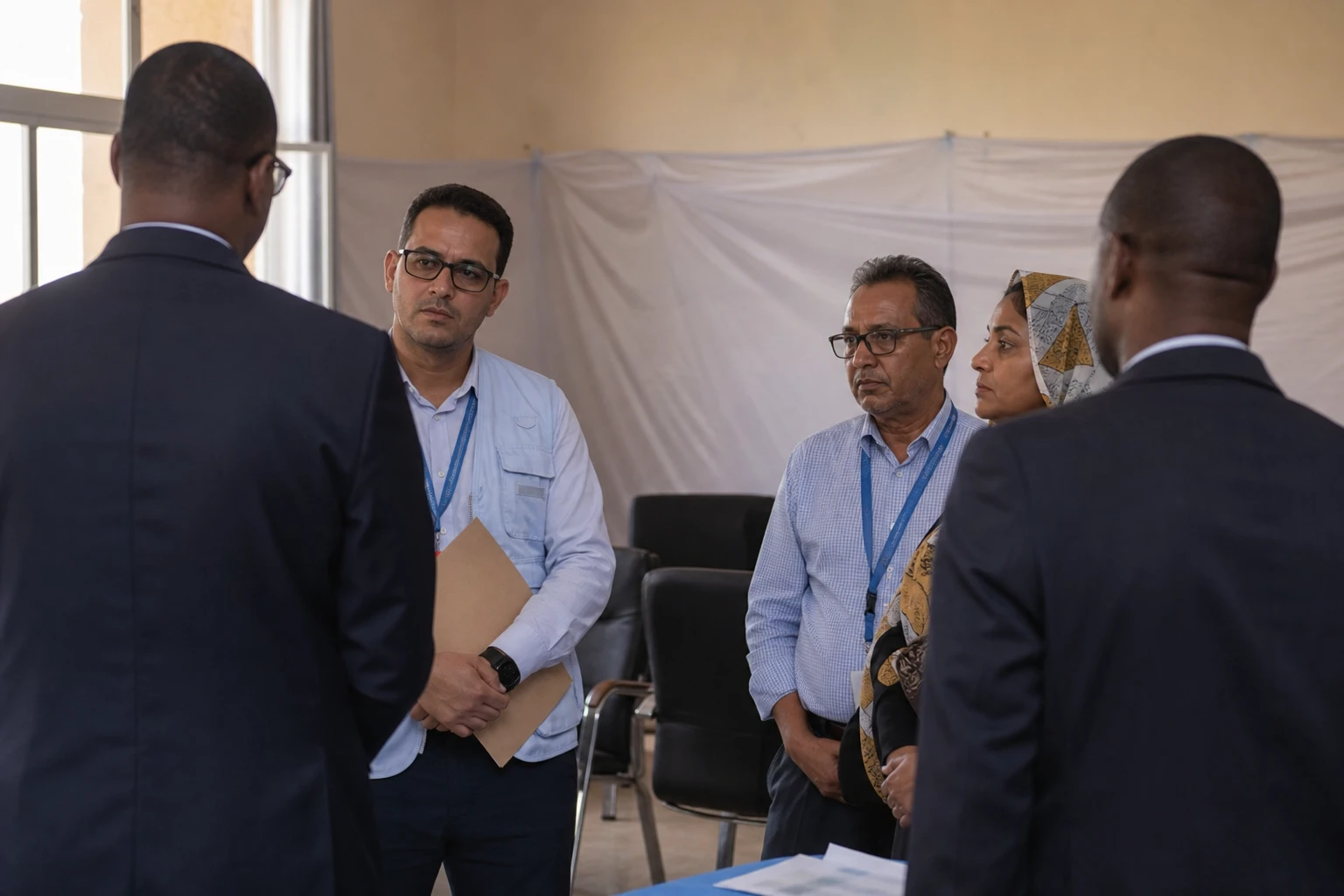
On the Atlantic coast, the Canaries route remains both a lifeline and a source of risk
In Nouadhibou, rescue teams see the same reality in different forms: departures organised in haste, overcrowded boats, and then arrivals where exhaustion often masks more serious injuries. At the end of August 2026, this pressure resulted in a fresh influx of survivors on the Mauritanian and Senegalese coasts, in a highly vulnerable state.
Mauritania occupies a central position in this context. Nouadhibou, a major port city in the north-west, has become a key transit point on the Atlantic route to the Canary Islands. This route links several West African countries to Spain, often involving crossings lasting several days in extremely harsh maritime conditions.
What we know about the rescues and landings
According to Médecins Sans Frontières (MSF), 1,046 people were rescued in one week, at the very end of August, after crossing from Gambia towards the Canary Islands. The survivors were then landed at Nouadhibou in Mauritania, as well as at Rosso and Dakar in Senegal. The organisation says they received emergency care on site, in coordination with the Mauritanian Red Crescent in Nouadhibou and the International Organization for Migration in Rosso and Dakar.
The Agence de presse africaine confirmed the figure of 1,046 people and said the group included women, minors and a pregnant woman. Africanews also reported MSF’s warning about the critical condition of many survivors. Taken together, these sources establish the scale of the operation and its humanitarian nature, rather than treating it as a mere maritime incident.
MSF links this episode to seven boats that left Gambia and says that, during several recent landings, it observed signs of dehydration, burns, skin infections and trauma caused by the crossing. The organisation describes it as one of the longest migration routes in the world. This assessment is consistent with IOM data, which have tracked the resurgence of the Atlantic route to the Canary Islands over several years.
Shorter on the map, but longer in the body
The Atlantic route has grown in scale since 2020. According to the IOM, movements have risen steadily in recent years, although 2025 saw a decline in arrivals in the Canary Islands compared with 2024. The organisation nevertheless recorded 17,788 irregular arrivals in the Canary Islands in 2025, as well as 54 shipwrecks or incidents that caused the deaths or disappearance of 1,214 migrants along this route.
These figures tell us two things at once. First, migration pressure remains high even when arrivals fall. Second, the risk of death remains elevated. For families, villages of origin and working-class neighbourhoods in coastal cities, the issue is not only access to Europe. It is also the human cost of a journey wrongly presented as a quick way out.
Mauritania finds itself in the middle of the corridor. It is a transit country, a country of departure for some seeking exile, and a host country for migrants landed after being rescued. This position entails practical choices: coastal surveillance, emergency reception, action against smuggling networks, regional cooperation and respect for fundamental rights.
Nouadhibou, Rosso, Dakar: the humanitarian response to a cross-border crisis
In Nouadhibou, the Mauritanian authorities have already stepped up maritime surveillance and identity checks. An operation reported by the local press at the end of August showed that the north-western coast remained under pressure, with new groups intercepted at sea. These measures aim to curb departures, but they also shift pressure onto reception and protection services.
At the same time, Mauritania has opened or supported several facilities linked to the reception of foreign nationals, the fight against trafficking and the protection of migrants. The Mauritanian News Agency reported in July 2026 the inauguration of an office of the National Human Rights Commission at Nouadhibou’s temporary reception centre. The government has also launched a three-year project with the UNHCR and the Office of the United Nations High Commissioner for Human Rights to strengthen social cohesion and protect refugees and migrants in Nouakchott and Nouadhibou.
This context matters. In a city such as Nouadhibou, the line between security and humanitarian services is a fine one. Fishermen, drivers, small businesses and port services see these movements at close quarters. The authorities, meanwhile, must contend with a route that passes through ordinary economic spaces before reaching the sea. Migration is therefore not just a diplomatic issue; it is also a matter of public health, policing, local employment and social cohesion.
What the episode says about Mauritania and West Africa more broadly
Regionally, the episode is a reminder that the Canaries route does not concern Mauritania alone. It links Gambia, Senegal, Mali and, at times, Guinea, and intersects with Spanish and European policies to control departures. The IOM also notes that departures on this route mainly originate from the coasts of Mauritania, Morocco and Senegal. In other words, the response cannot be maritime alone.
For the African Union and West Africa’s subregional organisations, the issue raises a simple question: how can mobility be protected without allowing clandestine routes to become corridors of death? The answer lies in regular routes, jobs, reliable information in areas of departure, and credible rescue capacity at sea. MSF stresses this point, calling for the protection of human life to remain at the centre of migration policies.
What happens next will depend above all on three factors: the ability of coastal states to carry out rescues sooner, cooperation with countries of departure, and how departures evolve as the coming weeks of the sailing season approach. For Mauritania, the issue will remain at the intersection of two imperatives that rarely sit comfortably together: maintaining control of its coasts and preventing the sea from becoming a social filter in which the most vulnerable pay the heaviest price.