Algeria
 Egypt
 Libya
 Morocco
 Sudan
 Tunisia
 Benin
 Burkina Faso
 Cabo Verde
 Côte d'Ivoire
 Ghana
 Guinea
 Guinea-Bissau
 Liberia
 Mali
 Niger
 Nigeria
 Senegal
 Sierra Leone
 The Gambia
 Togo
 Cameroon
 Central African Republic
 Chad
 DR Congo
 Equatorial Guinea
 Gabon
 Republic of the Congo
 São Tomé and Príncipe
 Burundi
 Comoros
 Djibouti
 Eritrea
 Ethiopia
 Kenya
 Madagascar
 Malawi
 Mauritius
 Mozambique
 Rwanda
 Seychelles
 Somalia
 South Sudan
 Tanzania
 Uganda
 Angola
 Botswana
 Eswatini
 Lesotho
 Namibia
 South Africa
 Zambia
 Zimbabwe
Building skills, not just signing agreements
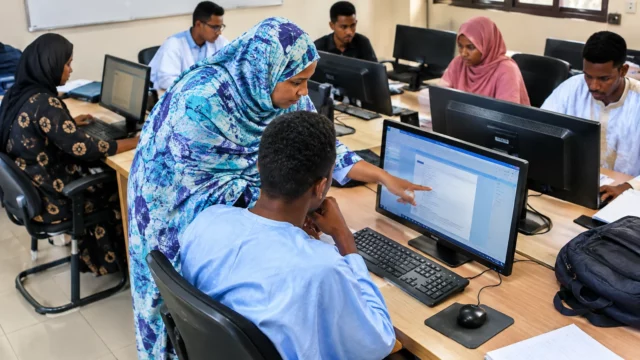
In Mauritania, the question is not simply how many students graduate from university. It is more straightforward and more pressing: what jobs await them, and in which sectors does the country really need skills? In Nouakchott, this debate takes on particular significance when higher education intersects with water, infrastructure and youth employment.
The country enters this debate with a very young population. The 2023 general census shows that nearly half of Mauritanians are under 20, and that the demographic structure remains marked by strong pressure on public services and the labour market. ANSADE also puts the total population at around 4.9 million, with an increasing share concentrated in Nouakchott.
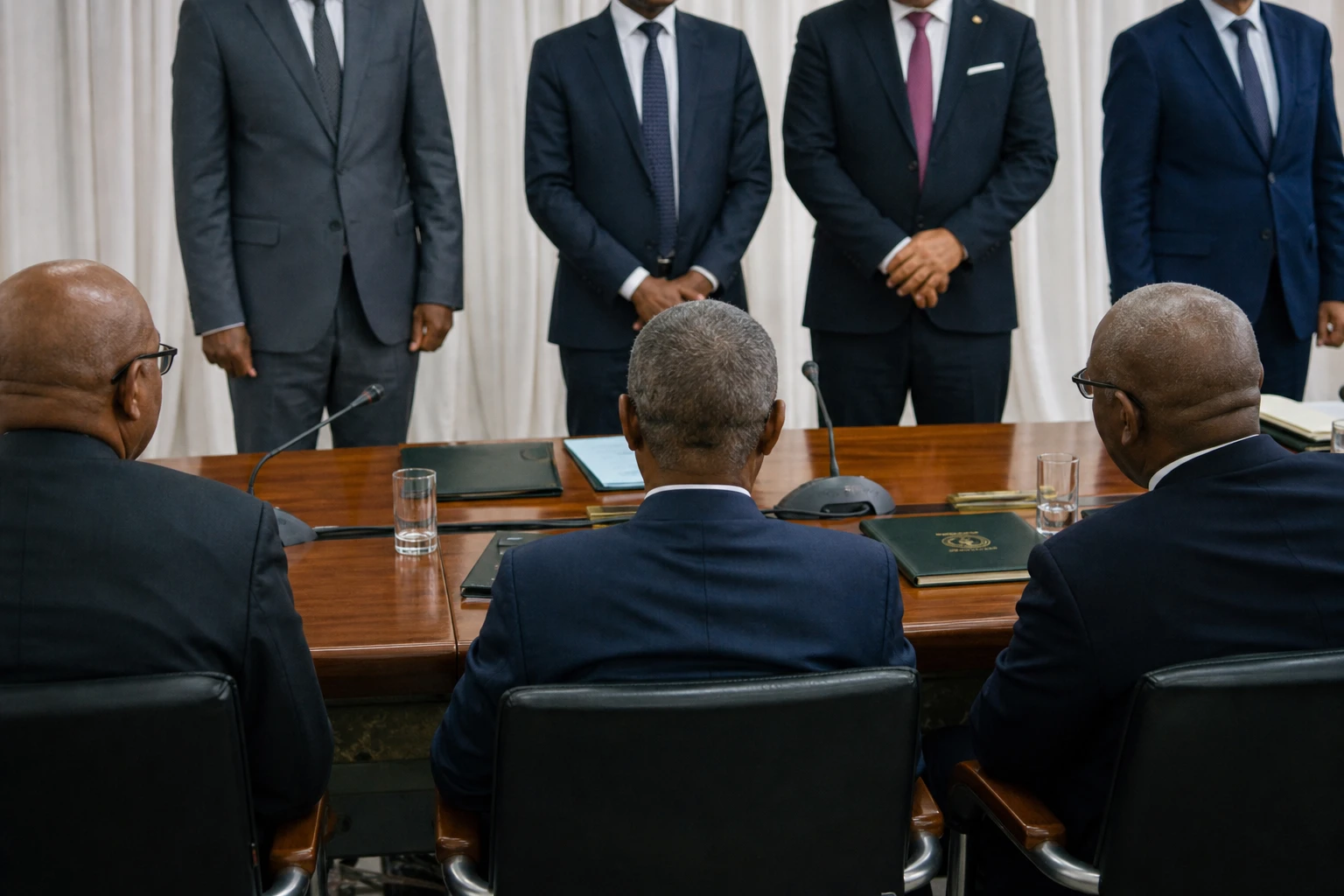
In this context, discussions between Mauritania’s Minister of Higher Education and Scientific Research, Yacoub Ould Moine, and China’s ambassador, Tang Zhongdong, are more than empty protocol. In late July 2025, their meeting in Nouakchott focused on strengthening co-operation in higher education and scientific research. The presence of a representative from China’s Hohai University gave the issue a more technical dimension, focused on hydraulics, engineering and water management.
China stakes its claim in a strategic field
Hohai is not just another general university. The Chinese institution presents itself as a leader in hydraulic engineering, water resources and international co-operation. Its official website highlights a network of partnerships with universities and institutions in many countries, as well as extensive experience in academic exchanges. For Mauritania, this profile matches a practical need: to train more engineers, water specialists and officials able to support the country’s major projects.
This rapprochement is also part of a broader bilateral relationship. Beijing and Nouakchott have strengthened their political and economic co-operation in recent years, announcing a strategic partnership in 2024 at the Beijing summit of the Forum on China-Africa Co-operation. Chinese authorities also point out that educational co-operation is already under way, notably with the University of Nouakchott and the teaching of Chinese in Mauritania.
On the ground, China is already involved in Mauritania’s infrastructure, from the ports in Nouakchott to projects linked to mining and transport. The Mauritania Investment Promotion Agency highlights the role of the port of Nouakchott and the mining corridor to Nouadhibou in the national economy. This reality helps explain why Mauritanian authorities also view academic diplomacy as a tool of economic sovereignty: training locally the people required by major projects.
Youth employment remains the real test
Labour-market figures show the scale of the challenge. According to the quarterly survey published by ANSADE, unemployment among 14- to 35-year-olds reached 16.5% in 2024. When underemployment and potential workers who are inactive are included, labour underutilisation rises to 34.6%. The gap between women and men remains clear, with female unemployment higher than male unemployment.
In other words, Mauritania does not just lack jobs. It also lacks jobs suited to people’s level of education, technical career opportunities and pathways between the classroom and the worksite. The state has included this issue in its national higher education strategy to 2030, with the aim of improving the system’s internal efficiency and aligning it more closely with the country’s needs.
The water sector illustrates this logic well. Access to drinking water in Mauritania remains unequal, particularly in rural areas, as several international institutions have noted in recent years. UNICEF continues to report stark disparities between urban and rural areas, while the African Development Bank is supporting water resilience projects under the national strategy for growth and shared prosperity. In this context, an academic partnership focused on hydraulics is far from incidental: it affects public services, agriculture, health and land-use planning alike.
The government has also launched more concrete projects. In August 2025, an agreement was announced with Toyota Tsusho for a desalination plant in Nouadhibou, with a planned capacity of 50,000 m³ per day and renewable energy use. This type of infrastructure requires technicians, engineers, managers and researchers able to oversee studies, operations and maintenance. This is precisely where university partnerships can prove useful, provided they lead to actual training, internships and courses tailored to conditions on the ground in Mauritania.
A Mauritanian initiative with West African reach
Regionally, the issue extends beyond Mauritania alone. The country is not a member of ECOWAS, but it borders the West African Sahel and is connected to student mobility and shared needs in water, engineering and youth employment. In this region, universities are increasingly becoming instruments of public policy: they must train, retain and connect skilled people.
For Nouakchott, the next step will therefore be less diplomatic than practical. It will be necessary to see whether talks with China lead to scholarships, double degrees, joint laboratories or priority courses linked to hydraulics, digital technology and engineering. Without that, the announcement will remain one more photo in an already dense relationship. With it, it could become a modest but useful lever for a country where young people make up the majority and every skill counts.