Algeria
 Egypt
 Libya
 Morocco
 Sudan
 Tunisia
 Benin
 Burkina Faso
 Cabo Verde
 Ghana
 Guinea
 Guinea-Bissau
 Liberia
 Mali
 Mauritania
 Niger
 Nigeria
 Senegal
 Sierra Leone
 The Gambia
 Togo
 Cameroon
 Central African Republic
 Chad
 DR Congo
 Equatorial Guinea
 Gabon
 Republic of the Congo
 São Tomé and Príncipe
 Burundi
 Comoros
 Djibouti
 Eritrea
 Ethiopia
 Kenya
 Madagascar
 Malawi
 Mauritius
 Mozambique
 Rwanda
 Seychelles
 Somalia
 South Sudan
 Tanzania
 Uganda
 Angola
 Botswana
 Eswatini
 Lesotho
 Namibia
 South Africa
 Zambia
 Zimbabwe
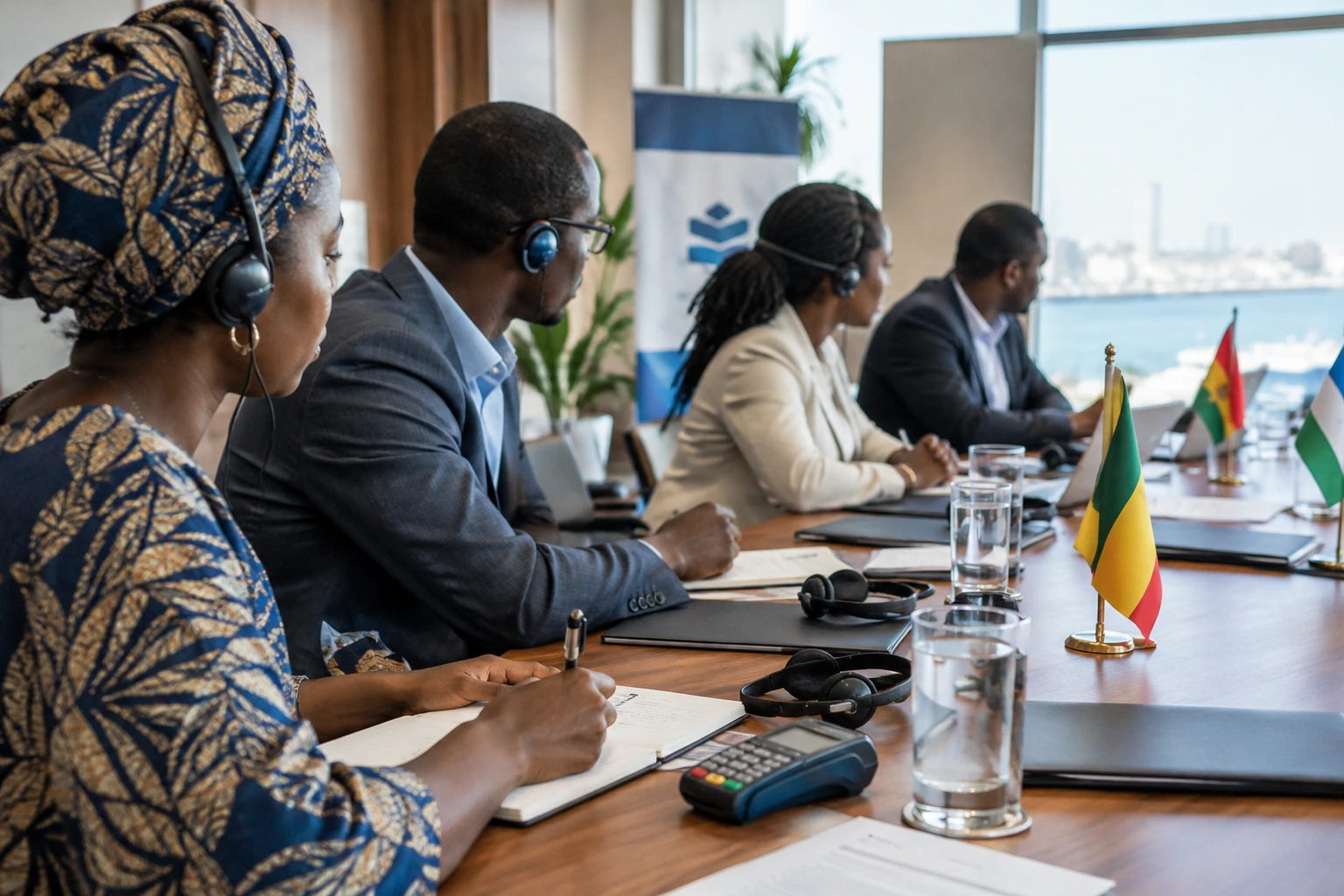
Digital payments are expanding rapidly in the West African Economic and Monetary Union (WAEMU). But their growth depends on more than apps and cards: it also rests on trust, common rules and merchants’ ability to accept these payment methods. It is in this environment that Ivorian executive Christelle N’Guessan-Rigaud has taken on a new role at Mastercard.
A regional market in rapid transition
WAEMU comprises eight countries: Benin, Burkina Faso, Côte d’Ivoire, Guinea-Bissau, Mali, Niger, Senegal and Togo. The BCEAO, their shared central bank, oversees some digital financial services. GIM-UEMOA, a regional interbank organisation, contributes in particular to the interoperability of cards and payment networks.
BCEAO data show both the scale of use and the challenges that remain. In 2024, electronic money transactions in the Union reached 11 billion operations, worth CFAF 160,415 billion. Their volume rose by 27% in a year. The cumulative value represents nearly 119% of regional gross domestic product, an indicator of the intensity of transactions, not of the wealth created by the sector.
Access does not necessarily mean regular use. The BCEAO recorded 248 million electronic money accounts opened in 2024, but 76.9 million were active. Merchant payments are also increasing: the number of acceptance points more than doubled in a year, reaching about 3.7 million. Yet deposits and withdrawals still account for a significant share of operations. Turning a digital wallet into a routine way to pay for purchases therefore remains a central challenge.
Appointment covering French-speaking Africa
Christelle N’Guessan-Rigaud has held the position of vice-president for country commercial development in French-speaking sub-Saharan Africa since June 2026, according to information released at the time of her appointment. She is to lead Mastercard’s commercial growth, develop its partnerships and strengthen its presence in the markets concerned.
Her career has spanned several areas of payments. Before Mastercard, she worked at Visa on commercial development in the WAEMU region. She has also worked in banking and payment technologies, notably at Ecobank Côte d’Ivoire and Onafrique. These roles have given her experience of the relationships between banks, card networks, mobile money operators and technology companies.
At Mastercard, she had previously held roles related to account management in WAEMU. Her new responsibilities extend her remit to French-speaking sub-Saharan Africa. She is to work with governments, banks, mobile money operators and fintechs. Details of the markets covered and quantified targets have not been made public in the information available.
Beyond cards, the question of interoperability
For users, the practical challenge is straightforward: being able to send or receive money, pay a merchant and access their balance without juggling multiple accounts or intermediaries. Yet systems do not always connect easily. Partnerships between international networks, banks and local players can broaden payment acceptance, but their value depends on fees, coverage and ease of use.
The BCEAO and GIM-UEMOA play a pivotal role here. The central bank sets the regional framework and supports interbank connectivity, while the group implements shared technical solutions. Mastercard also formalised a partnership with GIM-UEMOA in 2024. These partnerships show that international networks are only one part of an ecosystem in which central banks, regional institutions, telecoms operators and fintechs also have their own levers.
The benefits will not be the same for everyone. Large companies and urban retailers can more easily equip themselves and integrate digital payments. Small businesses, informal vendors and shops far from urban centres may be held back by fees, the cost of terminals, connection quality or access to electricity. For customers, data security, fraud prevention and redress procedures matter as much as the availability of an app.
Trust as a condition for inclusion
The rise in the number of accounts opened is therefore not enough to measure financial inclusion. Their activity, transaction costs, user protection and the ability to use services in everyday life must also be considered. In its report on 2024, the BCEAO notes that merchant payments are growing, but that deposits and withdrawals still account for a significant share of electronic money transactions.
The executive describes financial inclusion as infrastructure rather than a slogan. The phrase points to an operational reality: services must be reliable, accessible and suited to the needs of households and businesses. However, the commercial role she is taking on does not give her the power to resolve issues of regulation, pricing or coverage on her own. Such decisions involve multiple public and private actors.
Her appointment also highlights the presence of Ivorian women executives in the payments industry, a sector where commercial and technology roles remain highly contested. She has spoken about what this development means for young women in the region. This is her own account; it does not replace the question of the practical conditions for accessing leadership positions and advancing professionally.
A challenge that extends beyond international networks
For WAEMU, the next step is not simply a matter of extending a brand or a network. It concerns compatibility between systems, merchant acceptance and users’ ability to make secure payments at a reasonable cost. The 2024 figures point to a market that is already large, but also to a gap between the number of accounts and their active use.
Across French-speaking sub-Saharan Africa, conditions vary by country and regional framework. Initiatives designed for WAEMU do not automatically apply to states under other central banks or economic communities. Mastercard’s commercial development will therefore have to navigate different rules and infrastructure. The real impact of this appointment will be measured by the partnerships concluded and the effective expansion of use, particularly among small businesses and people still poorly served by financial networks.