Algeria
 Egypt
 Libya
 Morocco
 Sudan
 Tunisia
 Benin
 Burkina Faso
 Cabo Verde
 Côte d'Ivoire
 Ghana
 Guinea
 Guinea-Bissau
 Liberia
 Mali
 Mauritania
 Niger
 Nigeria
 Senegal
 Sierra Leone
 The Gambia
 Togo
 Cameroon
 Central African Republic
 Chad
 DR Congo
 Equatorial Guinea
 Gabon
 Republic of the Congo
 São Tomé and Príncipe
 Burundi
 Comoros
 Djibouti
 Eritrea
 Ethiopia
 Kenya
 Madagascar
 Malawi
 Mauritius
 Rwanda
 Seychelles
 Somalia
 South Sudan
 Tanzania
 Uganda
 Angola
 Botswana
 Eswatini
 Lesotho
 Namibia
 South Africa
 Zambia
 Zimbabwe
Getting around Maputo is becoming a metropolitan issue. Outlying neighbourhoods are expanding faster than infrastructure, while daily journeys now link several cities and districts. The planned bus rapid transit network must therefore answer a simple question: how can travel be organised across an urban area that extends far beyond the boundaries of the Mozambican capital?
A project designed for Greater Maputo
Mozambique reached a concrete milestone on 17 September 2026, with the signing of construction contracts and the laying of the foundation stone for the main BRT, or “bus rapid transit”, corridor. The system is based on dedicated lanes, purpose-built stations and more regular services than conventional buses.
The ceremony took place north of Zimpeto National Stadium in Maputo. It brought together Mozambique’s Minister of Transport and Logistics, João Jorge Matlombe, Maputo Mayor Rasaque Manhique, and representatives of local authorities and project partners.
The construction contract was awarded to China Henan International Cooperation Group, known by the acronym CHICO. The contract is worth 7.615 billion meticais, or about $119 million at the exchange rate stated in the tender documents. The planned duration is 24 months, putting completion in 2028.
The value and the company selected are listed in the contract notice linked to the Maputo Metropolitan Area Urban Mobility Project. A technical communication published in Mozambique also confirms the 17 September ceremony and the start of construction.
A dedicated corridor, followed by a wider network
The first phase provides for about 16.5 kilometres of bus-only lanes. The corridor is due to start in central Maputo and serve, among other places, Praça da Juventude in Magoanine, followed by the Missão Roque and Zimpeto area.
The scheme will not be limited to this infrastructure, separated from general traffic. The project plan also provides for direct and connecting routes covering several dozen kilometres. They are intended to link the main terminals in Maputo, Matola, Boane and Marracuene.
The figures have changed over the course of the studies. In 2023, the official MOVE Maputo website set out a 22-kilometre dedicated section and about 39 kilometres of routes on ordinary roads. The configuration now under construction in 2026 provides for an initial 16.5-kilometre section, supplemented by connecting routes. The difference reflects the shift from general studies to an operational construction scope.
The World Bank approved $250 million in funding in August 2022 to improve mobility in the metropolitan area. The programme includes the country’s first BRT, as well as the rehabilitation of streets, access to less well-served neighbourhoods and infrastructure for non-motorised travel.
A response to growth in Maputo and Matola
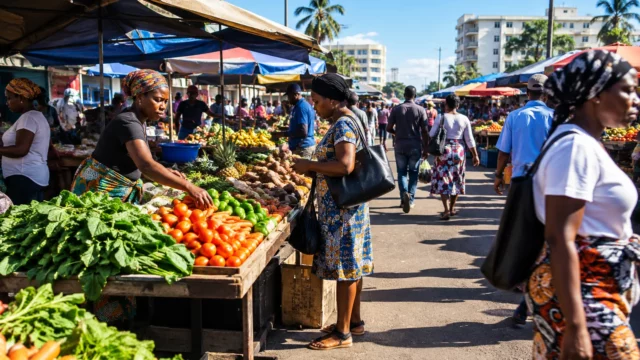
The Maputo metropolitan area comprises the capital, the city of Matola, Boane and the district of Marracuene. It already functions as a single mobility basin. Every morning, workers and students converge on administrative, commercial and industrial hubs. In the evening, flows reverse towards outlying residential areas.
The MOVE Maputo project estimates that about one million people travel to the centre of the capital each day. Transport authorities have also cited a target capacity of about 125,000 passengers a day, or nearly 40 million journeys a year if the service operates at that level throughout the year.
These projections will, however, have to be tested against actual usage. Ridership will depend on fares, bus frequency, station security and the quality of connections. It will also depend on the network’s ability to serve neighbourhoods far from major roads.
For households that rely on public transport, the expected benefit is not measured only in minutes. A more predictable service can improve access to jobs, schools and health centres. Conversely, a break in connectivity between the BRT and smaller operators could lengthen journeys or raise the total cost of travel.
The challenge of integrating with the “chapas”
In Greater Maputo, minibuses commonly known as “chapas” play a central role. They provide much of the local transport and serve streets where larger buses cannot always operate.
The BRT will therefore not automatically replace this network. Its success will depend on how well it connects with existing routes. Terminals will need to make transfers straightforward. Timetables will have to be coordinated. Electronic ticketing will need to remain accessible to passengers who mainly use cash payments or basic mobile phones.
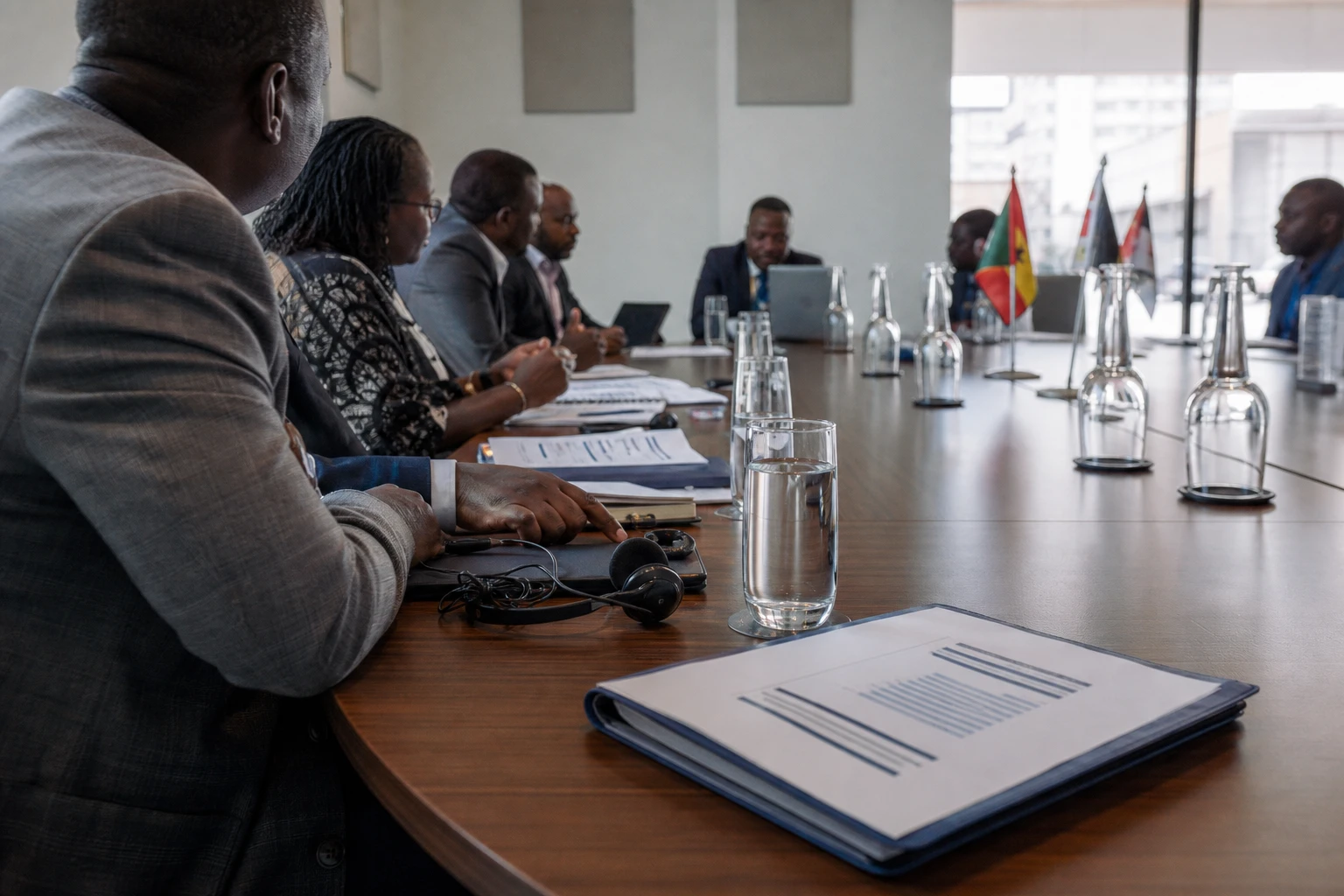
The project also raises an institutional challenge. Maputo, Matola, Boane and Marracuene fall under different local authorities. Managing routes, stations, traffic and revenue will require sustained coordination between municipalities, the Metropolitan Transport Agency and central government.
This governance will be as important as the construction work. A well-built corridor can lose much of its effectiveness if ordinary buses use it, intersections remain blocked or stations are difficult for pedestrians to reach.
A project within the SADC’s wider momentum
The construction work is under way in a region where capitals and major cities are seeking to reduce their dependence on private cars. Mozambique is a member of the Southern African Development Community, or SADC, which promotes regional cooperation on infrastructure, transport and economic integration.
Maputo also has daily links with southern Africa’s trade corridors. More reliable urban transport can support port activity, trade with South Africa and Eswatini, and journeys between industrial zones and residential neighbourhoods.
The BRT is also expected to help curb emissions and accidents linked to congestion. But these benefits will not be automatic. They will depend on how many passengers switch from private vehicles, the quality of the fleet and the continuity of the service.
The next milestone to watch will be the actual progress of construction through to 2028. The launch of stations, the operating model, fares and integration with existing transport operators will also need to be monitored. For Maputo, the project is therefore more than a new piece of infrastructure. It is a test of Mozambique’s ability to manage an expanding metropolis.