Algeria
 Egypt
 Libya
 Morocco
 Sudan
 Tunisia
 Benin
 Burkina Faso
 Cabo Verde
 Côte d'Ivoire
 Ghana
 Guinea
 Guinea-Bissau
 Liberia
 Mauritania
 Niger
 Nigeria
 Senegal
 Sierra Leone
 The Gambia
 Togo
 Cameroon
 Central African Republic
 Chad
 DR Congo
 Equatorial Guinea
 Gabon
 Republic of the Congo
 São Tomé and Príncipe
 Burundi
 Comoros
 Djibouti
 Eritrea
 Ethiopia
 Kenya
 Madagascar
 Malawi
 Mauritius
 Mozambique
 Rwanda
 Seychelles
 Somalia
 South Sudan
 Tanzania
 Uganda
 Angola
 Botswana
 Eswatini
 Lesotho
 Namibia
 South Africa
 Zambia
 Zimbabwe
Security sovereignty remains at the heart of debate in Bamako
When rumours of foreign intervention emerge in Mali’s public debate, they touch a sensitive issue: who decides how to ensure Mali’s security, and with what means? In Bamako, the question is not merely diplomatic. It also reflects the reality on the ground, as attacks, road blockades and pressure on several parts of the country fuel strong expectations of tangible results.
Mali now finds itself in a profoundly reshaped political and regional environment. Since effectively withdrawing from ECOWAS on 29 January 2025, Bamako has strengthened its ties with the Confederation of Sahel States, established with Burkina Faso and Niger. This new framework shapes how security and diplomatic issues are viewed, reflecting a desire to regain control of strategic choices from the central Sahel.
What Bamako and Washington are saying
The story began with a report published on 22 July 2026 saying that the Trump administration was considering military action against JNIM, Jama’at Nusrat al-Islam wal-Muslimin, an armed group affiliated with al-Qaeda and highly active in Mali, Burkina Faso and Niger. The sources cited referred to internal discussions, with no decision publicly announced. JNIM is led by Iyad Ag Ghali, whom the United States designated a top terrorist in 2013.
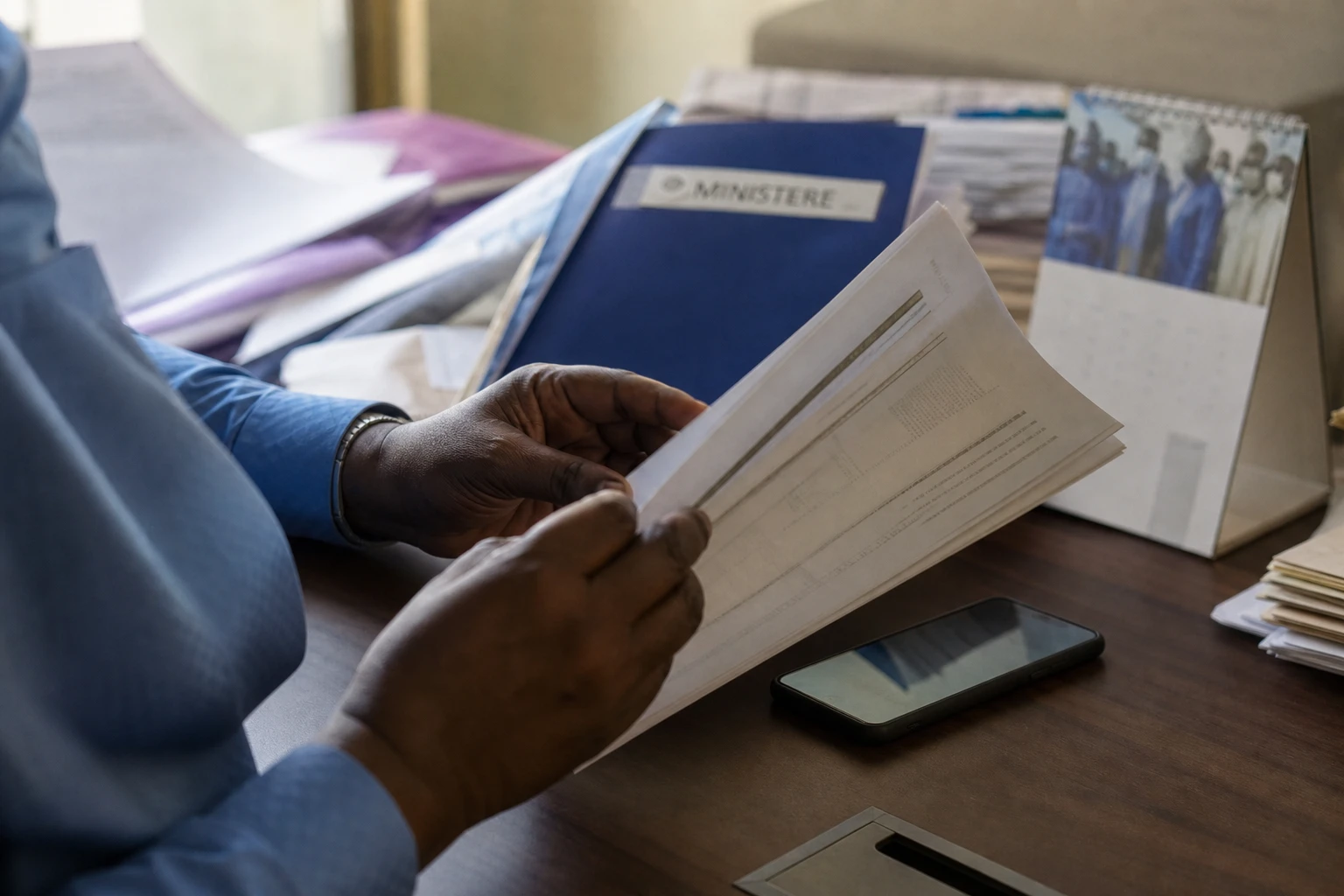
In Bamako, Abdoulaye Diop responded cautiously at a press conference on Thursday 23 July 2026. Mali’s foreign minister said the country had learnt of the possibility only through the press and that Washington had provided no official confirmation. He stressed one central political point: in his view, Mali was not sitting idle, waiting for an outside actor to solve the problem on its behalf.
The response comes amid a broader diplomatic sequence. Four days earlier, on 17 July 2026, Mali’s prime minister had received the US under-secretary of state for African affairs, Frank Garcia, in Bamako, in a visit presented by the Malian authorities as an opportunity to revive bilateral dialogue. The same month, exchanges between Malian and US officials had therefore been public and regular, and far from a scenario of abrupt rupture.
A security issue, but also a political one
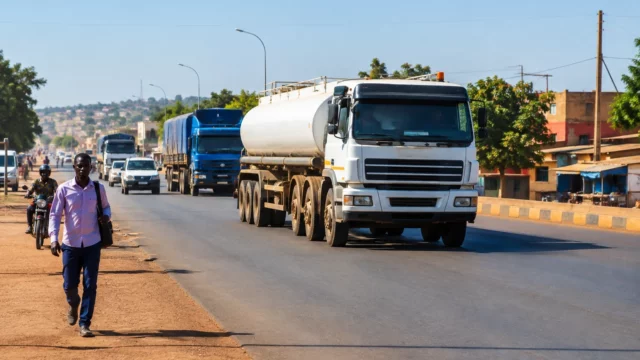
In practice, the threat posed by JNIM is not limited to military combat. The group exploits local divisions, the vulnerability of trade routes and tensions between urban areas and rural communities. As attacks move closer to the routes linking Bamako with the south and centre, the human and economic costs rise for transport operators, traders and households. The authorities, meanwhile, are seeking to show that they retain control of the ground and the narrative.
This is also why the question of US intervention prompts immediate reactions. In Mali’s recent history, foreign interventions have rarely produced lasting consensus. The French intervention launched in 2013 at the request of the Malian government of the time profoundly altered the military balance before giving way to a rapid reshaping of alliances. Today, Bamako wants to avoid the image of a country once again subjected to a strategy devised elsewhere, even as the military transition has been built around the word sovereignty.
This sequence should also be viewed in light of changing relations between Bamako and the United States. Dialogue has not disappeared. On the contrary, signs of a resumption have multiplied in 2026, with official meetings and discussions on security and economic co-operation. But trust remains fragile. The Malian authorities want useful partnerships without tutelage. Washington, meanwhile, is seeking to retain strategic access to a region where the jihadist threat spills across Mali’s borders.
What this sequence says about the Sahel and the continent
The case of Mali therefore goes beyond the relationship between Bamako and Washington alone. It points to a wider reality in the Sahel: the proliferation of military transitions, the fragility of traditional regional arrangements and the return of security diplomacy in which each capital wants to retain control over its partners. In this context, the AES Confederation serves as a political framework, a signal of rupture with ECOWAS and a testing ground for Sahelian co-operation less dependent on customary formats.
For the African Union and regional organisations, the stakes are clear. The central Sahel remains an area where crises overlap: insecurity, armed mobility, economic pressure, diplomatic realignment and distrust of external frameworks. What is unfolding in Bamako could therefore resonate far beyond Mali, as any new military initiative, American or otherwise, could influence the balance with Burkina Faso and Niger, as well as African debates on sovereignty, counter-terrorism co-operation and the legitimacy of foreign interventions.
What happens next will depend less on a rumour than on formal decisions. If Washington wants to act, it will have to clarify its position. If Bamako wants to build on its sovereignty-focused stance, it will above all have to demonstrate lasting gains on the ground. In either case, the real measure will not be the noise around an intervention, but the actors’ ability to contain JNIM, secure roads and restore the visibility of the Malian state in its own regions.