Algeria
 Egypt
 Libya
 Morocco
 Sudan
 Tunisia
 Benin
 Burkina Faso
 Cabo Verde
 Côte d'Ivoire
 Ghana
 Guinea
 Guinea-Bissau
 Liberia
 Mauritania
 Niger
 Nigeria
 Senegal
 Sierra Leone
 The Gambia
 Togo
 Cameroon
 Central African Republic
 Chad
 DR Congo
 Equatorial Guinea
 Gabon
 Republic of the Congo
 São Tomé and Príncipe
 Burundi
 Comoros
 Djibouti
 Eritrea
 Ethiopia
 Kenya
 Madagascar
 Malawi
 Mauritius
 Mozambique
 Rwanda
 Seychelles
 Somalia
 South Sudan
 Tanzania
 Uganda
 Angola
 Botswana
 Eswatini
 Lesotho
 Namibia
 South Africa
 Zambia
 Zimbabwe
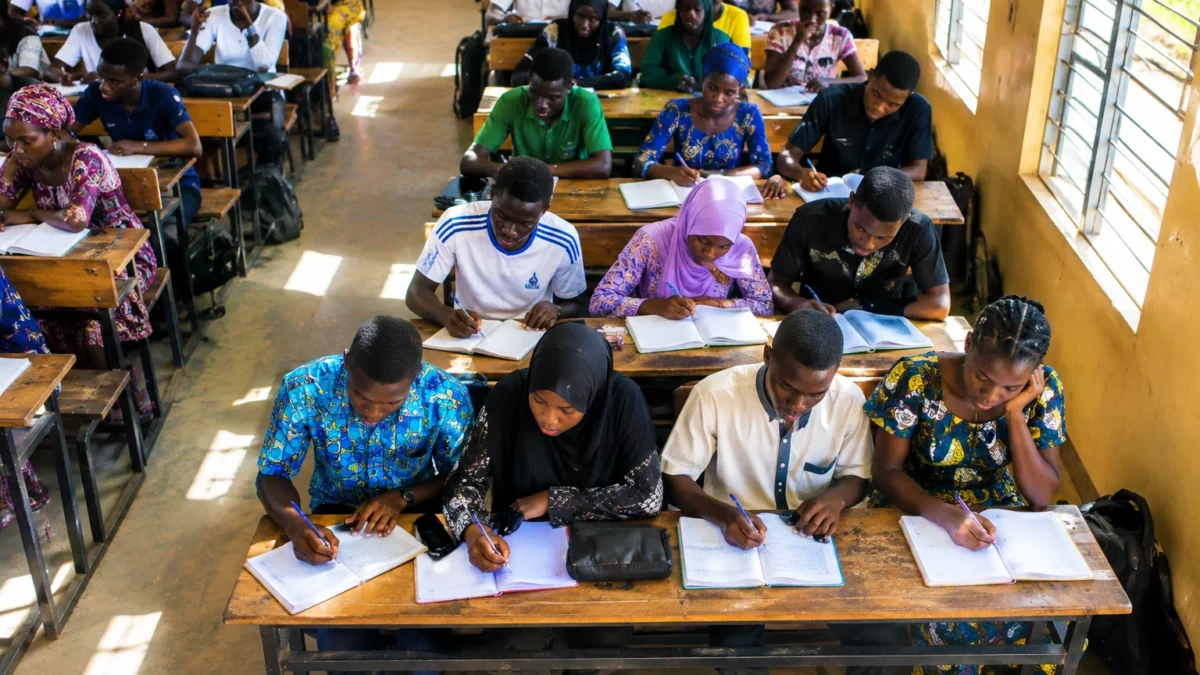
An extra classroom is not always enough to accommodate more pupils. There must also be desks, teachers and functioning services. In Mali, a school investment programme aims to address several of these needs at once. Its adoption by the National Transition Council opens a new phase, but does not yet guarantee delivery of the announced schools.
Regional funding for several levels of education
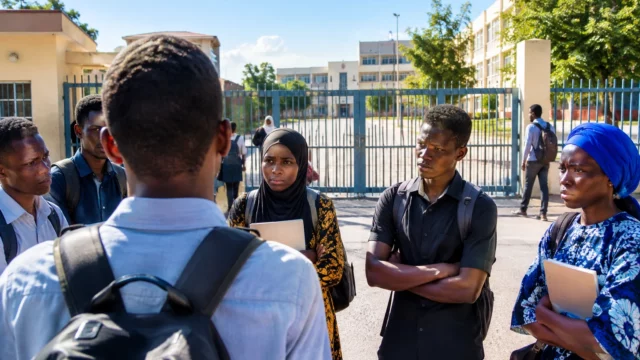
The project comes amid ongoing concerns for Malian families over access to secondary education and the quality of study conditions. In Bamako, Niamakoro public secondary school had about 2,000 pupils in April 2025. The Malian Press and Publicity Agency reported a shortage of classrooms and desks at the time, with pupils sometimes looking from one classroom to another for a place to sit. Problems with electricity, water and sanitation were also reported. The AMAP report on difficulties at Niamakoro secondary school documents these local grievances.
The funding comes from the West African Development Bank (BOAD), the financing institution for the states of the West African Economic and Monetary Union (UEMOA). This regional cooperation provides Mali with a source of credit, while the state must also contribute to the programme’s cost. BOAD approved the operation in 2026 as part of its funding for infrastructure and education. BOAD’s statement on approval of the Malian funding gives further details of the amount.
What the programme provides for
Meeting in Bamako on Friday 20 November 2026, members of the National Transition Council (CNT), the legislative body during the transition period, adopted the bill ratifying the order related to the loan agreement. The bill received 119 votes in favour, according to Malian reports of the session. The agreement was signed on 3 July 2026 in Ouagadougou, Burkina Faso. The Malian government’s statement on the vote and planned investments sets out the scheme in detail.
The announced funding amounts to CFAF 50 billion: CFAF 48 billion in a BOAD loan and CFAF 2 billion contributed by the Malian state. It is to fund the construction and equipping of 15 new public secondary schools, as well as the addition of 125 classrooms at 12 existing schools. The programme also provides for renovations and the purchase of 13,398 desks for 79 public secondary schools.
The project extends beyond general secondary education. It includes five teacher-training institutes, four vocational training institutes and the modernisation of the Abderhamane Baba Touré National School of Engineering. Projections presented to the CNT envisage the creation or consolidation of 43,546 places in general secondary education, and training capacity for 5,500 learners in technical, vocational and teacher-training courses. These are announced targets, not yet achieved results.
Construction will not solve everything
For pupils and their families, the programme’s impact will depend first on the buildings actually becoming operational. Construction timelines, the locations of the new secondary schools and the distribution of equipment will determine who benefits. Needs differ between the capital and other regions. A school far from home can remain difficult to reach, even if it has new classrooms.
Furniture is essential, but it cannot replace teachers or regular maintenance of the premises. The difficulties reported at Niamakoro illustrate this combination of needs: a shortage of classrooms and desks, as well as problems with electricity, water and sanitation. The programme announces construction, extensions, renovations and equipment. However, the public information reviewed does not provide a detailed delivery schedule or an update on disbursements.
The funding relies mainly on a loan. It will therefore be important to track not only progress on the works, but also expenditure and whether it complies with the announced programme. Parliamentary ratification validates an institutional step in the agreement; on its own, it does not mean that the funds have been fully disbursed or that construction is complete. The government had already presented the project’s main outlines in March 2026, including the 15 secondary schools and the expansion of 12 existing schools. The initial presentation by the Ministry of National Education helps put the vote in context.
An issue that goes beyond buildings
In Mali, investment in schools affects the continuity of education pathways: securing a place at secondary school, then being able to continue in technical, vocational or teacher-training courses. The announced capacity alone does not guarantee that every pupil will continue their studies. It could nevertheless reduce some material barriers if the schools actually open and have the resources needed to operate.
The regional dimension also stems from BOAD’s role in financing projects in UEMOA countries. For the Malian authorities, the immediate challenge is now to turn a ratified agreement into monitored construction works, and then into operational schools. The next steps to watch will be disbursements, the start and progress of construction, and the provision of staff and equipment. The concrete impact of the announced CFAF 50 billion will be measured by these results, in secondary schools in Bamako and in other regions alike.