Algeria
 Egypt
 Libya
 Morocco
 Sudan
 Tunisia
 Benin
 Burkina Faso
 Cabo Verde
 Côte d'Ivoire
 Ghana
 Guinea
 Guinea-Bissau
 Liberia
 Mauritania
 Niger
 Nigeria
 Senegal
 Sierra Leone
 The Gambia
 Togo
 Cameroon
 Central African Republic
 Chad
 DR Congo
 Equatorial Guinea
 Gabon
 Republic of the Congo
 São Tomé and Príncipe
 Burundi
 Comoros
 Djibouti
 Eritrea
 Ethiopia
 Kenya
 Madagascar
 Malawi
 Mauritius
 Mozambique
 Rwanda
 Seychelles
 Somalia
 South Sudan
 Tanzania
 Uganda
 Angola
 Botswana
 Eswatini
 Lesotho
 Namibia
 South Africa
 Zambia
 Zimbabwe
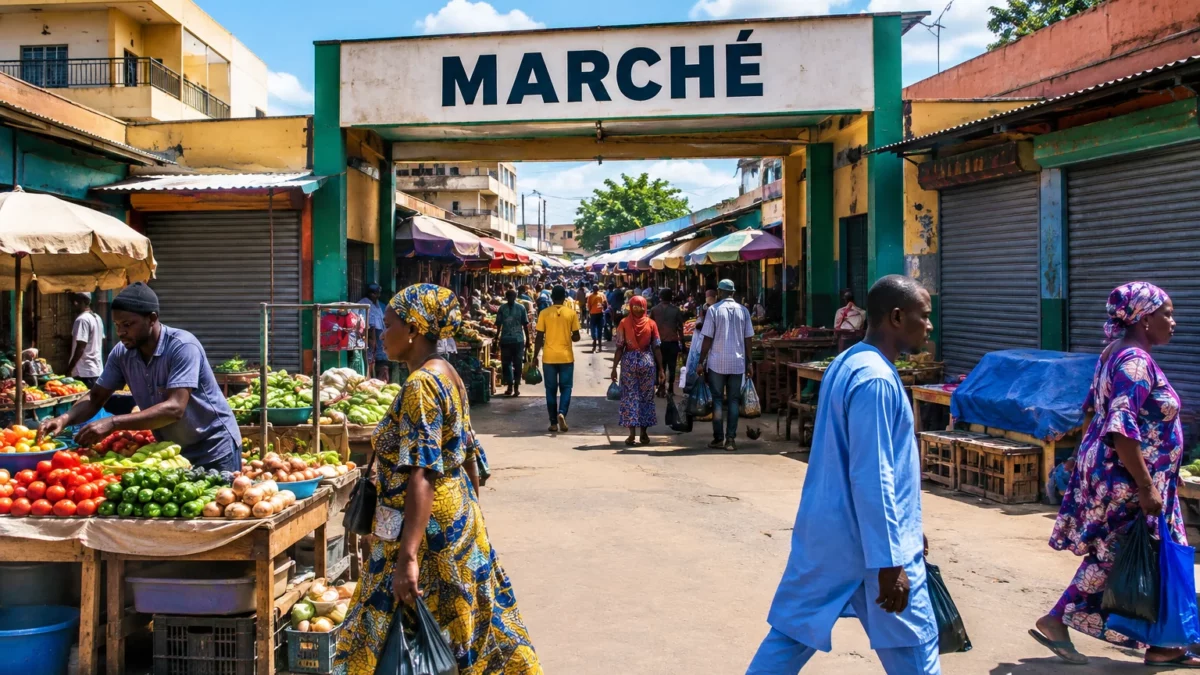
In Mali, Russian support was intended to strengthen the state’s military capacity. Leaked Russian records now offer a measure of the human cost borne by Moscow’s fighters, without answering the central question: does their presence sustainably improve the security of Malians?
A Russian presence that has changed shape
The security partnership with Moscow developed after relations broke down between Mali’s transitional authorities and several Western partners. The Wagner group arrived in Mali in late 2021. It was subsequently replaced, in June 2025, by Africa Corps, a structure overseen by the Russian state.
This evolution is part of a regional trajectory marked by military transitions in Mali, Burkina Faso and Niger. The three countries have created the Alliance of Sahel States while distancing themselves from the Economic Community of West African States (ECOWAS), the regional organisation bringing together much of West Africa. These choices are reshaping security partnerships, but do not by themselves resolve conflicts on the ground.
In Mali, fighting is concentrated particularly in the north and centre. The authorities face armed groups with different aims: the Group for the Support of Islam and Muslims (JNIM), affiliated with al-Qaeda, and separatist movements, including the Azawad Liberation Front (FLA). People in the affected areas also face movement restrictions, market disruption and difficulties accessing services.
What the leaked records show
Death certificates from the records of Russia’s statistics agency, Rosstat, report that 349 Russian nationals died in Mali between September 2023 and September 2026. The documents were obtained by the hacking groups Cyber Partisans and Silent Crow, then analysed by the British daily The Guardian.
The figure therefore comes from a documentary leak, not a tally published by Bamako or Moscow. Russian authorities do not release a public account of their losses in Mali. Nor do the leaked documents amount to a count independently verified against accessible records. The total should therefore be attributed to the journalistic analysis and treated with caution.
The records associate 70 deaths with 27 July 2024, in the Kidal region, during the fighting at Tinzaouatène. This figure contrasts with public estimates made after the battle. The Permanent Strategic Framework for the Defence of the People of Azawad (CSP-DPA) had claimed 84 Russian deaths, a figure that was disputed and not confirmed by Russian authorities. An investigation by the organisation The Sentry revisits the clashes and recalls this claim, without presenting it as an established toll.
Another day stands out in the data: on 25 April 2026, 43 Russians are reported to have died in Mali. The date coincides with a coordinated JNIM and FLA offensive against several towns and positions. Analysis by ACAPS, an organisation specialising in crisis analysis, describes the scale of the attacks and their effects on displacement, economic activity and civilian safety. It also notes that complete casualty figures remain difficult to establish.
An indicator of the partnership’s limits
These losses do not, on their own, measure the effectiveness of a military strategy. They nevertheless show that Russian forces are directly exposed to combat, including in areas where the Malian army is seeking to re-establish control. The death toll does not show how many operations achieved their objectives, or whether territorial gains lasted.
The Tinzaouatène episode illustrates this difficulty. In November 2023, Malian forces and Wagner retook Kidal. During the April 2026 offensive, the FLA announced that it had retaken the town. ACAPS also noted the withdrawal of Malian and Russian forces, and the resulting uncertainty for residents. Control can therefore change hands repeatedly without bringing lasting stability to local populations.
The consequences vary by location and actor. In Bamako, the Russian presence forms part of the transitional authorities’ diplomatic choices and their search for military resources. In the northern regions, residents experience the fighting, movement restrictions and interruptions to daily activity more directly. For traders and transport operators, insecurity on routes hampers commerce. For families, it can also limit access to healthcare, school or markets.
The figure of 349 is probably incomplete, according to The Guardian’s analysis: deaths may be registered late, and the absence of cases in a given month’s records does not prove that no losses occurred. Two Western officials cited by the newspaper believe the real toll could be higher. Their assessment remains an attributed estimate, not a verifiable count.
A regional question beyond Russian losses
Russia’s presence in Mali is part of Moscow’s broader strategy in Africa, but the immediate issues are Malian: civilian protection, control of territory and the ability of institutions to provide services in affected areas. The contest for influence between foreign partners should not obscure these priorities or reduce Mali’s choices to rivalry between powers alone.
The course of the conflict also matters to neighbouring countries. Cross-border routes, trade and population movements link northern Mali with Algeria, Niger and Mauritania. Local deterioration can therefore have effects beyond national borders, although conditions differ from country to country.
What happens next will depend in particular on the ability of Malian forces and their partners to hold positions they have retaken, as well as on the resumption of political dialogue with actors in the north and the protection of civilians. Without a shared official toll, Russian losses will remain difficult to compare with the results claimed by the different parties. The leaked data provide an unprecedented insight; they are no substitute for a full independent verification or an assessment of the security experienced by local populations.