Algeria
 Egypt
 Libya
 Morocco
 Sudan
 Tunisia
 Benin
 Burkina Faso
 Cabo Verde
 Côte d'Ivoire
 Ghana
 Guinea
 Guinea-Bissau
 Liberia
 Mauritania
 Niger
 Nigeria
 Senegal
 Sierra Leone
 The Gambia
 Togo
 Cameroon
 Central African Republic
 Chad
 DR Congo
 Equatorial Guinea
 Gabon
 Republic of the Congo
 São Tomé and Príncipe
 Burundi
 Comoros
 Djibouti
 Eritrea
 Ethiopia
 Kenya
 Madagascar
 Malawi
 Mauritius
 Mozambique
 Rwanda
 Seychelles
 Somalia
 South Sudan
 Tanzania
 Uganda
 Angola
 Botswana
 Eswatini
 Lesotho
 Namibia
 South Africa
 Zambia
 Zimbabwe
A military case that goes beyond Bamako alone
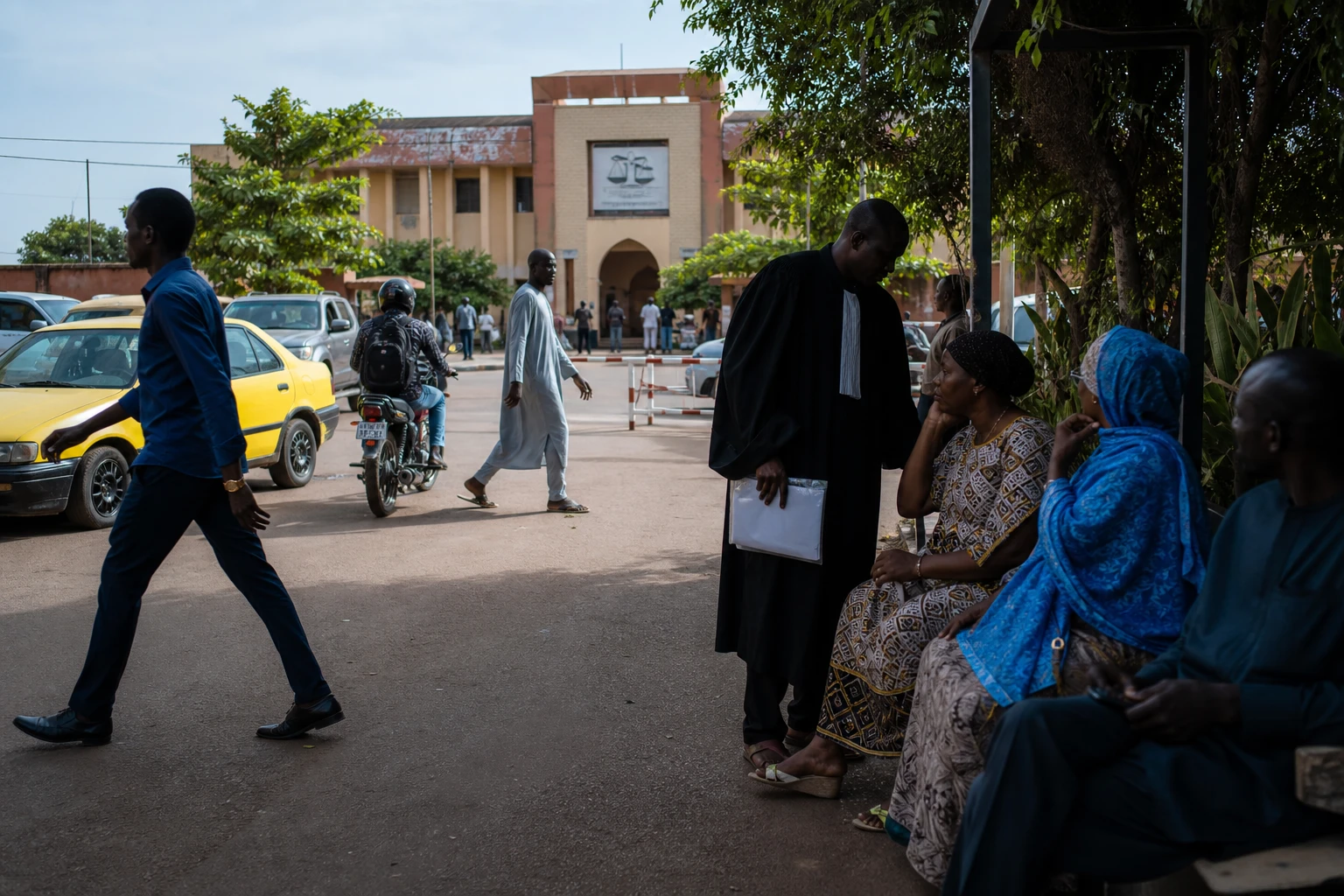
In Bamako, an arrest is never merely a judicial matter. In a Mali governed by a military transition since the coups of 2020 and 2021, every proceeding involving officers also affects the internal balance of the armed forces, the credibility of the state and public trust in institutions. The events that began in the summer of 2025 demonstrated this once again.
The country is also operating in a reshaped regional environment. Since 29 January 2025, Mali, Burkina Faso and Niger have left ECOWAS, the Economic Community of West African States, and consolidated their own cooperation framework within the AES, the Confederation of Sahel States. The departure has redrawn Bamako’s diplomatic room for manoeuvre, without resolving either the security crisis or internal political tensions.
What happened in August 2025
On 14 August 2025, the Malian authorities announced the arrest of a group of members of the armed and security forces, presented as having been involved in an attempt to destabilise the institutions. The official statement said an operation had been “foiled” on 1 August 2025 and named, among those arrested, Generals Abass Dembélé and Néma Sagara. It also referred to ongoing judicial investigations to identify any possible accomplices.
Press reports and international agencies, for their part, described a wave of arrests affecting dozens of military personnel, at least two generals, and a French national whom the authorities said was linked to French foreign intelligence. The announcement came after several days of rumours about arrests within the Malian army.
In this case, the military court in Bamako opened a judicial investigation. According to consistent sources, those under investigation were questioned twice about the substance of the case and denied any involvement in an attempted coup.
In October 2025, several officers were dismissed from the armed forces by presidential decrees as a disciplinary measure. This transformed a criminal case into a lasting administrative sanction, with immediate consequences for careers and the chain of command.
A slow process in a tightly controlled political climate
A year after the arrests, the sticking point remains the judicial timetable. The arrested military personnel have not yet stood trial, while their defence is demanding a hearing date and says it wants the law to be applied. The delay is fuelling questions about the separation between the security apparatus, military justice and the transitional executive.
Mali’s political context makes these questions all the more sensitive. In 2024 and 2025, the transition tightened its control over public life, suspending the activities of political parties and then dissolving them, while several political figures were arrested or prosecuted. This sequence weakened civilian checks and balances just as cases involving the army took on a highly political dimension.
For the families of the detained military personnel, the issue is first and foremost a human one. For the lawyers, it is a matter of securing a trial rather than indefinite detention. For the military institution, the case tests the cohesion of an army already stretched across several fronts, as armed groups remain active in the centre and north of the country.
The case of the French national arrested in August 2025 has opened a second front. He was sentenced on 5 June 2026 to 20 years in prison for undermining state security, according to several judicial and diplomatic sources cited by the international press. The same sources say he was officially accredited to the Malian authorities under his real identity, fuelling a diplomatic standoff with Paris.
What the case says about Mali today
This judicial sequence sends a clear political signal: in Bamako, loyalty to those in power has become central to stability, including within the ranks of the army. The government wants to show that it controls its forces and that no internal dissent can take hold. But the more the response relies on dismissals, prolonged detention and proceedings with no known hearing date, the more the rule of law returns to the fore.
Regionally, the case also matters because Mali is now pursuing a path distinct from that of ECOWAS. Through the AES, Bamako, Ouagadougou and Niamey aim to project greater security and political sovereignty. But that sovereignty is also measured by the ability of their institutions to handle sensitive cases without fuelling suspicion of arbitrariness. That is where part of their credibility is at stake, in the Sahel and with the African Union.
In Mali in 2026, the case of the officers arrested in August 2025 is therefore about more than an alleged conspiracy. It encapsulates a political moment in which national security, military discipline, exceptional justice and the realignment of external alliances intersect. Until the military personnel concerned have stood trial, the case will continue to weigh on the chain of command, public debate in Bamako and the image of a state that declares itself sovereign while remaining exposed to its own internal divisions.