Algeria
 Egypt
 Libya
 Morocco
 Sudan
 Tunisia
 Benin
 Burkina Faso
 Cabo Verde
 Côte d'Ivoire
 Ghana
 Guinea
 Guinea-Bissau
 Liberia
 Mauritania
 Niger
 Nigeria
 Senegal
 Sierra Leone
 The Gambia
 Togo
 Cameroon
 Central African Republic
 Chad
 DR Congo
 Equatorial Guinea
 Gabon
 Republic of the Congo
 São Tomé and Príncipe
 Burundi
 Comoros
 Djibouti
 Eritrea
 Ethiopia
 Kenya
 Madagascar
 Malawi
 Mauritius
 Mozambique
 Rwanda
 Seychelles
 Somalia
 South Sudan
 Tanzania
 Uganda
 Angola
 Botswana
 Eswatini
 Lesotho
 Namibia
 South Africa
 Zambia
 Zimbabwe
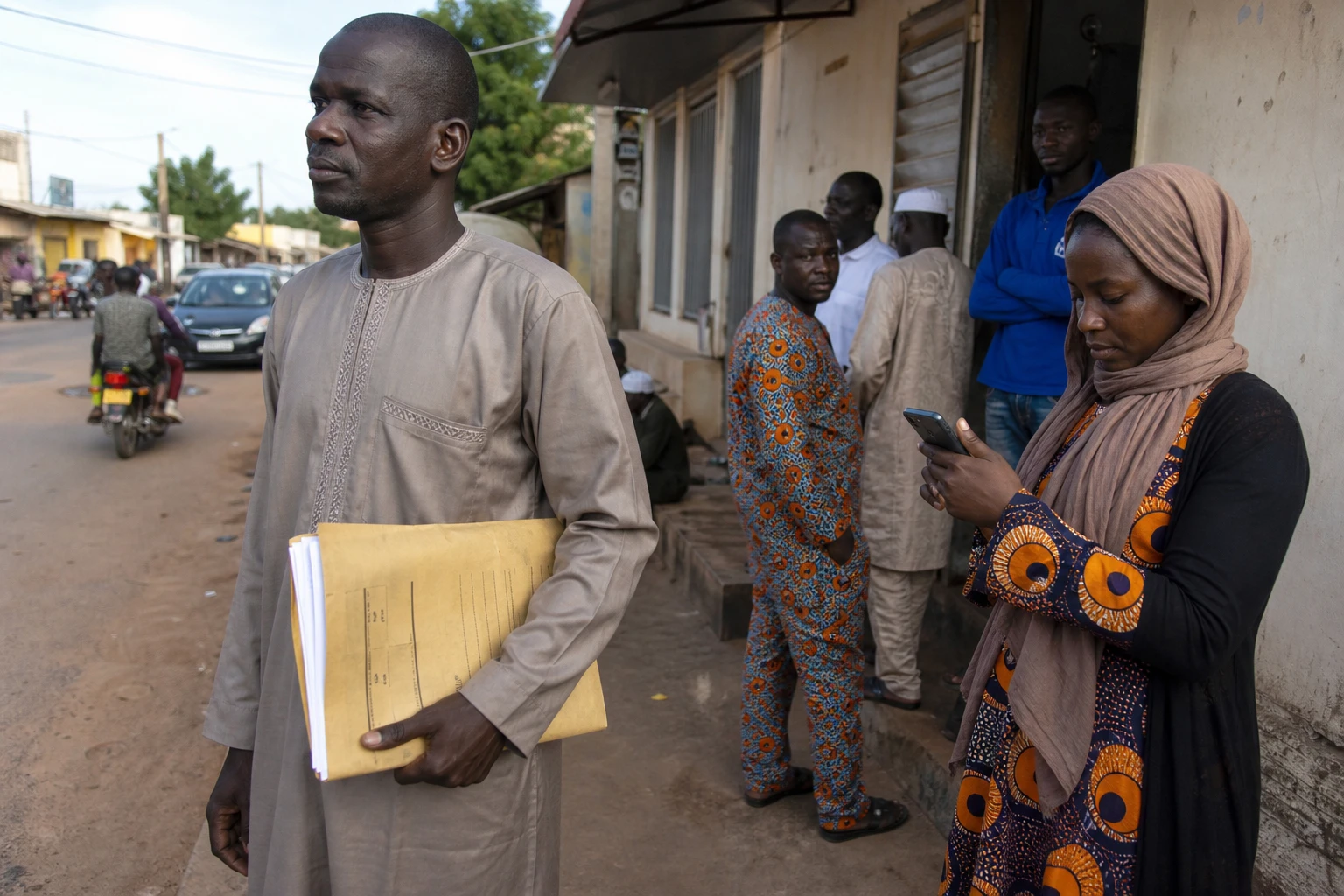
In Bamako, a disappearance that goes beyond one name
In Bamako, concern is not focused on just one man. It also says something broader: about the place of the law in a Mali where political expression is shrinking and families are asking, above all, for a simple answer. Four months after the abduction of lawyer and former minister Mountaga Tall, his relatives say they are still waiting for proof that he is alive, concrete information, and a sign of his state of health and where he may be held.
The case is part of a Malian climate already marked by disappearances attributed to security agents or unidentified men, against a backdrop of prolonged military transition, political tensions and persistent insecurity. In this context, the issue is not only that of an abduction. It is also whether the Malian state, in Bamako, can uphold the law in a visible and accountable way.
What is known, and what Bamako has not explained
The facts established so far are as follows. On 2 May 2026, Mountaga Tall was taken from his home in Bamako by armed, hooded men in unregistered vehicles, according to his family and several human rights organisations. His son, Cheick Mamadou Tall, was also taken afterwards. Other figures close to the democratic movement were affected in the same sequence of events, including Youssouf Daba Diawara and Moussa Djiré. The families say they have received no official information about where they are being held or the grounds for their deprivation of liberty.
The legal term used by several sources is enforced disappearance: a deprivation of liberty followed by a refusal to acknowledge the detention or reveal the fate of the person concerned. Amnesty International has called on the Malian authorities to clarify the situation immediately, stressing that such a practice puts the person at high risk of ill-treatment. The African Commission on Human and Peoples’ Rights has also expressed deep concern and called for clarification.
In early July 2026, the United Nations Committee on Enforced Disappearances asked the Malian state to search for, locate and protect Mountaga Tall and his son, and to specify the legal grounds for any detention. Two months later, the families were still saying they had received no useful response from Bamako. This lack of explanation is fuelling the anger of relatives, as well as a more diffuse fear among lawyers, activists and political figures who challenge the transition.
A test for Mali’s transition and the West African region
The case has particular political significance because Mountaga Tall is not an anonymous activist. A prominent figure in the National Congress for Democratic Initiative, he has also held ministerial posts and made his mark defending political figures before Malian courts. His abduction, followed by that of his son, has therefore been read by several observers as a signal to an entire political and legal milieu. This is not simply a security incident; it is a power struggle.
For the transitional authorities, the cost is twofold. At home, the silence fuels distrust of the institutions responsible for security and justice. Abroad, it weakens a country that says it wants to restore the authority of the state while remaining exposed to criticism over civil liberties. Yet the private home, the presumption of innocence and the prohibition of arbitrary detention are protected by the Malian Constitution, which affirms the inviolability of the home and private life.
The regional context further increases the significance of the case. Since 29 January 2025, Mali has no longer been a member of ECOWAS, the Economic Community of West African States, following the coordinated withdrawal of Bamako, Ouagadougou and Niamey. This rupture does not silence African bodies’ calls for action, but it reduces an already weakened political framework for addressing disputes over freedoms, justice and governance. In the central Sahel, the security crisis also weighs on civilians and institutional balances.
Why this case matters beyond Tall
This case says something about Mali’s current moment. The transition wants to present itself as a period of renewal. But renewal has meaning only if procedures are in place, institutions respond and citizens can challenge the authorities without disappearing into the shadows. Otherwise, families are left alone with rumours, and justice loses its most visible function: protecting people from arbitrary action. This is, implicitly, what the statements from NGOs, the UN and the African Commission remind us.
This sequence of events must also be viewed over time. For several years, international organisations have been reporting recurring problems in Mali concerning disappearances, alleged extrajudicial detention and the effectiveness of legal remedies. The UN Committee on Enforced Disappearances had already urged Bamako to strengthen its search and investigation mechanisms. The Tall case shows that, on the ground, the gap between stated standards and perceived practices remains considerable.
For West Africa, the stakes therefore extend beyond Mali. In a region reshaped by military transitions, diplomatic realignments and armed threats, the treatment of opponents, lawyers and human rights defenders has become a major political indicator. What Bamako chooses to say, or not to say, about Mountaga Tall and the other missing people will shape how African institutions, courts and public opinion in the region view events in the future. The next point to watch is simple: whether the Malian authorities respond to requests to locate and protect them, or maintain their silence.