Algeria
 Egypt
 Libya
 Morocco
 Sudan
 Tunisia
 Benin
 Burkina Faso
 Cabo Verde
 Côte d'Ivoire
 Ghana
 Guinea
 Guinea-Bissau
 Liberia
 Mauritania
 Niger
 Nigeria
 Senegal
 Sierra Leone
 The Gambia
 Togo
 Cameroon
 Central African Republic
 Chad
 DR Congo
 Equatorial Guinea
 Gabon
 Republic of the Congo
 São Tomé and Príncipe
 Burundi
 Comoros
 Djibouti
 Eritrea
 Ethiopia
 Kenya
 Madagascar
 Malawi
 Mauritius
 Mozambique
 Rwanda
 Seychelles
 Somalia
 South Sudan
 Tanzania
 Uganda
 Angola
 Botswana
 Eswatini
 Lesotho
 Namibia
 South Africa
 Zambia
 Zimbabwe
A recovery that says much more than a simple rebound
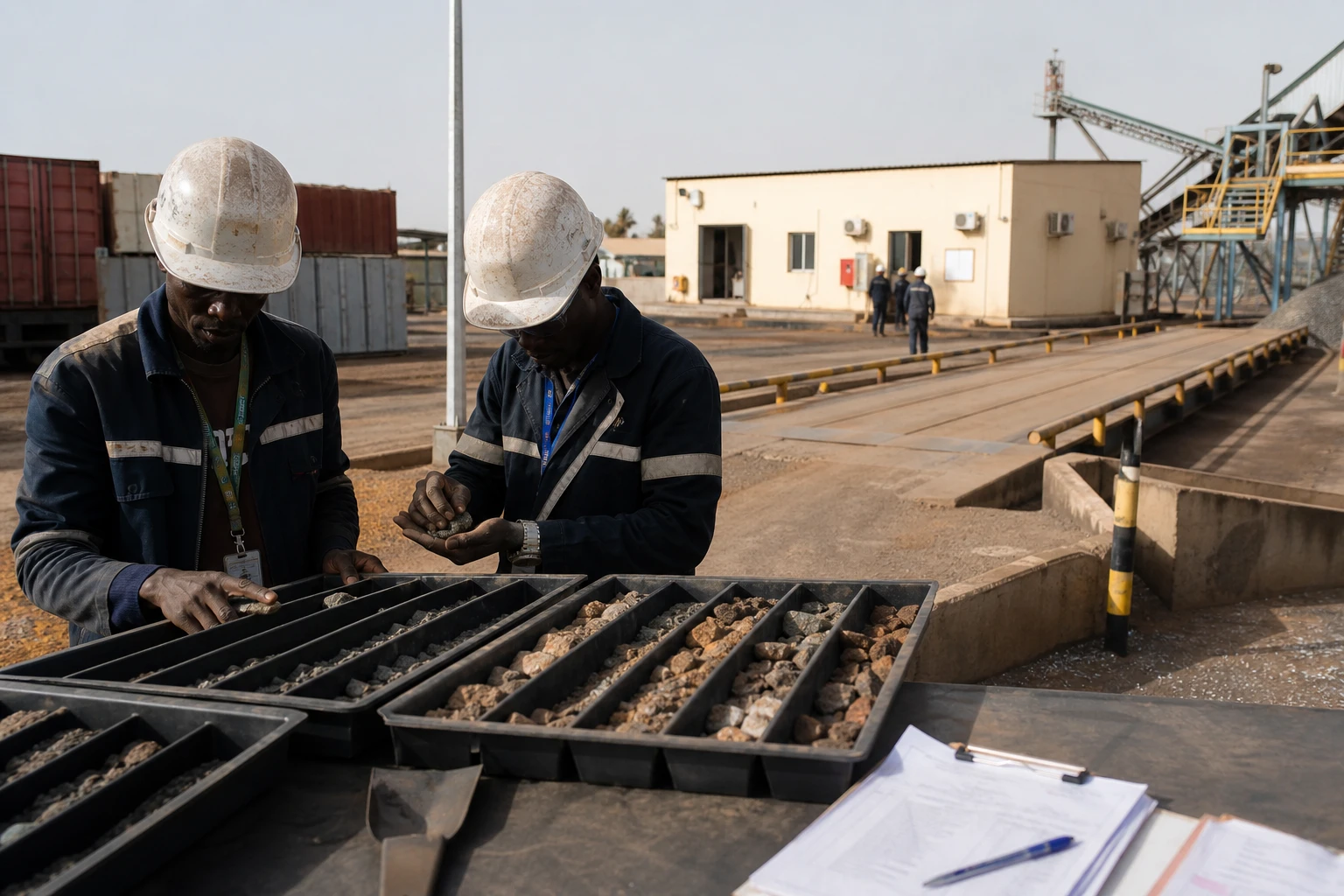
In Bamako, the recovery in industrial gold production is more than just good news for the accounts. Above all, it reveals how the Malian state is now seeking to regain control of a resource that directly or indirectly finances a large share of the national economy. In a country where gold remains the main export, every tonne produced affects public revenues, local employment and investor confidence.
The issue also extends beyond Mali. Across West Africa, where industrial mines and artisanal gold mining often coexist uneasily, securing a share of mining revenues remains a central concern. Mali tightened its framework with the 2023 Mining Code, which increases the state’s stake in projects, while discussions with major groups have shown the limits of a relationship long based on old arrangements.
Rising volumes, but a recovery still under scrutiny
According to data from the Ministry of Mines, industrial gold production reached 23.5 tonnes in the first half of 2026. That is about 30% more than a year earlier and above the 21.2 tonnes the government had expected over the same period. The sector is therefore still on track, at this stage, to meet the annual target of 43.2 tonnes.
This improvement contrasts with 2025, when industrial production fell sharply to 42.2 tonnes, from 54.8 tonnes in 2024 and 66.5 tonnes in 2023. The contrast is stark. It shows how much Mali’s gold sector still depends on a few major sites, their operational stability and the legal environment in which they operate.
The Loulo-Gounkoto complex, one of the country’s largest gold assets, illustrates this fragility. After months of dispute over the tax framework and the 2023 Mining Code, the site gradually resumed operations in late 2025. In the first half of 2026, it produced 6.9 tonnes, already more than the 5.5 tonnes recorded over all of 2025. Fekola, operated by B2Gold, remains the biggest contributor, however, with 8.85 tonnes.
Bamako’s strategy: more control, more revenue
Since 2023, the Malian authorities have made mining sovereignty an explicit policy priority. The new code raised public participation requirements and paved the way for tougher renegotiations with operators. The government has also highlighted an audit of the sector and the recovery of arrears estimated at 761 billion CFA francs, according to information reported by Reuters on the basis of a ministerial plan.
This strategy addresses a concrete need: securing budget revenues. In 2024, extractive revenues paid into the budget reached 978.29 billion CFA francs, or about $1.7 billion. For a state heavily reliant on gold exports, even a small change in production alters the budget equation. Higher prices are not enough if volumes fall.
The 2026 rebound therefore comes at a good time for public finances, but it resolves nothing structural. Mali still has a two-speed sector: highly capitalised, concentrated industrial mines on one side, and far more dispersed artisanal gold mining on the other. In July 2026, the government also created a new body to better regulate the trade in artisanal gold, after finding discrepancies between declared exports and the volumes reported by importing countries.
What the rebound means for companies, the state and workers
For the Malian state, the rise in production improves its room for manoeuvre. It can support tax revenues, mining dividends and foreign-exchange reserves. For companies operating in the country, it brings some predictability after a period of political and legal tension. For contractors and site employees, however, the priority remains the stability of operations, exports and payments.
Loulo-Gounkoto was at the heart of this period. Its shutdown weighed heavily on national production, as the 2025 figures showed. Its gradual restart has therefore had a direct effect on the country’s overall volumes. But it also serves as a reminder that much of Mali’s gold performance depends on a handful of industrial complexes, leaving the sector vulnerable to tax disputes, administrative blockages and export tensions.
The regional context adds another dimension. Across West Africa, several producing states are seeking to claim a larger share of the value extracted from their soil. Mali is not alone in renegotiating the rules of the game. But its trajectory is particularly visible because it combines political transition, a need for resources and a repositioning of the state in relation to major foreign operators.
2026, a decisive year for Mali’s mining trajectory
The central question is now simple: can the first-half recovery last through to the end of the year? The ministry is targeting industrial production of 43.2 tonnes for all of 2026. The administration’s plan, meanwhile, points to modest ambitions over several years, with production staying below 60 tonnes until 2029. In other words, the rebound is real, but it is part of a still cautious trajectory.
For Bamako, the challenge is not simply to produce more. It is above all to produce more steadily, under greater control and with greater returns for the public budget. The credibility of mining reform will be decided here. If revenues follow, the state will be better able to fund its priorities. If tensions return, the country will quickly find itself dependent once again on too few sites to absorb the shock.
The current rebound is therefore not an endpoint. It is a test. It will show whether Mali can turn a technical recovery into lasting gains for its finances, its workers and its position in West Africa’s gold economy.