Algeria
 Egypt
 Libya
 Morocco
 Sudan
 Tunisia
 Benin
 Burkina Faso
 Cabo Verde
 Côte d'Ivoire
 Ghana
 Guinea
 Guinea-Bissau
 Liberia
 Mauritania
 Niger
 Nigeria
 Senegal
 Sierra Leone
 The Gambia
 Togo
 Cameroon
 Central African Republic
 Chad
 DR Congo
 Equatorial Guinea
 Gabon
 Republic of the Congo
 São Tomé and Príncipe
 Burundi
 Comoros
 Djibouti
 Eritrea
 Ethiopia
 Kenya
 Madagascar
 Malawi
 Mauritius
 Mozambique
 Rwanda
 Seychelles
 Somalia
 South Sudan
 Tanzania
 Uganda
 Angola
 Botswana
 Eswatini
 Lesotho
 Namibia
 South Africa
 Zambia
 Zimbabwe
When a classroom closes, teacher training must continue
In Mali, schooling does not stop only when the bell rings. In several areas of the centre and north, insecurity disrupts the school calendar, makes travel more difficult and leads families to keep children away from classrooms. In this context, strengthening teacher-training institutes means protecting the entire learning chain, from teacher training to the last pupil. On 30 July in Bamako, education authorities presented this approach as a means of ensuring continuity rather than simply providing equipment.
The choice of Bamako is not incidental. Mali’s capital is home to some government departments, technical partners and bodies overseeing school reform. It is also where national responses and external support come together, in a country where education remains one of the areas most exposed to security, social and budgetary shocks. At regional level, the Sahel remains one of West Africa’s major pressure points, and ECOWAS, despite its political reconfiguration, remains a frame of reference for the exchange of public policies, including those on education.
Targeted equipment, a broader message
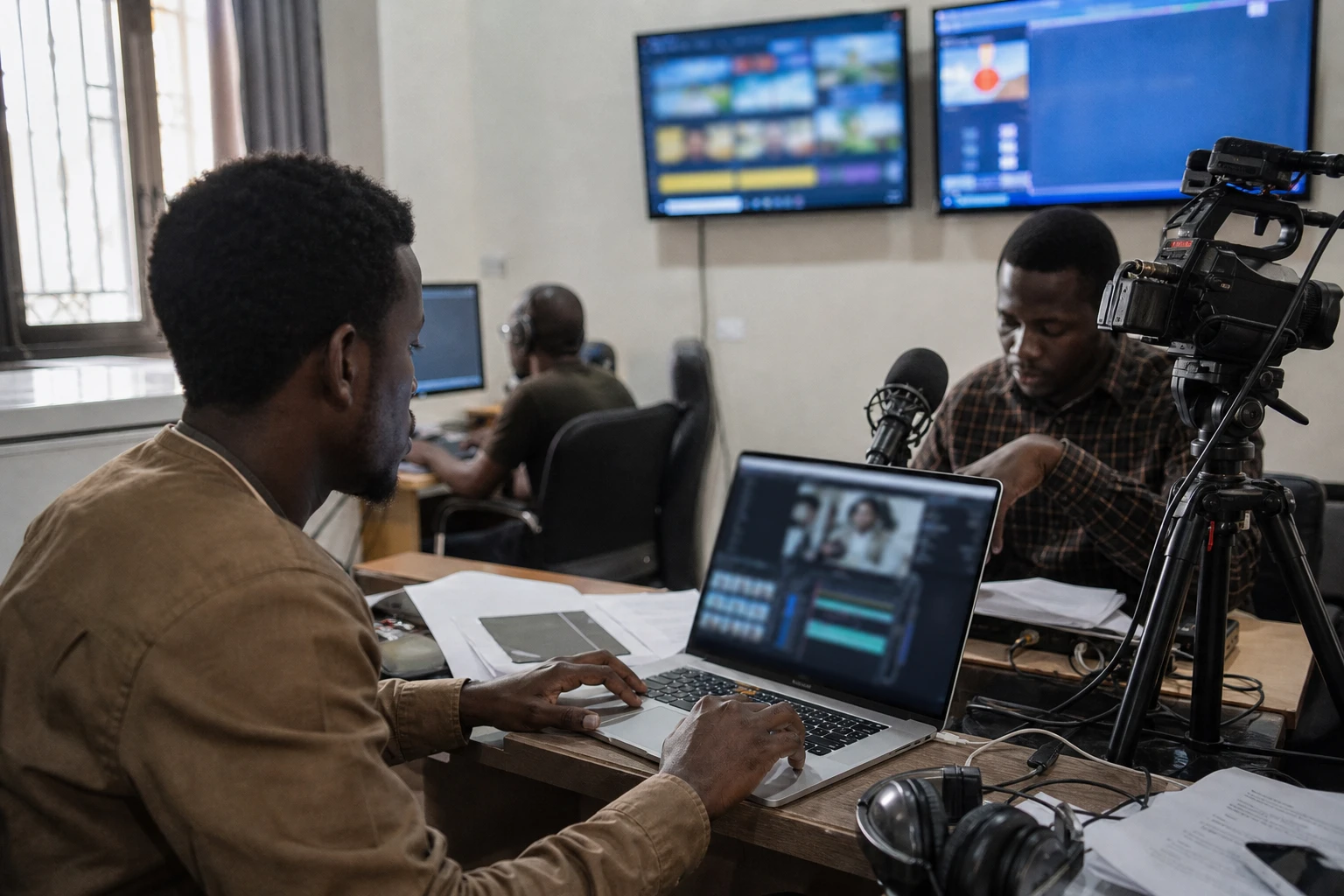
The handover in Bamako involved eight teacher-training institutes, known as IFMs, which prepare future primary-school teachers. The package comprises 40 laptops, 16 desktop computers and 32 digital tablets, with a stated value of 88.7 million CFA francs. The initiative was led by UNESCO’s International Institute for Capacity Building in Africa (IICBA), with financial support from the Japanese government and cooperation from Mali’s ministry responsible for national education.
This kind of support is part of a broader sequence of initiatives. Since 2024, IICBA and Japan have launched several projects to strengthen teachers’ capacities in fragile settings in Africa, including Mali. The stated aim is clear: to make teaching more resilient, particularly in areas affected by population displacement, school closures and disrupted classes. Boubacar Dembélé, secretary-general of the Ministry of National Education, presented digital technology as a tool for equity and continuity.
The UNESCO representative in Bamako, for his part, stressed a shared vision of inclusive education. This matters because it is a reminder that the issue is not simply about distributing machines. It is also about changing teaching practices, producing content that can be shared and enabling teachers to work even when school walls can no longer fulfil their role.
In practice, the reach of the equipment remains modest relative to the needs of the system. Eight IFMs and a few dozen computers and tablets are not enough to make up for years of underinvestment or, on their own, to correct inequalities between Bamako and remote regions. But the signal is important. Mali is testing a response that focuses on training trainers rather than simply distributing equipment as a one-off measure.
Digital technology cannot replace peace, but it can limit the damage
The real obstacle, in Mali as across much of the Sahel, remains access. UNICEF said that in 2025 nearly 15,000 schools had closed in West and Central Africa because of insecurity, affecting around 3 million children. In the central Sahel, school closures and forced displacement continue to weigh heavily on learning, with girls particularly hard hit.
The digital divide compounds the problem. The International Telecommunication Union estimates that in 2024, 38% of people on the African continent used the internet, compared with 57% in urban areas and 23% in rural areas. In Mali, the most frequently cited estimates for 2023 put internet penetration at around 35%. In other words, training teachers in digital technology is not enough if connections remain intermittent, expensive or unavailable in rural areas.
This is where the difference lies between visible modernisation and useful modernisation. In cities, digital tools can speed up lesson preparation, the sharing of materials and the monitoring of teaching. In remote areas, they will only fulfil their potential if accompanied by electricity, a stable connection, basic maintenance and ongoing skills development for teachers. Without that, innovation risks remaining concentrated in administrative capitals.
Mali is also seeking to join a broader continental effort. IICBA links several African countries through projects funded by Japan, with the aim of pooling training tools and sharing experience. This approach resonates with other education systems facing the same constraints: insecurity, forced mobility, a shortage of qualified teachers and pressure to do more with less. In this respect, Bamako offers a useful point of observation for West Africa: what works in teacher training in Mali could, on a small scale, inspire similar responses in Burkina Faso, Niger or Mauritania.
What happens next will depend less on the handover photo than on how the equipment is actually used in the IFMs. If teachers trained in digital technology are subsequently provided with tools, connectivity and pedagogical support, Mali will be able to turn an emergency response into a lasting policy. Otherwise, the initiative will remain useful but isolated support in the face of an education crisis that continues to extend beyond Mali’s borders.